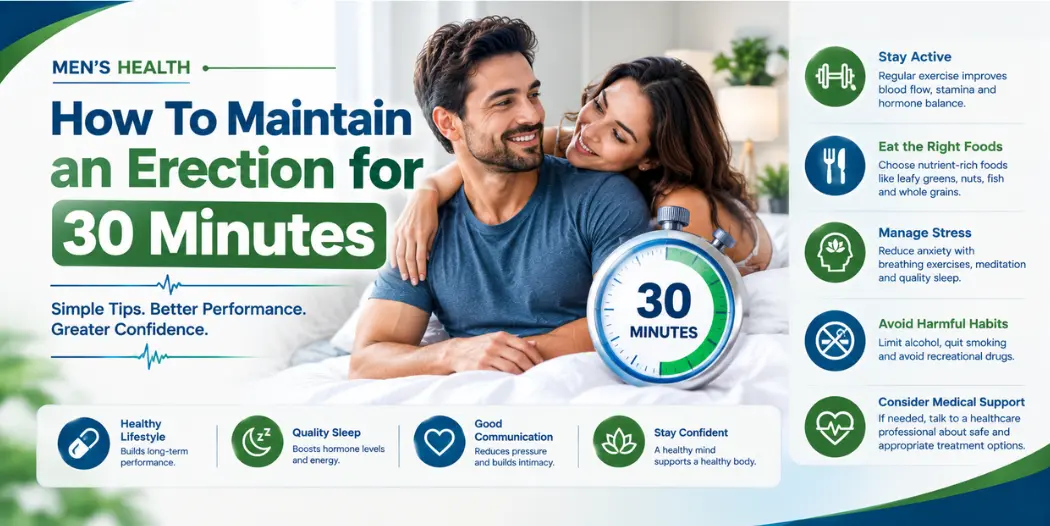
Many men want to know how to maintain an erection for 30 minutes especially if they sometimes lose their erection during sex. However there is no fixed amount of time an erection should last. It can vary from person to person depending on sexual arousal, physical health stress, sleep medications, alcohol use and other factors.
If you are wondering how to maintain erection longer, it is better to focus on your overall sexual and physical health rather than trying to stay hard for exactly 30 minutes. Regular exercise, healthy food, good sleep, stress management, avoiding smoking, and maintaining a healthy weight can all support normal erectile function.
Losing an erection occasionally is usually not a major concern. However if you often have trouble getting or keeping an erection talk to a healthcare professional. Frequent erection problems may sometimes be linked to diabetes, high blood pressure, heart problems, certain medicines, anxiety or other health conditions.
What Does It Mean to Maintain an Erection?
Maintaining an erection means keeping the penis firm enough for the sexual activity you want after becoming sexually aroused. An erection happens when the brain, nerves, hormones, muscles, and blood vessels work together to increase blood flow to the penis.
During sexual stimulation, blood enters the erectile tissues, making the penis firm. Staying erect depends on continued sexual arousal and healthy blood flow and nerve function. Several things can affect how long an erection lasts. Stress, anxiety, poor sleep, alcohol, smoking, certain medicines, and some health conditions may make it harder to maintain firmness.
It is also important to understand that maintaining an erection is different from delaying ejaculation. A man may keep an erection but ejaculate quickly, while another may lose firmness even when he is still sexually aroused.
How Can You Maintain an Erection for 30 Minutes?
There is no guaranteed method for making an erection last exactly 30 minutes. If you are searching for ways to maintain erection, the better approach is to support the physical and psychological factors that help normal erectile function.
1. Focus on Sexual Arousal
Sexual arousal is important for getting and maintaining an erection. If you keep worrying about whether you are staying hard, that pressure can make it harder to stay relaxed and aroused.
Instead, focus on enjoying the sexual experience rather than treating your erection like a test. Pay attention to physical sensations, intimacy, and your connection with your partner. Give yourself enough time to become naturally aroused without feeling rushed.
Good stimulation can also help maintain arousal. If your level of excitement decreases, it is normal for your erection to become softer. This does not always mean something is wrong. If you are looking for the best way to keep an erection, try to focus less on the clock and more on staying relaxed, comfortable, and sexually engaged.
2. Give Yourself Enough Time for Foreplay
Rushing into intercourse can create unnecessary pressure, particularly if you are already worried about maintaining an erection. Taking enough time for foreplay can help you become more relaxed and naturally increase sexual arousal.
Foreplay may include kissing, touching, gentle massage, talking, or other forms of intimacy that both partners enjoy. It can help you and your partner feel more comfortable before intercourse. There is no fixed amount of time that foreplay should last.
Every couple is different, so focus on what feels enjoyable and comfortable for both of you. Taking things slowly can also reduce performance pressure and help you focus on the experience instead of worrying about how to stay hard for 30 minutes.
3. Reduce Performance Anxiety
Performance anxiety can create a difficult cycle. You may worry about losing your erection, notice a change in firmness, become more anxious, and then find it even harder to stay aroused. Stress and anxiety can make it harder to maintain an erection during sex.
Try not to put pressure on yourself to stay hard for a specific amount of time. Instead, focus on enjoying the moment, your partner, and the physical sensations. Taking slow, deep breaths can help you feel more relaxed.
Talking openly with your partner can also reduce pressure. If anxiety continues to affect your sex life, consider speaking with a healthcare professional or qualified counselor.
4. Communicate With Your Partner
Open communication can take some of the pressure out of sexual activity. Tell your partner what feels comfortable, what helps you stay aroused, and whether you are feeling anxious.
Talking openly with your partner can make sex more relaxed and enjoyable. If you sometimes lose your erection, try not to feel embarrassed or treat it as a failure. A temporary change in firmness does not always mean that you have lost interest or attraction.
Let your partner know how you feel and discuss what can help you stay comfortable and aroused. Good communication can reduce performance pressure and help both partners feel more connected. An Erection Guide can also provide useful information about common erection concerns.
5. Stay Physically Active
Regular physical activity is one of the most useful lifestyle habits for supporting erectile function. Exercise helps improve blood circulation, support heart health, manage body weight, and reduce stress. All of these factors can play a role in maintaining healthy erections.
Regular aerobic exercise may also improve erectile function in men who experience erection difficulties. You do not need to follow a hard or complicated workout routine. Simple activities such as walking, cycling, swimming, jogging, or brisk walking can be helpful.
Try to stay active regularly and choose exercises that you enjoy. Consistent physical activity can support better overall health and may also benefit your sexual health over time.
6. Try Pelvic Floor Exercises
The pelvic floor muscles play a role in sexual function and urinary control. Some research suggests that pelvic floor exercises may help improve erection quality and control. These exercises involve tightening and relaxing the muscles used to stop urine flow.
You can practice them regularly by tightening these muscles for a few seconds and then relaxing them. Start with a few repetitions and gradually increase them as you become more comfortable.
Avoid overdoing the exercises, as this can cause muscle tension. If you are unsure about the correct technique or experience pain, speak with a healthcare professional or pelvic-floor physical therapist.
7. Get Enough Sleep
Sleep affects many areas of health, including mood, energy, stress levels, and sexual function. Poor sleep and ongoing fatigue may make it more difficult to maintain an erection.
Aim for a consistent sleep schedule and good-quality sleep. If you regularly have trouble sleeping or suspect you have a sleep disorder, discuss it with a healthcare professional.
Improving sleep may not immediately change erection duration, but it can support the overall physical and mental factors involved in sexual function.
8. Maintain a Healthy Weight
Excess body weight is associated with several health conditions that can affect erectile function, including diabetes, high blood pressure, and cardiovascular problems. Maintaining a healthy weight can therefore support both general and sexual health.
If you are overweight, losing even a small amount of weight may support better overall health and improve some risk factors linked to erectile problems. You do not need to follow strict diets or make sudden changes.
Instead, focus on simple habits such as eating more vegetables, fruits, whole grains, and lean proteins while staying physically active. Regular exercise, portion control, and healthy food choices can help you maintain a healthy weight over time and support better sexual health.
9. Follow a Balanced Diet
Healthy blood vessels are important for normal erections because erections depend on adequate blood flow. Eating a balanced diet can support better blood flow and overall health. Try to include more vegetables, fruits, beans, whole grains, nuts, seeds, and healthy fats in your daily meals. Foods such as leafy greens, berries, oats, and fatty fish can be good choices.
A Mediterranean-style diet is also linked with better heart and sexual health. At the same time, try to limit highly processed foods, added sugar, and unhealthy fats. Food will not make an erection last longer immediately, but healthy eating habits can support better erectile function over time.
10. Limit Alcohol and Avoid Smoking
Heavy alcohol use can interfere with sexual function, while smoking can damage blood vessels and reduce healthy blood flow. Both are recognized lifestyle factors associated with erectile difficulties.
Drinking too much alcohol may make it harder to get or maintain an erection during sex. Smoking can also affect blood flow, which is important for getting a firm erection. Reducing alcohol intake and avoiding tobacco can help support better sexual and overall health.
If you use recreational drugs, keep in mind that some substances may affect sexual desire, arousal, or erections. If you notice changes in your sexual function, talk with a healthcare professional.
Can Food Help You Maintain an Erection Longer?
Food cannot make an erection last for a specific amount of time. However, eating a healthy diet can support good blood flow, heart health, and overall health, which are important for healthy erections.
Foods That Support Cardiovascular Health
A healthy diet can support your heart, blood vessels, and overall circulation. These factors are important because healthy blood flow plays a role in getting and maintaining an erection. Try to include whole grains, beans, nuts, seeds, fish, and healthy oils in your meals. Choose fresh and less-processed foods more often, and avoid making highly processed foods a regular part of your diet. A balanced eating pattern is more helpful for long-term health than relying on one food or ingredient.
Fruits and Vegetables
Fruits and vegetables are rich in fiber, vitamins, minerals, and other nutrients that your body needs. Try to include different types throughout the week to get a wider range of nutrients. Leafy greens, berries, oranges, tomatoes, carrots, and peppers are simple choices for everyday meals. You can add them to salads, breakfast, snacks, or main meals. Eating more fruits and vegetables can also help you maintain a balanced diet and support your overall health.
Whole Grains
Whole grains can be a healthy part of your daily diet. Foods such as oats, brown rice, whole-wheat bread, and quinoa provide fiber and important nutrients. Fiber can support heart health and help maintain healthy blood sugar levels. Since good blood flow is important for erections, a heart-healthy diet can also support sexual health. Try replacing some refined foods, such as white bread and white rice, with whole-grain options to improve the overall quality of your meals.
Healthy Fats
Healthy fats are an important part of a balanced diet and can support heart and blood-vessel health. Good sources include nuts, seeds, olive oil, avocados, and fatty fish such as salmon and sardines. These foods provide unsaturated fats, which are generally better for your health than large amounts of saturated fats found in some processed and fried foods. Adding healthy fats to your meals regularly can support overall health and may also help maintain healthy blood flow, which is important for normal erectile function.
Lean Protein Sources
Lean protein can be an important part of a healthy diet. Foods such as beans, lentils, fish, chicken, and eggs provide protein and other nutrients that support overall health. Adding these foods to your meals can help you maintain a balanced diet. You do not need to eat a specific protein-rich food just before sex to maintain an erection. Instead, focus on eating healthy, balanced meals regularly and choosing nutritious protein sources as part of your daily diet.
Foods and Habits to Limit
NIDDK recommends limiting foods that are high in saturated fats, refined carbohydrates, added sugars, and sodium. Eating too much of these foods regularly can affect your overall health and may increase the risk of health conditions linked to erectile dysfunction (ED). Try to choose healthier foods more often, such as vegetables, fruits, whole grains, nuts, seeds, and other nutrient-rich options. A balanced diet can support better heart health and may also help maintain healthy erectile function.
Why Do You Lose Your Erection During Sex?
Losing an erection sometimes during sex is common and does not always mean you have erectile dysfunction (ED). Stress, tiredness, alcohol, lack of arousal, and emotional concerns can all make it harder to keep an erection.
Performance Anxiety and Stress
Worrying about your sexual performance Anxiety can make it harder to stay aroused. You may start thinking about whether you will lose your erection, which can create more stress and make the problem worse.
Not Enough Sexual Stimulation
An erection can become softer when sexual stimulation or arousal decreases. This is a normal response and does not always mean there is a medical problem.
Tiredness and Poor Sleep
Feeling tired can affect your energy, mood, focus, and sexual response. Poor sleep over a long period may also contribute to erection problems.
Alcohol and Smoking
Drinking too much alcohol can affect sexual performance, while smoking can damage blood vessels and reduce healthy blood flow. Cutting down on alcohol and avoiding smoking can support better sexual and overall health.
Relationship or Emotional Problems
Relationship stress, low confidence, anxiety, depression, or other emotional concerns can affect sexual arousal and erections. Talking openly with your partner or speaking with a counselor or sex therapist may help.
Certain Medications
Some medicines can make it harder to get or maintain an erection. These may include certain antidepressants, blood-pressure medicines, antihistamines, and pain medicines. Do not stop any prescribed medicine on your own. If you think a medicine is affecting your erections, speak with your healthcare professional.
If you are looking for the Safest ED Medication, remember that the right option depends on your overall health, other medicines you take, heart health, and the cause of your ED. A healthcare professional can help you choose a suitable treatment.
Underlying Health Conditions
Frequent erection problems can sometimes be linked to health conditions such as diabetes, obesity, high blood pressure, heart disease, hormone problems, or nerve disorders. For this reason, repeated erection problems should not be ignored. If they happen often, talking with a healthcare professional can help identify the cause and find the right treatment.
How Long Should an Erection Normally Last?
There is no fixed amount of time that an erection should normally last. Every man is different, and an erection does not need to stay firm for exactly 30 minutes. How long it lasts can depend on sexual arousal, stimulation, physical health, stress, emotions, tiredness, alcohol use, medications, and other factors.
It is also normal for an erection to become softer during sexual activity and become firm again later. Instead of focusing on a specific number of minutes, it is more important to consider whether you can get and keep an erection that is firm enough for the sexual activity you want and whether sex feels comfortable and satisfying.
If you regularly have trouble keeping an erection long enough for sex, it may be a sign of erectile dysfunction and should be discussed with a healthcare professional.
When Is Difficulty Maintaining an Erection a Problem?
Losing an erection once in a while is common and usually not a serious concern. It can happen because of stress, lack of sleep, tiredness, drinking too much alcohol, or not feeling fully aroused. However, if you often have trouble getting or keeping an erection, it is a good idea to talk to a healthcare professional.
You should consider getting medical advice if:
- You regularly lose your erection during sex.
- You often have trouble getting an erection.
- The problem continues even after making healthy lifestyle changes.
- Your erection problems started suddenly or have become worse.
- You have health conditions such as diabetes, high blood pressure, or heart disease.
- You think a medicine you take may be affecting your erections.
- Erection problems are causing stress, anxiety, or problems in your relationship.
The good news is that erectile dysfunction (ED) can often be treated. A healthcare professional can help find the possible cause and recommend the right treatment. Depending on your situation, treatment may include lifestyle changes, counseling, medicines, or other options. Be careful with products that claim to improve erections naturally. Some sexual-enhancement products may contain hidden ingredients or may interact with other medicines.
If you are asking Smoking Weed Does Libido Return, changes in sexual desire or erection quality after stopping cannabis can be different for each person. If these changes continue or concern you, it is better to speak with a healthcare professional instead of using unverified supplements or medicines.
Conclusion
Learning How To Maintain an Erection for 30 Minutes is not about reaching a fixed time. There is no specific amount of time that an erection needs to last. Every man is different, and erection duration can change depending on arousal, health, stress, sleep, and other factors.
Healthy habits can support better erectile function. Regular exercise, a balanced diet, healthy weight, good sleep, less alcohol, stress management, and avoiding smoking can all help. However, these changes may not solve every erection problem. If you regularly have trouble getting or keeping an erection, speak with a healthcare professional to find the possible cause and the right treatment.