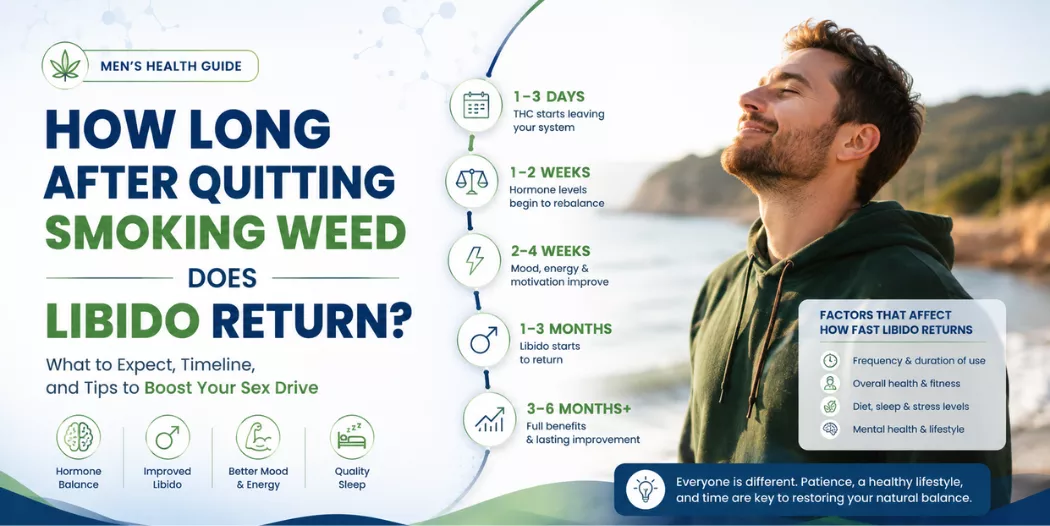
If you recently stopped smoking weed and noticed a change in your sex drive, you may wonder how long it will take for your libido to return. There is no fixed timeline because everyone responds differently. Some people may notice improvement within a few weeks, while others may take longer.
Cannabis can affect sexual desire in different ways. Some people experience increased sexual interest, while others may notice lower libido or sexual problems, especially with frequent or heavy use. After quitting, withdrawal symptoms such as poor sleep, stress, anxiety, and mood changes may temporarily reduce sexual desire.
If you are wondering how long after quitting smoking weed does libido return? It is important to understand that recovery can vary from person to person. However, if low libido continues for a long time, cannabis may not be the only reason. Other factors, including medications, hormones, mental health, sleep, and overall health, can also affect sexual desire.
What Happens to Libido After Quitting Weed?
Quitting weed does not always lead to an immediate increase in sexual desire. If you use cannabis regularly, your body and mind may need time to adjust. During this period, withdrawal symptoms such as anxiety, irritability, poor sleep, and restlessness may temporarily reduce your interest in sex.
Cannabis can affect libido differently from person to person. Some people report greater sexual desire while using cannabis, while others may experience reduced sexual interest or sexual difficulties. This means does weed kill sex drive cannot be answered with a simple yes or no.
After quitting, libido may gradually improve as sleep, mood, and daily energy become more stable. However, factors such as stress, mental health, medications, and overall health can also affect recovery.
Libido Recovery Timeline After Quitting Weed
There is no scientifically established schedule that applies to everyone. The following timeline should therefore be viewed as a general framework rather than a guaranteed recovery plan.
First Few Days
In the first few days after quitting weed your body starts adjusting to the absence of THC. If you use cannabis regularly you may experience anxiety, irritability, restlessness, poor sleep or changes in appetite.
These withdrawal symptoms may temporarily reduce sexual desire. Some people may notice no change while others may experience lower libido. It is usually too early to judge your long-term sexual health during this early adjustment period.
1–2 Weeks
During the first one to two weeks after quitting weed some people may experience withdrawal symptoms such as poor sleep, vivid dreams, anxiety or irritability. These changes can temporarily reduce sexual interest. As withdrawal symptoms become easier to manage libido may gradually improve.
However recovery is different for everyone. This is why does weed lower sex drive does not have one clear timeline and depends on individual health and cannabis use.
2–4 Weeks
After two to four weeks of quitting weed, some people may start to feel more balanced. Sleep, mood and energy may gradually improve. These changes can support a natural return of sexual desire if cannabis was affecting libido.
However, recovery is different for everyone. Ongoing stress, anxiety, depression, relationship problems, certain medications or other health conditions can continue to affect libido even after stopping cannabis.
1–3 Months
During the next one to three months some people may notice better mood energy, sleep and sexual interest after quitting weed. Others may see little change. Recovery depends on cannabis use and overall health.
If your libido remains low after several months it may not be related to cannabis alone. Stress anxiety, poor sleep medications, hormonal changes or other health conditions can also affect your sex drive.
After 3 Months
If your libido is still low after three months without cannabis it may be time to consider other possible causes. Stress anxiety, poor sleep hormonal changes, certain medications, relationship problems and health conditions can all affect sexual desire.
If low libido continues or becomes concerning, speak with a healthcare professional. They can help identify the underlying cause and recommend appropriate steps to support healthy sexual function.
Can Quitting Weed Increase Libido?
Quitting weed may increase libido for some people but there is no guaranteed timeline or result. If cannabis use was affecting your sexual desire, sleep mood or energy stopping it may help these areas improve. As your body adjusts and your sleep and mood become more stable you may notice a gradual increase in sexual interest.
However research on cannabis and sexual health has shown mixed results. Some people report greater sexual desire and satisfaction while others may experience reduced sexual function. This means does weed decrease libido cannot be answered with a simple yes or no.
Your libido after quitting weed can depend on factors such as cannabis use patterns, stress sleep, mental health medications and overall health. Give your body time to adjust and focus on healthy lifestyle habits that support sexual well-being.
Why Is My Libido Still Low After Quitting Weed?
If your sex drive is still low after quitting weed, cannabis withdrawal may not be the only reason. Here are some common factors to consider:
Cannabis Withdrawal
Withdrawal can temporarily affect mood and sleep, which may reduce sexual interest. Symptoms often improve within one to two weeks, but experiences vary. Some people may also notice changes in energy, appetite, or mood, which can further affect libido.
Stress and Anxiety
High stress and anxiety can make it difficult to relax, focus on intimacy, or feel sexually interested. Even after quitting weed, ongoing stress can continue to affect libido. Daily worries, work pressure, or personal problems may also reduce your interest in sex.
Poor Sleep
Sleep plays an important role in energy, mood, and overall well-being. Difficulty sleeping after quitting cannabis may temporarily reduce interest in sex. Poor sleep can leave you feeling tired, stressed, and less interested in sexual activity.
Depression or Low Mood
Low mood can strongly affect sexual desire. If you have persistent sadness, loss of interest in activities, low energy, or other symptoms of depression, cannabis may not be the primary cause of your low libido.
Hormonal Factors
Hormonal changes can influence sexual desire. Testosterone and other reproductive hormones may affect libido in some people. However, having a hormone problem should not be assumed without proper evaluation. If low libido continues, appropriate medical testing can help identify the cause.
Certain Medications
Some prescription medicines can affect sexual desire or sexual function. If your libido changes after starting or changing a medication, discuss it with your prescriber. If you are considering treatment for erectile dysfunction, Safest ED Medication can provide more information about commonly used options. Do not stop or change any medicine on your own, as this may cause other health problems.
Relationship Issues
Emotional connection, communication, conflict, and relationship satisfaction can affect sexual desire. Problems in a relationship, poor communication, or emotional distance may reduce interest in intimacy. A change in libido is not always caused by a physical health problem.
Alcohol, Nicotine or Other Substance Use
Replacing cannabis with alcohol, nicotine, or another substance may introduce additional factors that can affect sexual health. Looking at your overall substance use is often more helpful than focusing on cannabis alone.
Factors That Affect Libido Recovery
Libido recovery after quitting weed can vary depending on several personal factors. These may include how often and how long you used cannabis, the amount consumed, sleep quality, stress levels, mental health, physical activity, medications, alcohol or nicotine use, and your overall health.
Your age, relationship situation, and any existing sexual health concerns may also influence sexual desire. Because these factors differ from person to person, there is no exact timeline for everyone.
How to Support Healthy Libido After Quitting Weed
There is no specific food or supplement that guarantees faster libido recovery. Instead, focus on habits that support overall physical and mental health.
- Prioritize sleep: Try to maintain a consistent sleep and wake schedule, particularly if quitting cannabis has temporarily disrupted your sleep.
- Exercise regularly: Physical activity can support mood, cardiovascular health, energy, and general well-being.
- Eat a balanced diet: Include adequate protein, fruits, vegetables, whole grains, and healthy fats rather than relying on restrictive diets or unproven sexual-health supplements.
- Manage stress: Relaxation techniques, regular physical activity, hobbies, and social connection can help reduce stress that may interfere with sexual desire.
- Avoid replacing cannabis with other substances: Excessive alcohol or other substance use can introduce additional problems for sexual and overall health.
- Give yourself time: Recovery is not always linear. Libido can fluctuate while your sleep, mood, and daily routine are changing.
- Consider other factors: Women experiencing persistent changes in sexual desire may also benefit from learning more about Libido Boosters for Women. However, persistent low libido should be discussed with a healthcare professional.
Libido vs Erectile Dysfunction: What’s the Difference?
Low libido and erectile dysfunction (ED) are two different sexual health concerns.
Libido means your sexual desire or interest in sex. You can have low libido but still be able to get and maintain an erection.
Erectile dysfunction (ED) means having difficulty getting or keeping an erection firm enough for sexual activity. A person with ED may still have a normal sex drive.
This difference is important when looking at sexual changes after quitting cannabis. If your main problem is low sexual desire, ED treatment may not address the actual cause.
If you are wondering how long after quitting smoking weed does erectile dysfunction improve, there is no fixed timeline. Cannabis may affect sexual function differently from person to person, and research on its effects is still mixed.
If alcohol is also affecting your erections, Drinking Will My ED Go Away can help you understand how drinking may influence erectile function.
Conclusion
So, how long after quitting smoking weed does libido return? There is no fixed timeline because everyone responds differently. Some people may notice changes in sexual desire within a few weeks, while others may take several months. During this time, withdrawal symptoms, poor sleep, stress, or mood changes may temporarily affect libido.
Quitting weed does not always lead to an immediate increase in sex drive. Cannabis can affect sexual health differently from person to person. If your libido gradually improves, healthy sleep, regular exercise, stress management, and a balanced lifestyle can support recovery. Erectile dysfunction may also have different causes and should not automatically be linked to cannabis use.
If low libido continues for several months or occurs with erectile problems, mood changes, or other symptoms, consider discussing the issue with a healthcare professional. Give your body time to adjust and avoid expecting a specific recovery date.