
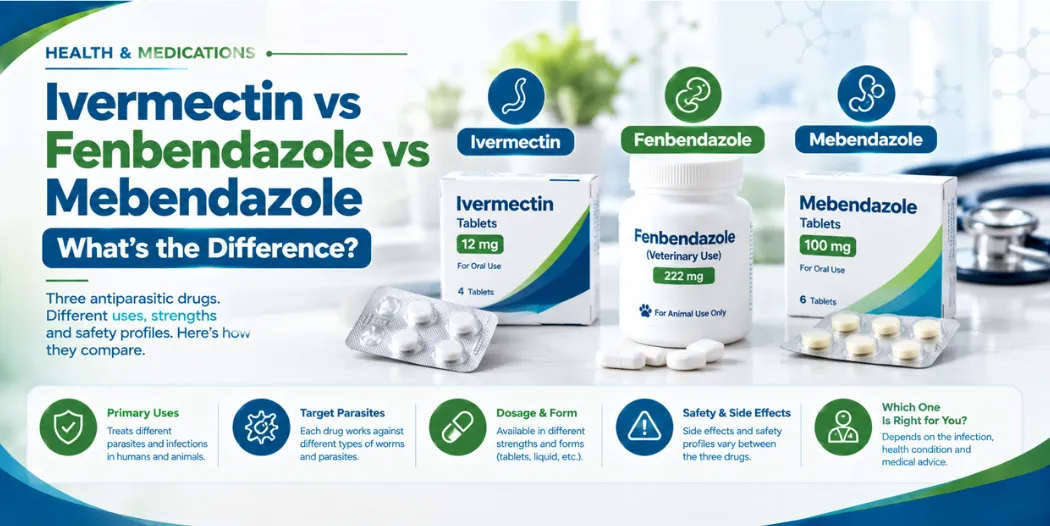
Parasitic infections can affect different parts of the body including the intestines and skin. Several medicines are available to treat these infections but they do not all work in the same way. Understanding Ivermectin vs Fenbendazole vs Mebendazole can help you learn how these medicines differ and what they are used for.
Ivermectin and mebendazole are used to treat certain parasitic infections in humans. Fenbendazole is mainly used to treat worm infections in animals and is not FDA-approved for human use. Although all three medicines fight parasites they work differently and are used for different types of infections.
Choosing the right medicine depends on the type of parasite and your health condition as well as your doctor’s advice. In this guide we will explain the uses and key differences along with the effectiveness and dosage of these three medicines. We will also cover their side effects and safety in simple terms.
What Are Ivermectin, Fenbendazole, and Mebendazole Used For?
These three medicines are used to control or treat parasitic infections, but their applications are different.
Ivermectin
Ivermectin is an antiparasitic medicine used to treat certain parasitic infections in humans. It is commonly prescribed for intestinal strongyloidiasis and river blindness (onchocerciasis). Some forms of ivermectin are also used to treat head lice and rosacea. Doctors may recommend ivermectin for other parasitic infections depending on the patient’s condition.
Fenbendazole
Fenbendazole is a deworming medicine mainly used in animals. It helps treat infections caused by roundworms, hookworms, whipworms, and certain tapeworms. Fenbendazole is commonly used in veterinary medicine. Although some people search for Fenbendazole for Humans, this medicine is not FDA-approved for human use, and its safety and effectiveness in people have not been fully studied.
Mebendazole
Mebendazole is an antiparasitic medicine used to treat intestinal worm infections in humans. It is commonly prescribed for roundworms, hookworms, whipworms, and pinworms. It works by stopping worms from absorbing the nutrients they need to survive. This helps eliminate the worms from the intestines and treat the infection.
How Do Ivermectin, Fenbendazole, and Mebendazole Work?
Although all three medicines act against parasites, their mechanisms are not identical.
Ivermectin affects specific nerve and muscle channels in susceptible parasites. It increases chloride ion movement through certain channels, causing paralysis and helping the body eliminate the parasites. Its activity depends on the parasite species and stage of infection.
Fenbendazole interferes with microtubule formation in susceptible worms. Microtubules are essential structures involved in nutrient uptake and normal cellular function. When these structures are disrupted, the parasites cannot maintain their normal activities.
Mebendazole works through a similar mechanism to fenbendazole. It binds to parasite beta-tubulin, disrupting microtubule formation and interfering with glucose uptake. This gradually reduces the parasite’s energy supply.
The main difference is that ivermectin primarily affects parasite nerve and muscle function, while fenbendazole and mebendazole disrupt important cellular processes.
Ivermectin vs Fenbendazole vs Mebendazole: Key Differences
Understanding the differences between these medicines helps explain why they are not interchangeable.
| Feature | Ivermectin | Fenbendazole | Mebendazole |
| Drug class | Macrocyclic lactone | Benzimidazole | Benzimidazole |
| Main use | Certain parasitic infections in humans | Worm infections in animals | Intestinal worm infections in humans |
| Mechanism | Affects parasite nerve and muscle function | Disrupts microtubules | Disrupts microtubules and glucose uptake |
| Human FDA approval | Yes, for specific indications | No | Yes |
| Parasite coverage | Certain nematodes and ectoparasites | Several veterinary intestinal worms | Common intestinal nematodes |
| Human dosage | Depends on the infection | No established approved dose | Depends on the infection |
| Safety evidence | Established for approved human uses | Limited human evidence | Established for approved human uses |
The comparison of fenbendazole vs ivermectin vs mebendazole shows that each medicine has a different clinical role. Even when their parasite coverage overlaps, this does not mean they can be substituted for one another.
Ivermectin, Fenbendazole or Mebendazole: Which Is Better?
There is no universal winner when comparing these three antiparasitic medicines. The most appropriate treatment depends on the parasite involved and whether the medicine has been studied and approved for that use.
Ivermectin vs Fenbendazole
When comparing Mebendazole vs Fenbendazole both medicines belong to the same group of antiparasitic drugs and work in similar ways. Mebendazole is FDA-approved for humans and commonly treats intestinal worms such as pinworms, roundworms, hookworms, and whipworms. Fenbendazole is mainly used in veterinary medicine and is not approved for human treatment.
Fenbendazole vs Mebendazole
Fenbendazole and mebendazole belong to the same group of medicines and work in similar ways. Both help stop the growth and survival of certain parasitic worms. Mebendazole is FDA-approved for humans and commonly treats pinworms and roundworms and hookworms and whipworms. Fenbendazole is used in veterinary medicine and is not approved for human treatment.
Ivermectin vs Mebendazole
Ivermectin and mebendazole are both used to treat parasitic infections in humans but they target different types of worms. Ivermectin is commonly used for infections such as strongyloidiasis while mebendazole treats common intestinal worms such as pinworms and roundworms and whipworms. The better choice depends on the type of infection. A healthcare professional can recommend the most suitable medicine after identifying the parasite.
Are Ivermectin, Fenbendazole and Mebendazole Effective Against Parasites?
Ivermectin, fenbendazole, and mebendazole are used to treat different types of parasitic infections. However, their effectiveness depends on the type of parasite and the infection being treated.
Ivermectin is effective against certain parasitic infections in humans, including strongyloidiasis and onchocerciasis. It works by paralyzing susceptible parasites, helping the body clear the infection.
Fenbendazole is mainly used in animals to treat intestinal worms such as roundworms, hookworms, and whipworms. When comparing ivermectin and fenbendazole for parasites, it is important to know that fenbendazole is not FDA-approved for human use.
Mebendazole is commonly used to treat intestinal worm infections in humans. It works against pinworms, roundworms, hookworms, and whipworms by preventing the worms from getting the energy they need to survive.
Each medicine works against different parasites. The right treatment depends on the type of infection and the patient’s health. A healthcare professional can help determine which medicine is suitable.
Ivermectin vs Fenbendazole vs Mebendazole for Cancer
Ivermectin, fenbendazole, and mebendazole are antiparasitic medicines that have also been studied for their possible effects on cancer cells. Some laboratory and animal studies suggest that these medicines may slow cancer cell growth or affect how cancer cells survive. However, there is not enough evidence to prove that they can safely or effectively treat cancer in humans.
Fenbendazole has gained attention because of online claims about its possible cancer benefits. However, these claims are not supported by reliable human clinical studies. Its safety and effectiveness for cancer treatment remain unknown.
Mebendazole has also been studied for its possible ability to slow cancer cell growth. Early research has shown some interesting results, but more human studies are needed.
Ivermectin has shown possible effects on cancer cells in laboratory studies. Although ivermectin has shown effects on cancer cells in laboratory studies, its effectiveness and safety as a cancer treatment in humans have not been established.
None of these three medicines is FDA-approved for cancer treatment. Patients should not use them as a replacement for proven cancer treatments and should always consult their healthcare provider.
Fenbendazole vs Mebendazole: Pros and Cons
Fenbendazole and mebendazole share a similar mechanism of action, but their approved uses and available human safety evidence differ.
Fenbendazole: Pros and Cons
| Pros | Cons |
| Effective against several intestinal worms in animals | Not FDA-approved for human use |
| Broad veterinary antiparasitic activity | Human safety data are limited |
| Established use in veterinary medicine | No approved human dosage |
| Available in different veterinary formulations | Potential risk of adverse effects, including reported liver injury in humans |
Mebendazole: Pros and Cons
| Pros | Cons |
| FDA-approved for specific human intestinal worm infections | May cause gastrointestinal side effects |
| Effective against several common intestinal worms | Not suitable for every parasitic infection |
| Well-established clinical use | Some infections require repeated treatment |
| Available in oral formulations | Certain medicines may interact with it |
The comparison of Fenbendazole and mebendazone often appears in online searches, although mebendazone is a misspelling of mebendazole. Both medicines belong to the benzimidazole class, but only mebendazole has established FDA-approved uses in humans.
Dosage and Administration
The dosage of antiparasitic medicines depends on the type of infection, body weight, age, and overall health. Always follow your doctor’s instructions for safe and effective treatment.
Ivermectin Dosage
The dosage of an Ivermectin Tablet depends on body weight and the type of parasitic infection. Some infections require a single dose, while others may need additional treatment. It is usually taken with water on an empty stomach, as directed by a doctor.
Fenbendazole Dosage
Fenbendazole is mainly used to treat worm infections in animals. Its dosage depends on the animal’s weight and infection type. There is no FDA-approved human dosage, so veterinary doses should not be used by humans.
Mebendazole Dosage
Mebendazole is used to treat intestinal worm infections in humans. Some infections require a single dose, while others need treatment for several days. It can generally be taken with or without food, depending on the formulation. Follow your doctor’s prescribed dosage.
Side Effects of Ivermectin, Fenbendazole, and Mebendazole
Ivermectin, fenbendazole, and mebendazole can cause side effects. These effects may vary depending on the medicine, a person’s health, and the type of infection being treated.
Ivermectin Side Effects
- Nausea
- Dizziness
- Diarrhea
- Headache
- Stomach pain
- Skin rash or itching
Fenbendazole Side Effects
- Liver injury
- Changes in liver function
- Other possible reactions that have not been fully studied
Mebendazole Side Effects
- Stomach pain
- Diarrhea
- Nausea
- Gas or bloating
- Headache
- Skin rash
Are Ivermectin, Fenbendazole, and Mebendazole FDA Approved?
Ivermectin and mebendazole are FDA-approved for treating certain parasitic infections in humans. However, fenbendazole is approved only for veterinary use in the United States. Each medicine has different approved uses and safety guidelines.
Is Ivermectin FDA Approved?
Yes, ivermectin is FDA-approved for treating certain parasitic infections in humans, including strongyloidiasis and onchocerciasis. Some forms of ivermectin are also approved for treating head lice and rosacea. However, it should only be used for appropriate medical conditions under a doctor’s guidance.
Is Fenbendazole FDA Approved?
People searching for Fenbendazole FDA Approved for Human should know that fenbendazole is not FDA-approved for human use in the United States. It is mainly used to treat worm infections in animals. Although it works against several types of parasites in animals, its safety and effectiveness in humans have not been fully studied.
Is Mebendazole FDA Approved?
Yes, mebendazole is FDA-approved for treating certain intestinal worm infections in humans. It is commonly used for pinworms, roundworms, hookworms, and whipworms. The medicine helps remove these parasites from the body. Patients should follow their doctor’s instructions for safe and effective treatment.
Conclusion
Ivermectin, fenbendazole, and mebendazole are antiparasitic medicines with different uses and safety profiles. Ivermectin treats certain parasitic infections in humans, while mebendazole is commonly used for intestinal worms such as roundworms, hookworms, and pinworms.
Fenbendazole is mainly used to treat parasites in animals and is not FDA-approved for human use. Although these medicines are being studied for cancer treatment, there is not enough evidence to prove they are safe or effective against cancer.
The best treatment depends on the type of infection and your health condition. Always consult a healthcare professional before taking any antiparasitic medicine.