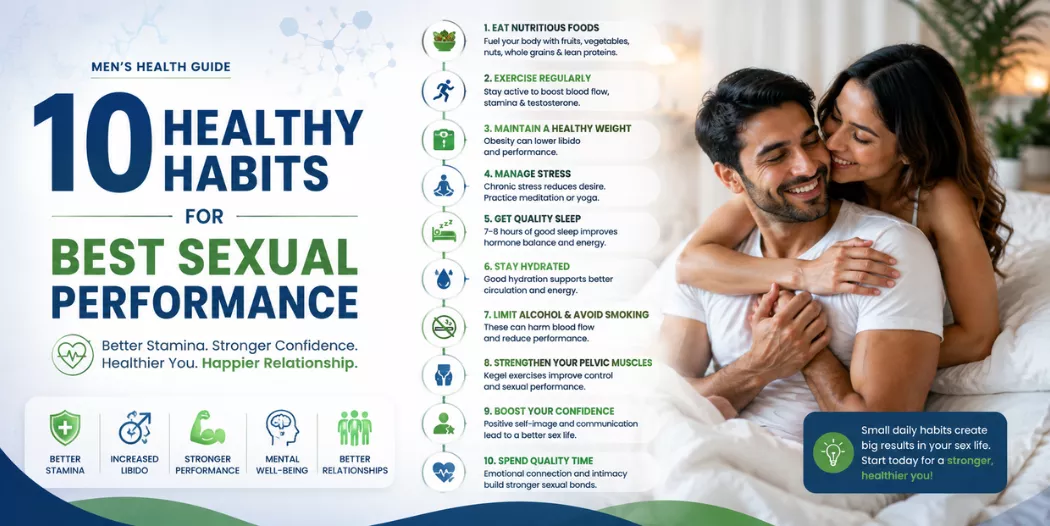
Sexual performance depends on more than sexual activity. Healthy Habits for Best Sexual Performance include maintaining good heart health, physical fitness, quality sleep, a balanced diet, stress management, emotional well-being, and a healthy daily lifestyle. Making healthy choices may support energy, blood flow, confidence, and overall sexual function, while unhealthy lifestyle habits may contribute to erectile dysfunction.
Simple habits can make a difference. These include exercising regularly, eating a balanced diet, maintaining a healthy weight, getting enough sleep, managing stress, avoiding smoking, limiting alcohol, doing pelvic floor exercises, communicating openly with your partner, and having regular health checkups.
If you want to improve sexual performance naturally, focus on healthy habits that you can follow consistently instead of looking for quick solutions. These habits may support overall health and help reduce some factors linked to sexual problems. Consistent lifestyle changes can be a useful part of maintaining better sexual health.
What Can Affect Sexual Performance?
Sexual performance can change from person to person and may be affected by several factors. Physical health is important because conditions such as diabetes, high blood pressure, obesity, heart disease, nerve problems, and hormonal changes may affect sexual function.
Mental health also plays an important role in Sexual Dysfunction. Stress, anxiety, depression, relationship problems, and performance pressure may reduce sexual desire or make it difficult to maintain an erection.
Lifestyle habits such as smoking, excessive alcohol use, poor diet, lack of exercise, and inadequate sleep can also affect sexual wellness. Age, certain medicines, and overall fitness may contribute as well. Understanding these factors can help support better sexual health and identify possible causes of sexual difficulties.
10 Healthy Habits for Better Sexual Performance
1. Exercise Regularly
Regular exercise can support better sexual health by improving blood circulation, fitness, strength, and energy levels. Activities such as walking, jogging, cycling, swimming, and strength training can be included in your routine.
You do not need intense workouts; start with simple exercises and gradually increase your activity. Staying active may also help reduce stress and improve mood, which can support sexual interest and performance.
2. Eat a Balanced, Nutrient-Rich Diet
A healthy diet can support overall sexual health by helping maintain a healthy heart, blood vessel, and nervous system function. Including foods for better sexual health such as fruits, vegetables, whole grains, beans, lentils, nuts, seeds, fish, eggs, lean proteins, and healthy fats can provide essential nutrients for overall well-being.
Limit highly processed foods, added sugars, and unhealthy fats. A balanced diet can also support a healthy weight, blood sugar, cholesterol, and energy levels. However, its benefits develop over time rather than acting as an instant sexual performance booster.
3. Maintain a Healthy Weight
Maintaining a healthy weight can support sexual health and overall well-being. Excess weight may increase the risk of conditions such as diabetes, high blood pressure, and heart problems, which can affect sexual function.
A healthy weight may also improve energy, fitness, and confidence. Focus on regular exercise, balanced meals, good sleep, and gradual lifestyle changes. Avoid crash diets or rapid weight loss. If needed, consult a healthcare professional for personalized guidance.
4. Get Enough Quality Sleep
Sleep is often overlooked when discussing sexual health. Poor sleep can make you feel tired, stressed, and less energetic, which may reduce your interest in sexual activity. Most adults generally need 7 or more hours of sleep each night, although individual sleep needs can vary. Maintain a regular sleep schedule and a comfortable sleep environment.
Managing stress and limiting alcohol can improve sleep quality. Persistent sleep problems, including sleep apnea, should be discussed with a healthcare professional.
5. Manage Stress and Performance Anxiety
Stress is a common but often underestimated factor in sexual performance. Work pressure, financial concerns, relationship problems, and daily responsibilities can make it difficult to relax and enjoy intimacy.
Performance anxiety may create a cycle where worrying about sexual performance increases stress and affects arousal, erection, or satisfaction. Deep breathing, meditation, regular exercise, relaxation techniques, and open communication with your partner may help.
6. Quit Smoking and Avoid Tobacco
Smoking is harmful to cardiovascular health and can damage blood vessels. Because normal erections depend partly on adequate blood flow, smoking may affect erectile function and sexual performance.
Quitting smoking can be difficult, especially for long-term smokers, but it can improve overall health over time. If you smoke, consider asking a healthcare professional for proven support to quit. Avoiding tobacco supports better heart, lung, blood vessel, and sexual health.
7. Limit Alcohol and Avoid Excessive Drinking
Alcohol can affect sexual performance, especially when consumed in large amounts. Excessive drinking may reduce sexual desire, affect erections, delay or interfere with ejaculation, and make it harder to communicate clearly with your partner.
Regular heavy drinking can also harm overall health and may contribute to sexual problems over time. If you drink alcohol, keep it moderate and avoid using it to reduce stress or improve sexual confidence.
8. Practice Pelvic Floor Exercises
The pelvic floor muscles help support several functions involving the bladder, bowel, and sexual activity. Pelvic floor exercises, commonly known as Kegel exercises, can help strengthen these muscles when performed correctly.
To identify them, imagine stopping urine flow, but do not practice while urinating. Once identified, practice gently tightening and relaxing these muscles without holding your breath or tightening your abdomen, thighs, or buttocks. If unsure, ask a healthcare professional or pelvic floor physiotherapist for guidance.
9. Communicate Openly With Your Partner
Sexual health is not only a physical issue. Open communication, trust, emotional intimacy, and mutual comfort can improve sexual experiences. Talk honestly with your partner about preferences, boundaries, concerns, and expectations.
This can reduce misunderstandings and performance pressure while building a stronger connection. Remember, sex is not a test of performance. If relationship problems affect your sexual health, couples counseling or sex therapy may help.
10. Monitor Your Overall Health
Regular healthcare is an important part of maintaining sexual wellness. Regular checkups can help monitor blood pressure, blood sugar, cholesterol, cardiovascular health, and other factors that may affect sexual function.
Some medicines may also affect sexual desire or performance. If you notice changes after starting or changing a medicine, talk to your doctor instead of stopping it yourself. Persistent sexual problems may sometimes be linked to an underlying health condition.
Best Exercises to Support Sexual Health
These simple sexual health tips for men focus on supporting overall physical fitness, mental well-being, and healthy lifestyle habits.
Walking
Walking is accessible to most people and can be an excellent starting point for improving physical activity. Brisk walking can increase cardiovascular activity without requiring specialized equipment.
Running and Cycling
Running and cycling can provide more vigorous cardiovascular exercise for people who are already physically active. Begin gradually if you are new to these activities and increase intensity according to your fitness level.
Resistance Training
Resistance exercises can help build and maintain muscle strength. Bodyweight exercises, resistance bands, free weights, or gym machines can all be used depending on individual preference and ability.
Pelvic Floor Exercises
Pelvic floor exercises specifically target muscles involved in pelvic function. They can be added to a broader fitness routine rather than replacing cardiovascular or strength training.
Flexibility and Mobility Exercises
Stretching and mobility work can support movement and physical comfort. Yoga and other flexibility-focused activities may also provide an opportunity to relax and manage stress.
If you have a chronic health condition, injury, or have been physically inactive for a long time, consider getting professional advice before starting vigorous exercise.
Habits That May Hurt Sexual Performance
Some everyday habits can work against sexual and overall health.
Smoking
Tobacco use can damage blood vessels and increase cardiovascular risks. Since blood vessel health is important for normal erectile function, quitting smoking is a valuable health goal.
Excessive Alcohol
Heavy alcohol use can interfere with sexual response and may contribute to longer-term health problems.
Poor Sleep
Regularly getting insufficient or poor-quality sleep can contribute to fatigue, mood changes, and reduced well-being.
Physical Inactivity
A sedentary lifestyle can contribute to weight gain and poor cardiovascular fitness. Finding opportunities to move throughout the day can help.
Chronic Stress
Long-term stress can affect mood, relationships, sleep, and sexual interest. Developing healthy stress-management strategies can support overall well-being.
Poor Diet
A diet consistently high in highly processed foods and low in nutritious whole foods may contribute to poor metabolic and cardiovascular health.
Recreational Drug Use
Some recreational drugs can affect the nervous system, cardiovascular function, judgment, and sexual response. Avoiding recreational drug use is an important part of protecting overall health.
Can Healthy Habits Improve Erectile Function?
Healthy lifestyle habits may support factors that contribute to normal erectile function, particularly cardiovascular health, physical fitness, healthy weight, and psychological well-being.
An erection involves coordinated activity between the brain, nerves, hormones, blood vessels, and penile tissues. Problems with any of these areas may contribute to erectile difficulties. Regular exercise, a balanced diet, quitting smoking, limiting alcohol, maintaining a healthy weight, and managing stress can support erectile health.
Lifestyle changes may not completely Improve Erectile Dysfunction in every case. Diabetes, heart disease, hormonal problems, nerve disorders, psychological concerns, certain medicines, and other health conditions may also affect erectile function.
Conclusion
Better sexual performance does not come from one specific food, drink, supplement, or quick fix. Many people may wonder, Is cranberry juice good for sexually but sexual health depends on your overall physical and mental well-being. Your daily habits can play an important role in supporting healthy sexual function.
Regular exercise can support cardiovascular fitness, while a balanced diet provides the nutrients needed for general health. Maintaining a healthy weight, getting enough quality sleep, managing stress, avoiding tobacco, and limiting excessive alcohol can further support physical and emotional well-being. Pelvic floor exercises may also be useful for some people, while honest communication can help reduce relationship-related stress and performance pressure.
The most effective approach is to make realistic changes that you can maintain over time. You do not need to change everything at once. Starting with regular physical activity, better sleep, healthier meals, or reducing tobacco and excessive alcohol can be meaningful steps toward better overall health.