
Intestinal worm infections are a common health problem that can affect people of all ages. These infections happen when parasitic worms enter the body and live in the intestines. They can cause stomach pain, diarrhea, weakness, and other health problems. Some people may notice symptoms early, while others may not realize they have an infection.
Understanding Roundworms vs Hookworms vs Whipworms is important because each type of worm affects the body differently. Roundworms can cause digestive problems and sometimes block the intestines. Hookworms feed on blood and may lead to anemia, while whipworms can cause diarrhea and inflammation in the large intestine.
Although these worms share some symptoms, they spread in different ways and may require different treatments. Knowing their differences can help you understand the risks and recognize possible signs of infection. This guide explains the differences between roundworms, hookworms, and whipworms, including their symptoms, causes, diagnosis, treatment options, and prevention methods. It also discusses what you should know about Fenbendazole for Humans.
What Are Intestinal Worms?
Intestinal worms are small parasites that live inside the human digestive system and can affect overall health. Common types include roundworms, hookworms, and whipworms. These worms usually spread through contaminated food, water, or soil. Some worms can also enter the body through the skin when people walk barefoot on infected soil.
Some people with intestinal worm infections have no noticeable symptoms. Others may experience stomach pain, diarrhea, nausea, loss of appetite, weight loss, or weakness. Heavy infections can cause more serious health problems, including anemia, intestinal blockages, and nutritional deficiencies.
Children may also experience poor growth when infections are severe or long-lasting. Early diagnosis, appropriate treatment, and good hygiene can help manage these infections and reduce the risk of reinfection.
What Are Roundworms?
Roundworms are long, round-shaped worms that can live inside the human intestine. One common type is called Ascaris lumbricoides, which causes an infection known as ascariasis. These worms usually live in the small intestine and are light pink or cream in color. They can grow quite long and may sometimes be seen in a person’s stool.
People can get roundworm infections by eating contaminated food, drinking unsafe water, or accidentally swallowing worm eggs from dirty hands or soil. Once the eggs enter the body, they hatch in the intestine. The young worms travel to the lungs and then return to the small intestine, where they grow into adults.
Common symptoms of roundworm infection include:
- Stomach pain and bloating
- Nausea or vomiting
- Loss of appetite
- Coughing
- Weight loss or poor growth in children
- Worms appearing in stool
Some people may not notice any symptoms, especially if they have only a few worms. However, a severe infection can cause serious problems. Too many roundworms in the intestine may block the passage of food and waste, leading to severe stomach pain and vomiting. Sometimes, worms can also move into other parts of the digestive system and cause complications.
The main difference between roundworm and hookworm is how they enter the body. Roundworm infections usually happen when people swallow worm eggs, while hookworm infections commonly occur when larvae enter through the skin, especially when walking barefoot on contaminated soil.
What Are Hookworms?
Hookworms are small parasitic worms that live in the human small intestine and feed on blood. The two main types of hookworms that infect humans are Ancylostoma duodenale and Necator americanus. People usually get hookworm infections by walking barefoot on contaminated soil.
The tiny hookworm larvae enter through the skin, travel through the body, and eventually reach the small intestine. Hookworm infections may cause itching or a skin rash at first. As the worms grow and feed on blood, they can cause digestive problems and weakness.
Common symptoms of hookworm infection include:
- Itching or a skin rash
- Stomach pain
- Diarrhea
- Loss of appetite
- Feeling tired or weak
- Pale skin
- Dizziness
One of the biggest health risks of hookworm infection is iron-deficiency anemia, which happens when the body loses too much blood over time. When comparing hookworm vs roundworm, hookworms mainly cause blood loss and anemia, while severe roundworm infections can block the intestine.
Similarly, in hookworm vs tapeworm, hookworms are small worms that feed on blood, while tapeworms are long, flat worms that absorb nutrients from the intestine. Hookworm infections can usually be treated with appropriate antiparasitic medicines prescribed by a healthcare professional. Wearing shoes outdoors and maintaining good hygiene can help prevent infection.
What Are Whipworms?
Whipworms are small intestinal parasites that live in the large intestine of humans. They are called Trichuris trichiura, and the infection they cause is known as trichuriasis. These worms are called whipworms because their bodies look like a whip. They have a thin front part and a thicker back part.
People can get whipworm infections by accidentally swallowing worm eggs through contaminated food, water, soil, or dirty hands. Once the eggs enter the body, they hatch and grow into adult worms in the large intestine. Mild infections may not cause any noticeable symptoms. However, severe infections can affect digestion and cause health problems.
Common symptoms of whipworm infection include:
- Frequent diarrhea
- Stomach pain or cramps
- Blood or mucus in stool
- Loss of appetite
- Unexplained weight loss
- Weakness or anemia in severe cases
- Frequent urge to pass stool
Heavy whipworm infections can be especially harmful to children. They may affect growth and cause nutritional problems. In rare, severe cases, the infection can also lead to rectal prolapse, where part of the rectum comes out through the anus. Unlike roundworms and hookworms, which mainly live in the small intestine, whipworms live in the large intestine. They can cause irritation, inflammation, and digestive problems if left untreated.
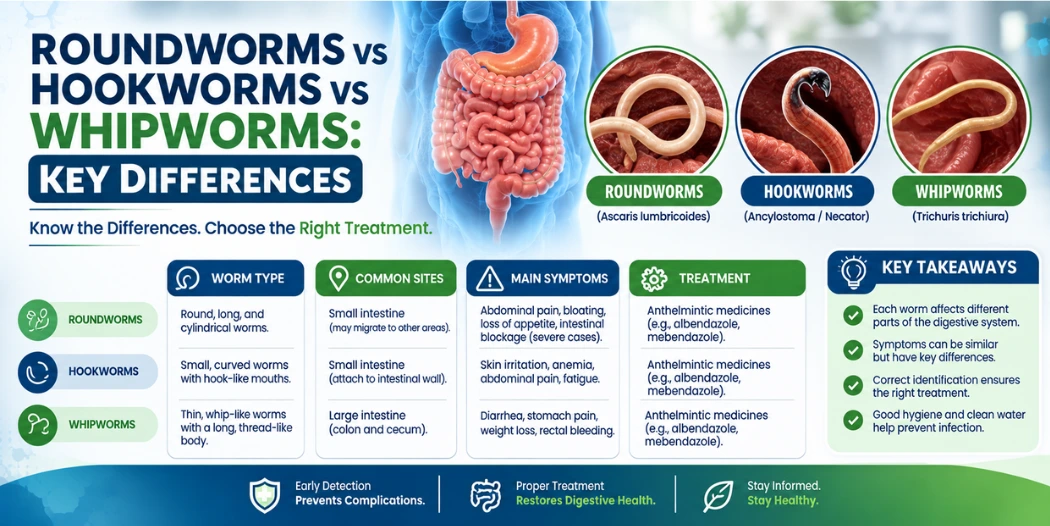
Roundworms vs Hookworms vs Whipworms: Key Differences
Roundworms, hookworms, and whipworms are intestinal parasites, but they affect the human body in different ways. They differ in size, how they enter the body, where they live, and the health problems they cause.
The table below explains the key differences between these three types of intestinal worms in simple terms.
| Feature | Roundworms | Hookworms | Whipworms |
| Scientific Name | Ascaris lumbricoides | Ancylostoma duodenale and Necator americanus | Trichuris trichiura |
| Appearance | Long, round worms | Small, curved worms | Thin at one end and thick at the other |
| Where They Live | Small intestine | Small intestine | Large intestine |
| How They Spread | Through contaminated food, water, or soil | Mainly through bare skin touching infected soil | Through contaminated food, water, or soil |
| Common Symptoms | Stomach pain, nausea, coughing | Tiredness, stomach pain, diarrhea | Diarrhea, stomach cramps, weight loss |
| Health Risks | Can block the intestine | Can cause blood loss and anemia | Can cause severe diarrhea and bowel problems |
| Diagnosis | Stool test | Stool test | Stool test |
| Treatment | Albendazole or mebendazole | Albendazole or mebendazole | Mebendazole or albendazole |
The main difference between roundworm vs hookworm is how they enter the body and affect health. Roundworms spread when a person swallows worm eggs through contaminated food, water, or soil. Hookworms usually enter the body through the skin, especially when walking barefoot on contaminated soil.
Roundworms can cause intestinal blockages in severe cases, while hookworms can lead to anemia because they feed on blood. Whipworms are different because they mainly live in the large intestine and can cause diarrhea and stomach pain. All three worm infections can be prevented by washing hands regularly, eating clean food, maintaining proper hygiene, and wearing shoes outdoors.
How Are Roundworm, Hookworm, and Whipworm Infections Diagnosed?
Doctors diagnose intestinal worm infections by reviewing symptoms, possible exposure to contaminated soil or water, travel history, and laboratory test results. Because these parasites can cause similar digestive symptoms, identifying the exact infection is important before choosing treatment.
1. Stool Test
A stool test is one of the most common methods used to diagnose roundworm and hookworm and whipworm infections. During this test a doctor asks the patient to provide a small stool sample which is examined under a microscope. The test helps identify worm eggs that may be present in the stool.
Since each type of worm produces eggs with a different appearance doctors can determine which parasite is causing the infection. In some cases doctors may request more than one stool sample because worm eggs are not always found in every sample.
2. Blood Tests
Blood tests help doctors understand how intestinal worm infections affect the body. For example hookworms feed on blood in the intestine which can cause blood loss and lead to anemia. A blood test can check hemoglobin levels and identify signs of anemia.
Doctors may also check white blood cells especially eosinophils which can increase during certain parasitic infections. Blood tests are useful for checking the severity of an infection and its effects on overall health. However they cannot usually identify the exact type of intestinal worm causing the infection.
3. Other Medical Tests
In some cases doctors may suggest additional medical tests to check for serious problems caused by intestinal worms. Imaging tests such as an ultrasound or X-ray can help doctors look for intestinal blockages or other complications. These tests may be needed if a person experiences severe stomach pain or frequent vomiting or unusual swelling in the abdomen.
If you have ongoing diarrhea or unexplained weight loss or weakness or stomach discomfort it is important to visit a doctor. Early diagnosis can help identify the infection and prevent further health complications.
How to Treat Roundworms, Hookworms, and Whipworms
Treatment for roundworms, hookworms, and whipworms depends on the type of parasite, severity of infection, and overall health of the patient. Doctors commonly recommend antiparasitic medications to eliminate intestinal worms and prevent complications.
- Albendazole: A commonly prescribed antiparasitic medication used to treat roundworm, hookworm, and whipworm infections. The treatment duration depends on the type of infection.
- Mebendazole 100 mg: This medication is used to treat several intestinal worm infections, including roundworms, hookworms, and whipworms. The recommended dosage and treatment schedule vary depending on the parasite.
- Roundworm Treatment: Doctors generally prescribe albendazole or mebendazole to treat ascariasis. These medications help eliminate adult worms from the intestine.
- Hookworm Treatment: Antiparasitic medications such as albendazole or mebendazole are commonly used. Patients with iron-deficiency anemia may also require iron supplements and additional medical care.
- Whipworm Treatment: Whipworm infections may require a longer treatment course than some other intestinal worm infections. Follow-up stool testing may be recommended to check treatment effectiveness.
- Fenbendazole Wormentel 150 mg: This product contains fenbendazole, a drug primarily used in veterinary medicine. It is not FDA-approved for human use and should not replace established human treatments.
- Fenbendazole 1000 mg: This formulation may be marketed online for parasite treatment, but its safety, effectiveness, and appropriate dosage for humans have not been established through FDA approval.
Which Is More Dangerous: Roundworms, Hookworms, or Whipworms?
Roundworms and hookworms and whipworms can all cause health problems. Each worm affects the body differently. How serious an infection becomes depends on the number of worms in the body and the person’s age and overall health.
Roundworms can be dangerous when too many worms grow inside the small intestine. They may cause severe stomach pain and vomiting. In some cases they can also block the intestine or the tubes that carry bile from the liver.
Hookworms feed on blood inside the small intestine. Over time this blood loss can cause anemia. A person may feel tired or weak or dizzy. Children and pregnant women are at greater risk of developing serious health problems.
Whipworms mainly affect the large intestine. Heavy infections can cause frequent diarrhea and stomach pain. Some people may also notice blood in their stool. In severe cases children may experience poor growth or rectal prolapse.
Overall hookworms can cause anemia while roundworms may cause intestinal blockage and whipworms can lead to serious digestive problems. Any of these infections can become dangerous if left untreated.
How to Prevent Roundworm, Hookworm, and Whipworm Infections
Preventing roundworm, hookworm, and whipworm infections is important for staying healthy. These worms can spread through contaminated soil, food, and water. Following simple hygiene habits can help lower the risk of infection.
Here are some easy ways to prevent intestinal worm infections:
- Wash Your Hands Regularly: Always wash your hands with soap and clean water before eating, after using the toilet, and after touching soil. This helps remove harmful germs and worm eggs.
- Wash Fruits and Vegetables: Clean fruits and vegetables properly before eating them. This helps remove dirt and possible worm eggs.
- Wear Shoes Outdoors: Avoid walking barefoot on soil that may be contaminated. Hookworm larvae can enter your body through the skin of your feet.
- Drink Clean Water: Always drink safe, clean water. Avoid drinking water from sources that may be contaminated.
- Maintain Proper Hygiene: Use clean toilets and dispose of human waste safely. Keeping your surroundings clean helps prevent worm infections.
- Keep Children’s Play Areas Clean: Make sure children play in clean areas. Teach them to wash their hands after playing outside and before eating.
Even after treatment, intestinal worm infections can happen again. Following these simple preventive steps can help protect you and your family from roundworms, hookworms, and whipworms.
Conclusion
Roundworms, hookworms and whipworms are intestinal parasites that can affect your health in different ways. Roundworms mainly cause digestive problems and may lead to intestinal blockage in severe cases. Hookworms feed on blood and can cause anemia while whipworms affect the large intestine and may lead to diarrhea and stomach pain.
These infections often spread through contaminated soil or contaminated food and water. Some people may not notice any symptoms at first which makes early diagnosis important. Doctors can identify the type of worm through stool tests and recommend the right treatment.
Albendazole and mebendazole are established human medicines used for certain intestinal worm infections. When comparing Mebendazole vs Fenbendazole, remember that the medicines are not interchangeable. Fenbendazole is primarily a veterinary drug and is not approved by the US FDA for human treatment.