Antibiotics are medicines used to treat bacterial infections such as respiratory infections and urinary tract infections. They work by killing bacteria or stopping their growth. However, taking antibiotics at the right time is important for effective treatment. Many people wonder whether they should take antibiotics before or after eating.
Some antibiotics work better on an empty stomach while others should be taken with food to reduce stomach discomfort and improve absorption. Certain antibiotics can be taken with or without food. Taking antibiotics incorrectly may cause side effects such as nausea and stomach pain or vomiting.
Food can also affect how well some antibiotics are absorbed by the body. Therefore, it is important to follow the instructions provided by your doctor or pharmacist. This guide explains whether you can take antibiotics on an empty stomach and which antibiotics require food. It also covers possible side effects and how to take them safely.
Can You Take Antibiotics on an Empty Stomach?
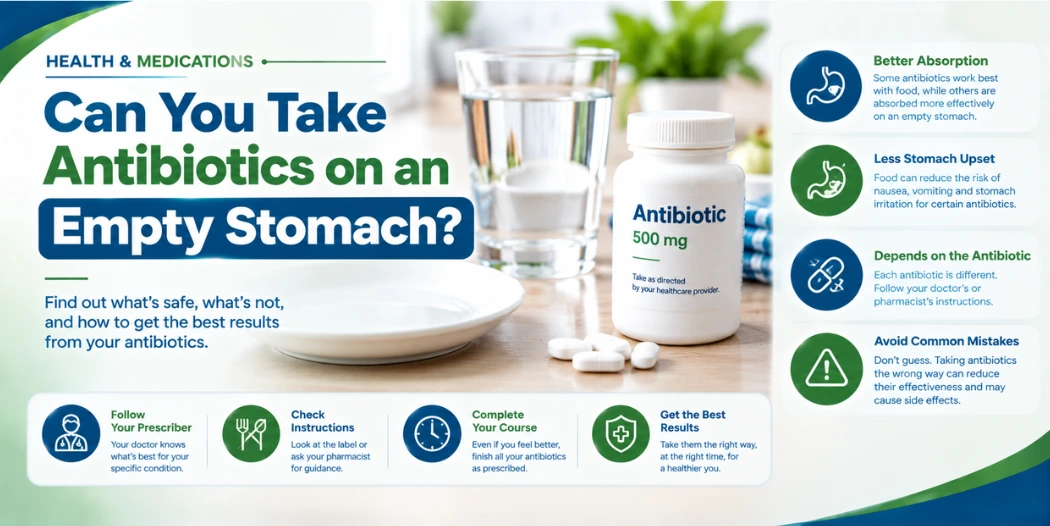
Yes, some antibiotics can be taken on an empty stomach, while others should be taken with food. It depends on the type of antibiotic and how it works in the body. Some antibiotics work better when taken without food because the body can absorb them more easily. Others should be taken with meals to help reduce side effects such as nausea, stomach pain, and vomiting.
Flucloxacillin is usually taken on an empty stomach because food can reduce its absorption. On the other hand, nitrofurantoin should be taken with food to help the body absorb the medicine and reduce stomach discomfort. So, can antibiotics be taken without food? Yes, but not all antibiotics have the same instructions. Some can be taken with or without meals, while others need specific timing.
What Happens If You Take Antibiotics on an Empty Stomach?
Taking antibiotics without food may cause stomach discomfort or affect how the medicine works. However, the effects depend on the type of antibiotic. Some antibiotics work better on an empty stomach, while others should be taken with food.
1. Nausea and Vomiting
Some antibiotics may cause nausea or vomiting when taken without food. Eating before taking certain antibiotics can help reduce these symptoms. However, always follow the food instructions provided with your medicine.
2. Stomach Pain and Discomfort
Taking certain antibiotics on an empty stomach may cause stomach pain, irritation, or indigestion. People with sensitive stomachs may experience more discomfort. If the pain becomes severe or continues, consult a doctor.
3. Changes in Medication Absorption
Food can affect how the body absorbs antibiotics. Some antibiotics, such as ampicillin, are absorbed better on an empty stomach. Others, such as nitrofurantoin, are absorbed better with food. Following the correct instructions helps the medicine work properly.
4. Possible Effects on Treatment
Taking certain antibiotics at the wrong time with food may reduce the amount of medicine absorbed by the body. This could affect how well the treatment works. However, one incorrectly timed dose does not always affect treatment. Consult a pharmacist if you are unsure what to do.
Which Antibiotics Should Be Taken on an Empty Stomach?
Some antibiotics work better when taken on an empty stomach because food can reduce how much medicine the body absorbs. Taking these antibiotics at the right time helps them work properly.
Ampicillin
Ampicillin is an antibiotic used to treat different bacterial infections. It is usually taken on an empty stomach because food can reduce its absorption. Oral ampicillin capsules are generally taken 30 minutes before a meal or two hours after eating.
Flucloxacillin
Flucloxacillin is commonly used to treat bacterial skin and wound infections. It works best when taken on an empty stomach. Patients are usually advised to take it at least one hour before food or two hours after eating. Swallow the medicine with a full glass of water.
Dicloxacillin
Dicloxacillin is used to treat certain bacterial infections, especially skin infections. Food can reduce how much medicine the body absorbs. It is generally recommended to take dicloxacillin one hour before eating or two hours after a meal.
Penicillin V
Penicillin V is commonly prescribed for certain bacterial infections, including throat infections. It is generally best taken on an empty stomach to improve absorption. However, patients should follow their prescription instructions because recommendations may vary.
Which Antibiotics Should Be Taken With Food?
Some antibiotics should be taken with food because it helps the body absorb the medicine and reduces stomach problems such as nausea and discomfort. Taking these antibiotics with meals can help them work properly and make treatment more comfortable.
Amoxicillin-Clavulanate (Augmentin)
Amoxicillin-clavulanate is an antibiotic used to treat different bacterial infections. It contains two medicines that work together to fight bacteria. It is usually recommended at the beginning of a meal. Taking it with food can help reduce stomach upset and improve the absorption of the medicine.
Nitrofurantoin
Nitrofurantoin is an antibiotic commonly used to treat urinary tract infections (UTIs). It should be taken with food or milk because this helps the body absorb the medicine better. Eating before or while taking nitrofurantoin can also reduce nausea and stomach discomfort.
Cefuroxime Axetil
Cefuroxime axetil is an antibiotic used to treat different bacterial infections, including some respiratory, skin, and urinary tract infections. Taking cefuroxime axetil with food can help the body absorb the medicine better. However, food instructions may differ between tablets and liquid forms. Always follow the instructions provided with your medication.
Comparison of Antibiotics and Food Requirements
| Antibiotic | General food instructions |
| Ampicillin capsules | Empty stomach |
| Flucloxacillin | Empty stomach |
| Dicloxacillin | Empty stomach |
| Penicillin V | Preferably empty stomach |
| Amoxicillin-clavulanate | Beginning of a meal |
| Nitrofurantoin | With food |
| Cefuroxime axetil | Depends on formulation; food often recommended |
| Amoxicillin | With or without food |
| Cephalexin | With or without food |
Antibiotics That Can Be Taken With or Without Food
Not every antibiotic requires a strict eating schedule. Some medicines are absorbed adequately whether a person has eaten or not. This flexibility can make it easier to follow the prescribed treatment, particularly when doses are needed several times a day.
Amoxicillin
Amoxicillin is used to treat bacterial infections affecting the ears, throat, lungs, and other parts of the body. It can be taken with or without food because eating does not significantly affect how it works. If you experience nausea or stomach discomfort then taking it with a meal may help. However amoxicillin-clavulanate is different and is usually recommended at the beginning of a meal to reduce stomach upset.
Cephalexin
Cephalexin is an antibiotic used to treat bacterial infections, including skin, respiratory, and urinary tract infections. It belongs to a group of medicines called cephalosporins. Cephalexin can be taken with or without food because eating does not significantly affect how well it works. However, taking it with a meal or light snack may help reduce nausea or stomach discomfort
Azithromycin
Azithromycin is a macrolide antibiotic used to treat several types of bacterial infections. Most regular azithromycin tablets can be taken with or without food. Taking them with food may help reduce stomach discomfort. However, some azithromycin capsules and liquid forms need to be taken on an empty stomach. Always check the medicine label or follow your doctor’s instructions to make sure you take the antibiotic correctly and safely.
Doxycycline
Doxycycline is a tetracycline-class antibiotic used for certain bacterial infections and other conditions. Many types of doxycycline can be taken with food to reduce stomach discomfort, but some require an empty stomach. Take it with plenty of water and avoid lying down immediately afterward. Understanding Amoxicillin vs Azithromycin can also help patients learn how different antibiotics work. Always follow your doctor’s instructions when taking antibiotics.
Antibiotics Before or After Food: What’s the Difference?
The timing of antibiotics can affect how well they work and how your stomach reacts to them. Some antibiotics work better when taken before meals, while others should be taken with or after food. Taking antibiotics before eating can help the body absorb certain medicines more effectively. However, taking some antibiotics with food may help reduce nausea and stomach discomfort. For certain antibiotics, food also improves absorption.
Always follow your doctor’s instructions or the medicine label to ensure safe and effective treatment.
What Does an Empty Stomach Mean?
Taking antibiotics on an empty stomach usually means taking them one hour before a meal or at least two hours after eating. However, the timing may vary depending on the antibiotic. For example, ampicillin capsules are generally taken 30 minutes before meals or two hours after eating, while flucloxacillin is usually taken at least one hour before or two hours after food.
What Is the Best Time to Take Antibiotics?
The best time to take antibiotics depends on the prescribed dosing frequency, food requirements, and the need to maintain appropriate intervals between doses.
For example, a medicine prescribed twice daily may be scheduled around breakfast and dinner if its instructions allow food. An antibiotic requiring an empty stomach may need a different schedule.
The most important consideration is taking each dose according to the prescription, with appropriate spacing throughout the day. Patients should not skip doses or change their prescribed timing simply to match their eating habits. If the schedule is difficult to follow, a pharmacist can help identify a suitable routine.
Side Effects of Taking Antibiotics Without Food
Antibiotics can cause digestive side effects even when they are taken correctly. However, taking certain medications without food may make some symptoms more noticeable.
The possible side effects of antibiotics on empty stomach include the following.
1. Nausea
Nausea is a common side effect of several antibiotics. Some people experience a feeling of sickness shortly after swallowing their medication. Taking food-compatible antibiotics with a meal may help reduce this discomfort.
2. Vomiting
Some antibiotics may cause vomiting, especially in people who are sensitive to digestive side effects. Vomiting can also affect whether the medicine remains in the body long enough to be absorbed. Patients who vomit after a dose should contact a pharmacist before taking another tablet.
3. Abdominal Pain
Mild stomach pain or cramping can occur during antibiotic treatment. This discomfort may be associated with digestive irritation or changes in intestinal activity. Persistent or severe abdominal pain should not be ignored.
4. Diarrhea
Antibiotics can affect beneficial bacteria in the intestines as well as the bacteria responsible for an infection. This disruption may cause diarrhea. Diarrhea is not necessarily caused by taking medication without food. It can occur regardless of meal timing. Severe, persistent, or bloody diarrhea requires medical assessment because antibiotics can sometimes cause more serious intestinal complications.
5. Indigestion and Bloating
Some people experience indigestion, bloating, or a feeling of fullness while taking antibiotics. These symptoms are often temporary but can make treatment uncomfortable. If digestive symptoms interfere with eating, drinking, or taking prescribed doses, patients should seek medical advice.
How to Prevent Stomach Upset While Taking Antibiotics
Antibiotics can sometimes cause nausea, stomach pain, or other digestive problems. Following a few simple steps can help reduce stomach discomfort while taking these medicines.
Follow the Food Instructions
Some antibiotics should be taken with food, while others work better on an empty stomach. Always follow the instructions on your prescription label. Taking certain antibiotics with food can help reduce nausea and stomach irritation.
Drink Enough Water
Drink plenty of water throughout the day to stay hydrated. Take your antibiotics with water as directed. Some medicines, such as doxycycline, should be taken with a full glass of water while sitting or standing upright.
Eat Light Meals
If your antibiotic can be taken with food, choose simple foods such as rice, toast, bananas, or crackers. These foods may be easier on your stomach and help reduce nausea.
Avoid Medication Interactions
Some antibiotics can interact with antacids, calcium, iron, and other supplements. These products may affect how well the medicine works. Ask your pharmacist before taking them together.
Take Antibiotics on Time
Take your antibiotics at the prescribed times each day. Set a reminder if needed to avoid missing doses. Following the correct schedule helps the medicine work as intended. If stomach discomfort continues or becomes severe, contact your doctor or pharmacist. Do not change your dose or stop taking antibiotics without medical advice.
Foods and Drinks to Avoid While Taking Antibiotics
Food restrictions are not the same for every antibiotic. However, food restrictions depend on the type of antibiotic you are taking. Here are some foods, drinks, and supplements you may need to avoid or limit during treatment.
Dairy Products
Milk, cheese, and yogurt contain calcium, which can reduce the absorption of certain antibiotics, such as ciprofloxacin and some tetracyclines. However, not all antibiotics interact with dairy products. Always check your medication instructions before avoiding them.
Calcium, Iron, and Magnesium Supplements
Calcium, iron, and magnesium supplements can make certain antibiotics less effective by reducing their absorption. You may need to take these supplements several hours before or after your antibiotic. Ask your pharmacist about the correct timing.
Alcohol
Drinking alcohol while taking antibiotics may increase side effects such as nausea, dizziness, and stomach discomfort. Alcohol should be avoided completely with certain antibiotics, including metronidazole and tinidazole, during treatment and for the recommended period afterward.
Antacids
Antacids are medicines used to relieve acidity and heartburn. Some contain calcium, magnesium, or aluminum, which can reduce the absorption of certain antibiotics. Check with your pharmacist before taking antacids alongside your medication.
Coffee and Caffeinated Drinks
Coffee, tea, and energy drinks contain caffeine. Certain antibiotics, such as ciprofloxacin, can slow down how quickly the body removes caffeine. This may cause restlessness, difficulty sleeping, or a faster heartbeat. Limiting caffeine may help prevent these symptoms.
Conclusion
Antibiotics help treat bacterial infections, but taking them correctly is important for getting the best results. Some antibiotics should be taken on an empty stomach, while others work better when taken with food. The right timing depends on the type of antibiotic and its instructions.
Ampicillin and flucloxacillin are usually taken on an empty stomach, while nitrofurantoin and amoxicillin-clavulanate are recommended with food. Antibiotics such as amoxicillin and cephalexin can generally be taken with or without meals. Taking certain antibiotics without food may cause nausea, stomach pain, or vomiting. Following the correct instructions can help reduce these problems and support effective treatment.
Always read the medication label and take antibiotics at the prescribed times. If you are unsure whether to take your medicine before or after eating, ask your doctor or pharmacist. They can guide you based on your medication and health needs.