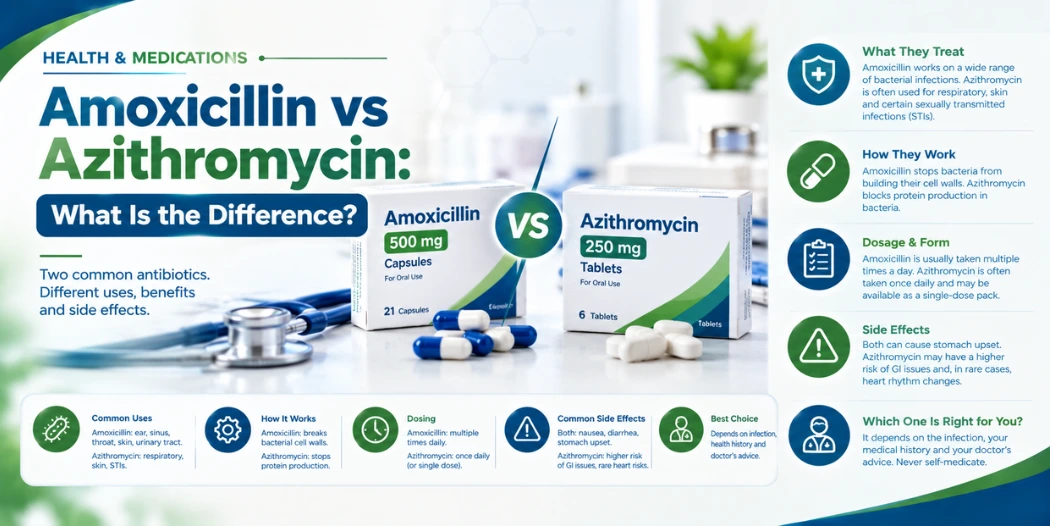
Amoxicillin and azithromycin are antibiotics used to treat different types of bacterial infections. Both medicines help fight bacteria, but they work in different ways. The right antibiotic depends on the type of infection, the bacteria causing it, and the person’s medical history and allergies.
Understanding Amoxicillin vs Azithromycin can help you learn how these two antibiotics differ and why a doctor may prescribe one instead of the other. Both medicines have different uses and possible side effects, so they are not suitable for every infection.
In this article, we will explain the main differences between amoxicillin and azithromycin, including their uses, effectiveness, side effects, and safety precautions.
What Is Amoxicillin?
Amoxicillin is a prescription antibiotic that belongs to the penicillin family. It is used to treat various bacterial infections by interfering with the formation of bacterial cell walls. Without properly functioning cell walls, susceptible bacteria cannot survive.
Doctors commonly prescribe amoxicillin for certain ear infections, strep throat, bacterial sinus infections, dental infections, and respiratory tract infections. It may also be used with other medicines to treat Helicobacter pylori, a bacterium associated with stomach ulcers.
The choice to prescribe amoxicillin depends on the suspected or confirmed bacteria and the infection being treated. It is not suitable for every bacterial infection because some bacteria are resistant to it.
How Does Amoxicillin Work?
Amoxicillin works by stopping bacteria from building the protective walls they need to survive. Without these walls, bacteria cannot grow properly and eventually die. This helps the body fight bacterial infections. Amoxicillin is available as tablets, capsules, and liquid medicine.
The correct dose and treatment duration depend on the type of infection, the patient’s age, and kidney function. People who have had a serious allergic reaction to penicillin should inform their doctor before taking amoxicillin. Always use this medicine as prescribed by a healthcare professional.
What Is Azithromycin?
Azithromycin is an antibiotic that belongs to the macrolide family. It treats certain bacterial infections by interfering with the bacteria’s ability to produce proteins needed for growth and reproduction.
Healthcare professionals may prescribe azithromycin for selected respiratory tract infections, some cases of community-acquired pneumonia, certain ear infections, and specific sexually transmitted infections. Its use depends on the infection, local antibiotic resistance patterns, and current treatment recommendations.
Azithromycin may be considered for some patients who cannot take penicillin antibiotics. However, it is not automatically the best alternative for everyone because some bacteria have developed resistance to macrolide antibiotics.
How Does Azithromycin Work?
Azithromycin works by stopping bacteria from making the proteins they need to grow and multiply. This helps the body fight the bacterial infection. The medicine stays in body tissues for a long time, so some infections can be treated with a shorter course.
However, the treatment duration depends on the type of infection and the doctor’s prescription. Azithromycin is available as tablets, capsules, and oral liquid. Common side effects include nausea, diarrhea, and stomach pain. It may also affect heart rhythm in some people.
Amoxicillin vs Azithromycin: Key Differences
The main difference between amoxicillin and azithromycin is how they work and which bacteria they are effective against. Although their uses sometimes overlap, they have different strengths and limitations.
| Feature | Amoxicillin | Azithromycin |
| Drug class | Penicillin antibiotic | Macrolide antibiotic |
| How it works | Stops bacteria from building their protective cell walls | Stops bacteria from making proteins they need to grow |
| Common uses | Certain ear, throat, sinus, and dental infections | Certain respiratory infections, throat infections, and other bacterial infections |
| Penicillin allergy | May not be suitable for people with a penicillin allergy | May be an alternative in some cases |
| Common side effects | Nausea, diarrhea, and skin rash | Nausea, diarrhea, and stomach pain |
| Main safety concerns | Allergic reactions and severe diarrhea | Heart rhythm problems in some people and severe diarrhea |
| Treatment duration | Depends on the type of infection | Depends on the type of infection |
Amoxicillin vs Azithromycin: Which Infections Do They Treat?
Amoxicillin and azithromycin can sometimes be prescribed for similar conditions, but their suitability varies by infection.
Strep Throat
When comparing Amoxicillin vs Azithromycin for strep throat, amoxicillin is generally a preferred treatment for confirmed group A streptococcal throat infections in patients who can safely take penicillin antibiotics. Azithromycin may be considered for certain patients with a penicillin allergy. However, resistance to azithromycin can occur, so it may not work against every strain of the bacteria. Strep throat is different from a sore throat caused by a virus. Appropriate testing and clinical evaluation can help determine whether antibiotics are needed.
Throat Infections
People often search for azithromycin vs amoxicillin for throat infection because both medicines may be used for selected bacterial throat conditions. Amoxicillin is commonly recommended for confirmed strep throat. Azithromycin may be an option in specific situations, including some patients with penicillin allergies. However, most sore throats are caused by viruses and do not require antibiotics. The right treatment depends on the underlying cause rather than the severity of the symptoms alone.
Sinus Infections
Some bacterial sinus infections may be treated with amoxicillin-based therapy, depending on current clinical guidelines and local resistance patterns. In many cases, amoxicillin-clavulanate is preferred over amoxicillin alone. Azithromycin is generally not a preferred routine treatment for bacterial sinusitis because resistance among common respiratory bacteria can limit its effectiveness. Not every sinus infection requires antibiotics. Many improve without them, particularly when caused by viruses.
Ear Infections
Amoxicillin is commonly used as a first-line antibiotic for certain bacterial middle-ear infections when antibiotic treatment is necessary. Azithromycin may be considered in selected circumstances, such as certain patients with penicillin allergies, but its suitability depends on the likely bacteria and resistance patterns.
Pneumonia and Other Respiratory Infections
Both antibiotics may be used in selected respiratory infections, but they are not appropriate for every case of pneumonia or bronchitis. Azithromycin can be useful against certain atypical bacteria associated with respiratory infections. Amoxicillin may be used for pneumonia caused by susceptible bacteria, depending on the patient’s circumstances and current guidelines. Most cases of acute bronchitis are viral, meaning antibiotics are generally unnecessary. A healthcare professional should determine whether a respiratory illness is bacterial and which treatment is appropriate.
Amoxicillin vs Azithromycin: Which Is More Effective?
Amoxicillin and azithromycin can both treat bacterial infections, but neither is always better than the other. The right choice depends on the type of infection, the bacteria causing it, and the patient’s health.
Amoxicillin is usually a preferred option for strep throat when the patient can safely take penicillin antibiotics. Azithromycin may be used for certain bacterial infections or as an alternative for some people who are allergic to penicillin.
A few factors can affect which antibiotic works best:
- Type of bacteria: Each antibiotic works against different types of bacteria.
- Antibiotic resistance: Some bacteria may not respond to certain antibiotics.
- Medical history: Allergies and other health conditions can affect which medicine is suitable.
- Type of infection: Different infections may need different antibiotics.
- Following instructions: Taking the medicine as prescribed helps ensure proper treatment.
Some people start feeling better within 48–72 hours of starting the right antibiotic. If your symptoms get worse or do not improve, contact your healthcare professional. Do not change or stop your treatment without medical advice.
Amoxicillin vs Azithromycin: Side Effects and Safety
Both medicines can cause side effects. Most are mild, but some reactions require urgent medical attention.
Common Side Effects of Amoxicillin
Common side effects of amoxicillin include:
- Nausea or vomiting
- Diarrhea
- Mild skin rash
- Stomach discomfort
Some people may have an allergic reaction to amoxicillin. Get emergency medical help if you have trouble breathing or swelling of your face or throat.
Common Side Effects of Azithromycin
Common side effects of azithromycin include:
- Diarrhea
- Nausea or vomiting
- Stomach pain
- Headache
Azithromycin can sometimes affect the heart’s electrical rhythm and increase the risk of a potentially serious condition called QT prolongation. The risk may be higher in people with certain heart conditions, low potassium or magnesium levels, or medicines that affect heart rhythm.
Both antibiotics can also cause antibiotic-associated diarrhea, including a potentially serious intestinal infection called Clostridioides difficile infection. Seek medical advice for severe, persistent, or bloody diarrhea.
Can You Take Amoxicillin and Azithromycin Together?
Amoxicillin and azithromycin are sometimes prescribed together in specific clinical situations. For example, doctors may recommend both antibiotics for certain cases of pneumonia to treat different types of bacteria.
However, most infections do not require both medicines. Taking them together without medical advice may increase the risk of side effects and unnecessary antibiotic use.
Whether you can take both depends on your infection, medical history, and other medicines you use. Do not take amoxicillin and azithromycin together unless your doctor prescribes both. Always follow your doctor’s instructions and report any unusual side effects during treatment.
How Long Do Amoxicillin and Azithromycin Take to Work?
Amoxicillin and azithromycin may start improving symptoms within 24–72 hours when the antibiotic is effective against the infection. However, the time needed to feel better depends on the type and severity of the infection.
Amoxicillin treatment length varies depending on the infection. Azithromycin is often prescribed for a shorter period because it stays in the body for longer. This does not mean it is always stronger or more effective than amoxicillin.
Take both medicines exactly as prescribed. Do not stop treatment early or change the dose without medical advice.
Amoxicillin vs Azithromycin: Which One Should You Take?
The best antibiotic depends on your infection and health condition. Amoxicillin is often used for bacterial ear infections and strep throat. Azithromycin may be recommended for certain respiratory infections or when amoxicillin is not suitable.
Your doctor will consider your symptoms, allergies, other medicines, and medical history before choosing the right treatment. Neither antibiotic works against viruses like the common cold or flu. Do not take antibiotics without medical advice, as using the wrong medicine can cause side effects and contribute to antibiotic resistance.
Conclusion
Understanding Amoxicillin vs Azithromycin helps explain why these antibiotics are used for different bacterial infections. Amoxicillin belongs to the penicillin family, while azithromycin belongs to the macrolide family. Both treat certain bacterial infections, but they work in different ways.
Neither antibiotic is always better than the other. Amoxicillin is commonly used for strep throat, while azithromycin may be suitable for certain infections or people who cannot take penicillin. The right choice depends on the infection, allergies, and medical history. Always consult a healthcare professional and take antibiotics only as prescribed.