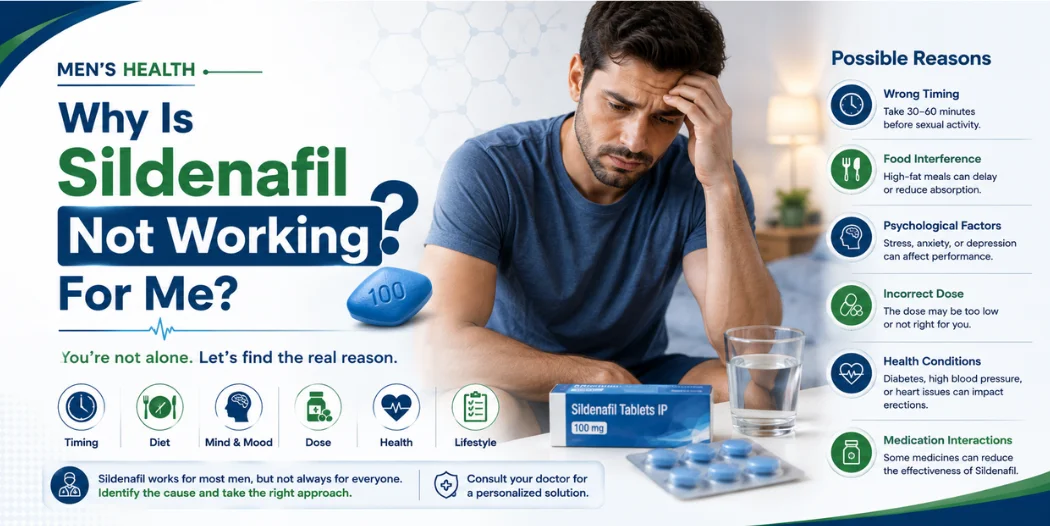
Sildenafil is a commonly used medicine for treating erectile dysfunction (ED) but it may not work as expected for everyone. If you are wondering Sildenafil Not Working For Me after taking the medicine you may still have trouble getting or maintaining an erection. This does not always mean that the medicine has failed. Several factors can affect its results including timing food alcohol sexual stimulation dosage stress other medicines and existing health conditions.
Sildenafil works by increasing blood flow to the penis during sexual stimulation. It does not create an automatic erection or increase sexual desire. This is why understanding how to use it correctly is important.
If sildenafil not working becomes a repeated problem avoid taking extra tablets on your own. Conditions such as diabetes, heart disease, hormonal problems, anxiety and certain medicines can also contribute to erectile dysfunction. Sildenafil is usually taken when needed with doses commonly ranging from 25 mg to 100 mg. It should not be taken more than once a day unless specifically advised by a healthcare professional.
How Does Sildenafil Work for Erectile Dysfunction?
Sildenafil belongs to a group of medicines called Phosphodiesterase type 5 inhibitors. During sexual stimulation natural signals help increase blood flow to the penis. Sildenafil blocks the PDE5 enzyme which helps keep blood flowing to the penis for longer. This can help you get and maintain an erection when you are sexually aroused.
Sildenafil does not increase sexual desire or create an erection on its own. Sexual stimulation is still needed for the medicine to work. This is why taking sildenafil without sexual arousal may not produce the expected result. Sildenafil is usually taken when needed before sexual activity. The timing can vary based on the prescribed instructions. It should not be taken more often than recommended.
Why Is Sildenafil Not Working For Me?
There can be several reasons why sildenafil may not work as expected.If you keep asking why sildenafil does not work after trying it several times then the following factors may help explain the problem.
You May Be Taking Sildenafil at the Wrong Time
Timing can affect how well sildenafil works. It is usually taken about one hour before sexual activity. It can generally be taken between 30 minutes and 4 hours before sex. Taking it too close to sexual activity may not give the medicine enough time to work.
Taking it too early may also make it harder to match the timing with sexual activity. Follow the instructions given with your prescription and use sildenafil only as directed.
You May Not Be Giving It Enough Time to Work
Sildenafil does not usually work immediately. It is generally taken about one hour before sexual activity. If you expect an erection within a few minutes you may think the medicine is not working. Giving it enough time can help you get the expected effect.
The response can also be different from one occasion to another. Follow the instructions given with your prescription and avoid taking another dose just because the first dose seems slow to work.
A Heavy or High-Fat Meal May Affect Its Absorption
Sildenafil can be taken with or without food. However a large or high-fat meal may slow down how quickly the medicine starts working. This means you may have to wait longer before noticing its effect. A heavy meal does not mean that sildenafil will stop working. It may simply delay the results.
If sildenafil seems slower than usual after a large meal the food may be one reason. Following the instructions provided with your prescription can help you use sildenafil correctly and get more predictable results.
Too Much Alcohol May Affect Your Erection
Drinking too much alcohol can make it harder to get or keep an erection. Even when sildenafil is working in your body, alcohol may reduce your ability to get the desired result. Heavy drinking can also affect sexual arousal and make erectile problems worse.
If sildenafil does not work well every time, think about how much alcohol you had before sexual activity. Reducing alcohol may help improve your sexual response and may make it easier to see how well sildenafil works for you.
You May Need Sexual Stimulation
One of the most important things to understand is that sildenafil does not create sexual desire or automatically produce an erection. The medicine helps increase blood flow to the penis during sexual stimulation. You still need to feel sexually aroused for sildenafil to help you get an erection.
Without sexual stimulation sildenafil may not produce the expected result. This is why some people may think sildenafil is not working even though the medicine is working as intended.
The Dose May Not Be Suitable for You
The appropriate dose can vary from person to person. Sildenafil tablets are commonly available in 25 mg 50 mg and 100 mg strengths. For many adults 50 mg is the usual starting dose. The dose may be changed based on how well it works and how the body responds.
If you are searching for sildenafil 100mg not working remember that a higher dose may not fix every cause of ED. Stress other medicines, health conditions or lack of sexual stimulation can also affect results. Never take more sildenafil than prescribed.
Anxiety or Performance Pressure May Be Affecting Results
Sexual performance is influenced by both physical and psychological factors. Anxiety, stress, fear of sexual failure, low confidence, and relationship concerns can contribute to ED or make existing symptoms worse.
This can create a cycle. You may worry that sildenafil will not work. This worry can increase anxiety during sexual activity and make it harder to get or maintain an erection.
Reducing stress and performance pressure may help improve sexual confidence. If anxiety continues to affect your sexual health, speaking with a healthcare professional can help identify the cause and find suitable ways to manage it.
An Underlying Health Condition May Be Contributing to ED
Sildenafil treats the erectile symptom, but it does not necessarily remove the underlying cause of ED. Some health conditions can make it harder to get or maintain an erection. These include diabetes, heart disease, high blood pressure, obesity, kidney problems, nerve disorders, and hormone problems.
These conditions can affect blood flow, nerves, or hormone levels that are important for erections. If sildenafil does not work well even when used correctly then an underlying health problem may be contributing to ED. Finding and treating the cause may help improve erectile function.
Other Medicines May Be Affecting Your Erectile Function
Some medicines can contribute to ED. NIDDK lists several categories, including certain antidepressants, blood pressure medicines, antihistamines, sedatives, hormone medicines, chemotherapy medicines, and some pain medicines. Sildenafil can also interact with other medicines.
In particular, sildenafil must not be taken with nitrate medicines because the combination can cause a dangerous drop in blood pressure. It can also interact with certain other medicines, so your healthcare professional or pharmacist should know about all prescription medicines, over-the-counter products, vitamins, and supplements you take.
Why Does Sildenafil Work Sometimes but Not Every Time?
Sildenafil may work well on some occasions but not on others. This does not always mean that the medicine has stopped working. Different factors can affect how well you get or maintain an erection.
Occasional ED
Temporary erection problems can happen from time to time and do not always mean a permanent sexual health problem. Factors such as tiredness, stress, illness, relationship concerns or alcohol can affect sexual performance. These factors may make it harder to get or maintain an erection even when sildenafil is being used.
Stress and Anxiety
Stress and anxiety can affect sexual arousal and make it harder to get or maintain an erection. Worrying about sexual performance can also create extra pressure and reduce confidence. If you often feel anxious during sexual activity then managing stress and discussing ongoing concerns with a healthcare professional may help improve your overall sexual health.
Alcohol
Drinking too much alcohol can make it harder to get or maintain an erection. If you are wondering Will My ED get worse after drinking alcohol the answer can depend on how much you drink and how your body responds. Sildenafil may not work as expected when you drink heavily. You may notice better results on occasions when you drink little or no alcohol compared with times when you consume more alcohol
Timing
The timing of sildenafil can affect how well it works for you. Taking it too early or too close to sexual activity may affect the results. Sildenafil is usually taken about one hour before sexual activity. Follow the dosage and timing instructions provided by your healthcare professional for the best results.
Sexual Stimulation
Sildenafil does not create an erection on its own. Sexual stimulation is needed for the medicine to work effectively. It helps increase blood flow to the penis when you are sexually aroused. Without enough sexual stimulation or arousal you may not get the expected erection even after taking sildenafil.
Lifestyle Factors
Smoking excessive alcohol use, lack of physical activity and being overweight can increase the risk of erectile problems. Making healthier lifestyle changes such as exercising regularly, limiting alcohol, quitting smoking and maintaining a healthy weight may support better sexual health and can be included as part of an overall ED treatment plan.
Why Has Sildenafil Stopped Working After It Used to Work?
If sildenafil worked well for you before but now seems less effective there may be several reasons. It does not always mean that your body has become used to the medicine or that you need a higher dose.
Changes in your health can affect how well sildenafil works. Stress anxiety, alcohol use and changes in your lifestyle may also affect your sexual response. Some medicines can also contribute to erectile problems or change how your body responds to treatment.
Health conditions such as diabetes, high blood pressure, heart disease, hormonal problems and nerve disorders can contribute to erectile dysfunction. These conditions may become more important over time and can affect your response to sildenafil.
If sildenafil no longer works as it did before, speak with a healthcare professional. They can review your current medicines, health conditions and other factors to help identify the possible cause.
What Can Make Sildenafil Less Effective?
Sometimes sildenafil may not work as well as expected because of other factors that can affect your erection. These may include:
- Drinking too much alcohol
- Eating a heavy or high-fat meal
- Stress or performance anxiety
- Certain medicines
- Diabetes or heart problems
- Smoking
- Lack of physical activity
- Being overweight
- Other health conditions that can cause erectile dysfunction
ED can have many different causes. Some may be related to your physical health while others can be linked to stress medications or lifestyle habits. Finding and managing these factors may help improve erectile function and make your treatment more effective.
What Should You Do If Sildenafil Is Not Working?
If sildenafil does not work once or does not give the expected result, do not worry immediately. Check whether you took it at the right time and whether food or alcohol may have affected the results. Remember that sexual stimulation is also needed for sildenafil to work.
If sildenafil does not work repeatedly then speak with a healthcare professional. They can check your health history and current medicines to find possible reasons for the problem. They can also help decide whether your current dose is suitable or whether another treatment may be better for you.
Can You Take More Sildenafil If It Is Not Working?
No. You should not take another sildenafil tablet just because the first dose did not work as expected. Taking extra sildenafil can increase the risk of side effects and may not improve the result.
Sildenafil is usually taken once a day for erectile dysfunction. The prescribed dose can range from 25 mg to 100 mg depending on how well it works and how your body responds. Do not change your dose without medical advice.
You should also not take sildenafil with nitrate medicines. This combination can cause a serious drop in blood pressure. Get urgent medical help if you have an erection that lasts longer than four hours. Sudden changes in vision or hearing after taking sildenafil also need immediate medical attention.
What Are the Alternatives If Sildenafil Does Not Work?
If sildenafil does not work well enough you should first find out why before changing treatment. A healthcare professional may review your health conditions, medicines, lifestyle and how you use sildenafil.
Other PDE5 medicines include tadalafil, vardenafil and avanafil. They work in a similar way but have different dosing schedules and effects. A comparison such as Sildenafil vs Tadalafil can help explain some of these differences. However the right option depends on your health and other medicines.
Other treatment options may include lifestyle changes counseling vacuum erection devices or injectable medicines. Treatment is often based on the cause of erectile dysfunction.
Conclusion
If you are wondering why sildenafil is not working for you there can be several reasons. Timing food, alcohol , sexual stimulation, stress and anxiety can all affect how well it works. Health conditions such as diabetes, heart disease, hormonal problems and obesity can also contribute to erectile dysfunction.
If sildenafil does not work repeatedly do not increase the dose on your own. Instead discuss the problem with a qualified healthcare professional. They can review your health medicines and possible causes of ED and suggest the right treatment approach.
There is no single Safest ED Medication for everyone. The right option depends on your health conditions, other medicines and individual needs. Avoid taking extra sildenafil or combining ED medicines without professional advice. Persistent ED should be evaluated because it may sometimes be linked to an underlying health condition.