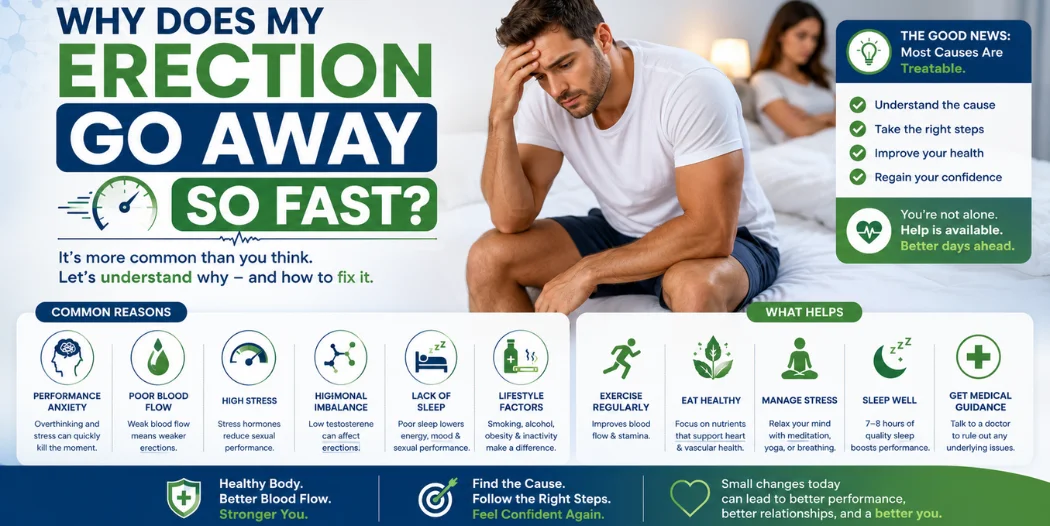
This can happen for many reasons and does not always mean you have erectile dysfunction (ED). Stress, performance anxiety, less sexual stimulation, tiredness, alcohol, smoking, relationship problems, certain medicines, and some health conditions can make it harder to keep an erection.
An erection depends on your brain, nerves, hormones, and blood flow working together. When you become less aroused or something interrupts this process, your erection may become soft or go away. Losing an erection sometimes is common and does not always mean you have a sexual health problem.
If you often wonder, “Why does my erection go away so fast?” and regularly have trouble getting or keeping an erection, it is a good idea to talk to a healthcare professional. Finding the cause can help you understand the problem and choose the right way to manage it.
Why Does My Erection Go Away So Fast?
An erection happens when sexual stimulation increases blood flow to the penis. Signals from the brain and nerves help blood vessels relax and allow blood to enter the erectile tissue. Several body systems need to work together to maintain an erection.
If sexual arousal decreases, blood flow changes, or stress affects your response, an erection may become soft. This can happen before, during, or after penetration. So, why do I lose my erection so fast? The cause can vary from person to person.
Temporary factors such as tiredness, distraction, nervousness, alcohol, or reduced stimulation may play a role. Frequent erection problems can also be linked to certain medications, mental health concerns, health conditions, or circulation problems. Worrying about losing an erection can increase anxiety and make the problem worse.
Common Reasons You May Lose an Erection
There are several reasons why someone may have difficulty maintaining an erection. Some are related to lifestyle or emotions, while others may involve physical health.
Stress and Anxiety
Stress can affect sexual function by making it difficult to relax and focus on sexual stimulation. Work pressure, financial concerns, family problems, or other worries may stay on your mind during sexual activity. Anxiety can have a similar effect.
You may start worrying about whether you will stay hard instead of focusing on pleasure. This can lower sexual arousal and make it harder to maintain an erection. Stress and anxiety may cause temporary erection problems, but occasional issues do not always mean you have a long-term sexual health condition.
Performance Anxiety
Performance anxiety occurs when you feel pressure to perform sexually or satisfy your partner. You may worry about how long your erection will last, whether you will orgasm, or whether your partner is enjoying sex. These thoughts can distract you from sexual pleasure and make it harder to stay aroused.
As anxiety increases, maintaining an erection may become more difficult. Learning how to Overcome Sexual Performance Anxiety can help you feel more relaxed and confident during sexual activity. Try to focus on intimacy and pleasure rather than erection firmness. Talking openly with your partner can also reduce pressure and help you feel more comfortable.
Lack of Sexual Stimulation
An erection usually depends on ongoing sexual arousal. If stimulation slows down or stops, your erection may naturally become less firm. This can happen during a pause, when your attention moves elsewhere, or when you feel less aroused. A change in sexual activity or position can also affect stimulation.
This type of erection change can be normal and does not always mean erectile dysfunction. If your erection becomes firm again when stimulation increases, it may simply be related to changes in arousal rather than an underlying physical health problem.
Relationship or Emotional Issues
Your emotional state can have a strong effect on sexual arousal. Relationship problems, poor communication, emotional distance, or unresolved concerns can make it harder to stay focused during sex. If you feel stressed, tense, or uncomfortable with your partner, your sexual arousal may decrease, which can affect your erection.
Talking openly with your partner about your feelings and concerns may help reduce stress and create a more comfortable experience. If emotional or relationship problems continue to affect your sex life, relationship counseling or sex therapy may also be helpful.
Alcohol and Smoking
Alcohol can affect sexual performance, especially when consumed in larger amounts. It may reduce sensitivity and make it harder to stay aroused or maintain an erection. Smoking can also affect blood vessels and reduce healthy blood flow, which is important for erections.
Cutting down on alcohol and avoiding smoking can support better sexual and overall health. Some people also wonder does weed lower libido when they notice changes in sexual desire or performance. Cannabis can affect people differently, and regular use may affect sexual function for some people.
Poor Sleep and Fatigue
When you are exhausted, your body may not respond to sexual stimulation in the same way. Fatigue can lower your energy and focus, and affect your mood and interest in sex. Poor sleep can also affect your physical and mental well-being.
If you often feel tired or do not get enough quality sleep, improving your sleep routine may support better sexual health. Losing an erection after a stressful or tiring day does not necessarily mean you have a medical problem.
Underlying Health Conditions
Some health conditions can affect the blood vessels, nerves, hormones, or other systems involved in erections. These may include diabetes, high blood pressure, heart disease, obesity, and some hormonal or neurological conditions.
Erection problems can sometimes be linked to other health concerns, so they should not always be viewed as only a sexual issue. If you frequently experience losing erection quickly, talk to a healthcare professional. They can help identify whether an underlying health condition may be affecting your erections and suggest the right steps to manage it.
Why Does My Erection Go Soft During Sex?
It can be frustrating when your erection becomes soft during sex, especially when you were fully aroused at first. However, this can happen for several reasons and does not always mean you have a serious problem.
A change in sexual stimulation is one common reason. When stimulation decreases, your level of arousal may also decrease. Stress, tiredness, alcohol, and distractions can have a similar effect.
Psychological factors can also affect your erection. Worrying about your performance, your erection, or satisfying your partner can increase anxiety. This may make it harder to stay relaxed and maintain an erection. In some cases, ongoing stress, anxiety, or other emotional concerns may contribute to Psychological ED, which can make it difficult to get or keep an erection during sexual activity.
If this happens occasionally, there may be no reason to worry. Erections can naturally become less firm and may return when sexual stimulation and arousal increase. However, if you regularly have trouble maintaining an erection during sex, consider speaking with a healthcare professional to understand the possible cause.
Is It Normal to Lose an Erection Sometimes?
Occasionally losing an erection is common. It can happen because you are tired, stressed, distracted, or nervous. A temporary change in arousal can also cause an erection to become soft.
An erection does not always need to stay firm throughout sexual activity. Changes in stimulation or arousal can naturally affect firmness.
What matters is how often it happens. If you lose erection fast only once in a while but usually have normal erections, there may not be a serious problem. However, frequent or ongoing erection difficulties may need more attention.
Also, notice when it happens. If you have normal erections when alone but struggle during sex with a partner, stress or performance anxiety may play a role. Occasional erection loss does not automatically mean you have ED.
How Can I Keep My Erection Longer?
Keeping an erection longer depends on what is causing the problem. Regular exercise, a balanced diet, enough sleep, maintaining a healthy weight, and managing stress can support better sexual health. Limiting alcohol and avoiding smoking may also help.
If performance anxiety affects you, focus on pleasure and connection instead of worrying about how long your erection will last. Open communication with your partner can also reduce pressure and anxiety.
If you think a medicine or health condition is affecting your erections, talk to a healthcare professional. Do not stop prescribed medicine without medical advice.
Avoid products that promise instant results. If you are looking for the Safest ED Medication, speak with a healthcare professional first. They can recommend an option based on your health, medications, and individual needs.
Can Erectile Dysfunction Cause an Erection to Go Away Quickly?
Erectile dysfunction (ED) can make it difficult to get or maintain an erection. However, losing an erection sometimes does not automatically mean you have ED.
ED usually means having ongoing or repeated difficulty getting or keeping an erection that is firm enough for sexual activity. It can be caused by physical health problems, psychological factors, or a combination of both. Some people have trouble getting an erection, while others can get one but find it difficult to keep it firm. In some cases, both problems may occur.
You may also wonder, ‘does erectile dysfunction come and go?’ Erection difficulties can vary depending on factors such as stress, sleep, alcohol use, medications, emotional well-being, and overall health. If erection problems happen regularly or continue over time, it is a good idea to speak with a healthcare professional. They can review your symptoms, medications, lifestyle, and health history to help identify possible causes.
Treatment depends on the cause. It may include lifestyle changes, addressing psychological factors, managing an underlying condition, changing a medication when medically appropriate, or using an ED treatment recommended by a healthcare professional.
Conclusion
If you have been asking yourself, “why does my erection go away so fast?”, know that you are not necessarily dealing with erectile dysfunction. Erection firmness can change naturally, and occasional erection loss can happen to anyone.
Sometimes, the cause is temporary and improves when you address the factor affecting your sexual response. Try not to worry too much about one experience, as anxiety about losing an erection can make it harder to stay aroused.
If your erection problems happen often or continue over time, consider talking with a healthcare professional. Pay attention to when the problem happens and how often it occurs, as this information can help identify possible causes. There is no need to feel embarrassed. Many erection problems can be managed once the underlying cause is understood.