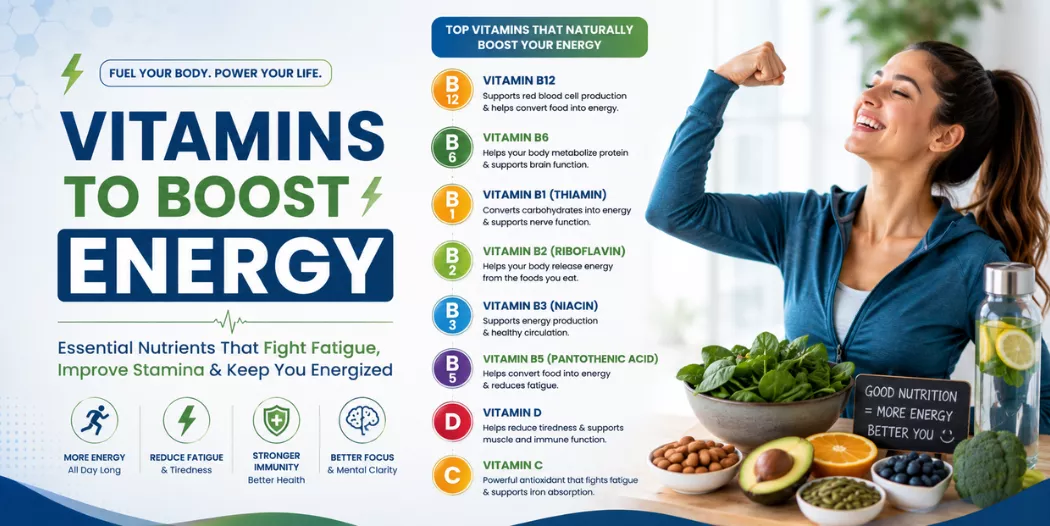
Feeling tired sometimes is normal, especially after a busy day, poor sleep or intense physical activity. However if you often feel low on energy it can affect your focus, mood work, exercise and daily activities. Your diet can play an important role because your body needs certain vitamins and minerals to produce energy and function properly.
Vitamins do not provide instant energy like coffee or energy drinks. Instead they support important body functions such as energy metabolism, red blood cell production and normal nerve function. If you are deficient in a specific nutrient, getting enough of it may help reduce tiredness and weakness.
In this guide we will discuss the most important vitamins to boost energy other nutrients that may support energy levels and foods that provide these nutrients. We will also cover supplements and simple lifestyle habits that can help you maintain healthy energy levels throughout the day.
What Are Vitamins That Help Boost Energy?
Vitamins are essential micronutrients that the body needs in relatively small amounts to perform important biological functions. Some vitamins help the body convert carbohydrates, fats, and proteins from food into energy.
B vitamins, especially vitamin B12 and other B-complex vitamins, play an important role in normal energy metabolism. Folate and vitamin B12 also support healthy red blood cells and normal nervous system function.
Vitamin D supports muscle and overall body health, while vitamin C helps the body absorb iron from plant-based foods. Vitamins do not provide calories or instant energy, but getting enough of them can support vitamins to boost energy levels by helping the body perform important functions properly and maintain normal energy levels.
Best Vitamins To Boost Energy
Vitamin B12
Vitamin B12 is one of the nutrients most commonly associated with energy because it plays an important role in normal metabolism and red blood cell formation. Red blood cells carry oxygen throughout the body, which helps support normal energy and physical function.
A lack of vitamin B12 may cause tiredness, weakness, or low energy. Vitamin B12 for energy supports normal energy metabolism and healthy red blood cells. Good sources include fish, meat, eggs, dairy products, and fortified foods. People following a vegan diet may need reliable B12 sources.
B-Complex Vitamins
B-complex vitamins include several different B vitamins, such as B1, B2, B3, B5, B6, biotin, folate, and B12. These vitamins help your body use carbohydrates, proteins, and fats from food for normal energy production.
You can get B vitamins from whole grains, vegetables, beans, eggs, dairy products, meat, fish, and fortified foods. For people looking for the best vitamins for energy, B-complex vitamins can be important. However, supplements should not replace a healthy and balanced diet.
Vitamin D
Vitamin D is best known for its role in calcium absorption and bone health, but it also supports normal muscle and immune function. Low vitamin D levels may be linked with tiredness and low energy in some people.
Your body can make vitamin D from sunlight, and you can also get it from fortified foods, egg yolks, and fatty fish. The amount made from sunlight varies by season, location, skin exposure, and lifestyle. If you have a deficiency, supplementation may help restore healthy levels.
Vitamin C
Vitamin C is an antioxidant nutrient that supports normal immune function, collagen production, and iron absorption. It is found naturally in many fruits and vegetables.
Good sources include oranges, lemons, strawberries, berries, peppers, tomatoes, broccoli, and leafy green vegetables. Eating these foods regularly can help you get enough vitamin C. If you want more food ideas, Foods Highest In Vitamin C can help you choose healthy options. Vitamin C supports overall health, but taking extra amounts does not necessarily give you an immediate energy boost.
Other Nutrients That May Support Energy Levels
Vitamins are not the only nutrients involved in maintaining normal energy and physical function. Several minerals and other compounds also play important roles.
Iron
Iron is an important mineral that helps your body make hemoglobin, a protein in red blood cells that carries oxygen throughout the body. Low iron levels can lead to iron-deficiency anemia, which may cause tiredness, weakness, and low physical energy.
Good sources of iron include meat, seafood, beans, lentils, spinach, and fortified cereals. Vitamin C can help your body absorb iron from plant-based foods more effectively. Iron supplements may help people with low iron levels, but they should not be taken unnecessarily because too much iron can be harmful.
Magnesium
Magnesium is an important mineral that helps your body perform many daily functions. It supports energy production by helping the body convert food into usable energy. Magnesium also plays a role in normal muscle and nerve function, making it important for overall physical health.
You can get magnesium naturally from foods such as nuts, seeds, beans, whole grains, and leafy green vegetables. Eating a balanced diet can usually help you get enough magnesium. Magnesium supplements may be useful for people who do not get enough from their diet or have a deficiency.
Folate
Folate is also known as vitamin B9. It is an important nutrient that helps your body make healthy new cells and red blood cells. Red blood cells carry oxygen throughout the body and help support normal energy levels. Not getting enough folate may lead to certain types of anemia. This can cause tiredness, weakness and low energy.
You can get folate from leafy green vegetables, beans, peas, citrus fruits and fortified grains. Eating a balanced diet that includes these foods can help you get enough folate and support normal body function.
Coenzyme Q10
Coenzyme Q10 also called CoQ10 is a natural compound found in the body. It helps cells produce the energy they need to function properly. The body naturally produces CoQ10 and small amounts can also be found in foods such as meat, fish and nuts.
CoQ10 supplements are often promoted for energy and exercise performance. However healthy people who already have enough CoQ10 may not need supplements. If you are considering a CoQ10 supplement, talk to a healthcare professional to determine whether it is suitable for you.
Which Vitamin Deficiency Can Cause Low Energy?
A lack of certain vitamins and minerals can sometimes cause low energy and tiredness. Vitamin B12 and folate are important for making healthy red blood cells, while iron deficiency can lead to anemia and make you feel weak or tired. Low vitamin D levels may also be linked with tiredness in some people.
However, feeling tired does not always mean you have a vitamin deficiency. Poor sleep, stress, dehydration, an unbalanced diet, too much physical activity, certain medicines, and some health conditions can also cause fatigue.
If you feel tired for a long time or your fatigue is severe or unexplained, it is better to find the underlying cause instead of taking several supplements without guidance.
Vitamins for Energy and Tiredness
If you feel tired because your body is low in certain vitamins or minerals, getting enough of those nutrients may help improve your energy and overall health.
However, there is no single vitamin that is best for everyone. The right vitamin or supplement depends on your diet, age, lifestyle, health, and whether you have a nutritional deficiency.
If you often feel tired even after getting enough sleep and eating a balanced diet, there may be another reason for your low energy. In such cases, it is better to find the cause rather than simply taking supplements.
Best Food Sources of Energy-Supporting Vitamins
A balanced diet can provide many of the nutrients required for normal energy metabolism.
Eggs and Dairy Products
Eggs, milk, yogurt, and other dairy products provide important nutrients such as vitamin B12, B vitamins, protein, and calcium. Adding eggs or dairy products to breakfast can be a simple way to include more nutrients in your diet.
Meat and Seafood
Meat, chicken, fish, and seafood are good sources of nutrients that support energy and overall health. They provide vitamin B12, iron, protein, and other B vitamins. These nutrients help the body produce energy and support healthy blood cells.
Leafy Green Vegetables
Vegetables such as spinach, kale, and broccoli contain nutrients like folate, vitamin C, and magnesium. Adding green vegetables to lunch or dinner can help increase your intake of important vitamins and minerals.
Fruits
Fruits provide vitamins, natural carbohydrates, water, fiber, and other helpful nutrients. Oranges, berries, kiwi, and other colorful fruits are good choices for adding variety to your meals and snacks. You can also explore Foods Highest In Vitamin C for more vitamin C-rich options.
Nuts and Seeds
Nuts and seeds, including almonds, pumpkin seeds, and sunflower seeds, provide magnesium, healthy fats, protein, and other nutrients. They can be an easy snack or added to oatmeal, yogurt, or salads.
Whole Grains
Foods such as oats, brown rice, whole-wheat bread, and other whole grains provide carbohydrates that the body uses for energy. They also contain fiber, B vitamins, magnesium, and other nutrients that support a balanced diet.
Fortified Foods
Some foods have extra vitamins and minerals added to them. These are called fortified foods. Examples include some breakfast cereals, plant-based milk, and nutritional yeast products. Depending on the product, they may provide nutrients such as vitamin B12, vitamin D, folate, or iron. Always check the nutrition label to see which nutrients are included.
Should You Take Vitamin Supplements for Low Energy?
Vitamin supplements may help if you have a vitamin or mineral deficiency or cannot get enough nutrients from your diet. However, supplements are not always needed for low energy.
Feeling tired can happen because of poor sleep, stress, an unbalanced diet, dehydration, or other health problems. Taking too many supplements can also provide more nutrients than your body needs and may cause side effects or interact with certain medicines.
Before starting high-dose vitamins, it is better to understand the reason for your tiredness. If low energy continues for a long time, speak with a healthcare professional for proper advice.
How to Choose Vitamins or Supplements for Energy
If you are considering a supplement, start by looking at what your diet and nutritional needs actually require. Check the label to see how much of each vitamin or nutrient the supplement contains. More vitamins do not always mean better results.
Avoid products that promise instant or unlimited energy. Your age, diet, health conditions, medications and any vitamin deficiency should also be considered before choosing a supplement.
Nutritional needs can change with age and lifestyle. For example people searching for Vitamins For Men Over 50 should choose supplements based on their specific nutritional needs rather than relying only on energy related claims.
Lifestyle Habits That Can Help Improve Energy
Vitamins are only one part of maintaining healthy energy levels. Daily habits can have an equally important influence.
Get Adequate Sleep
Good sleep is important for maintaining energy. Most adults need at least seven hours of sleep each night. Try to follow a regular sleep schedule and create a comfortable, quiet environment for better sleep.
Eat Balanced Meals
Eating healthy and balanced meals can help provide the nutrients and energy your body needs. Include foods such as vegetables, fruits, whole grains, protein-rich foods, and healthy fats in your daily diet.
Stay Hydrated
Not drinking enough water can sometimes make you feel tired or low on energy. Drink water regularly throughout the day, especially when you exercise or spend time in hot weather.
Exercise Regularly
Regular exercise can help improve your fitness and overall energy. You do not always need intense workouts. Simple activities such as walking, cycling, or stretching can also help you stay active.
Manage Stress
Too much stress can make you feel tired and can also affect your sleep and concentration. Try simple ways to manage stress, such as taking short breaks, exercising, relaxing, spending time with loved ones, or practicing deep breathing.
Limit Excessive Caffeine
Caffeine can help you feel more awake for a short time, but drinking too much can affect your sleep. Poor sleep may leave you feeling tired the next day. Try to limit caffeine, especially in the evening. A healthy diet and daily habits can also support your overall well-being. Learning about Hormone-Balancing Foods can help you make healthier food choices and support your body’s overall health.
Conclusion
Maintaining healthy energy levels starts with giving your body the nutrients and care it needs. Vitamins such as B12, B-complex vitamins, vitamin D, and vitamin C can support important body functions, while nutrients like iron, magnesium, and folate also play a role in normal energy production.
However, supplements may not help if you are already getting enough nutrients. A balanced diet should be your first choice, along with good sleep, regular exercise, enough water, and stress management. These simple habits can help you feel more active and support your overall well-being.
Following Healthy Habits For Sexual Performance can also contribute to better physical health and daily energy. If you continue to feel tired without a clear reason, speak with a healthcare professional to find the possible cause.