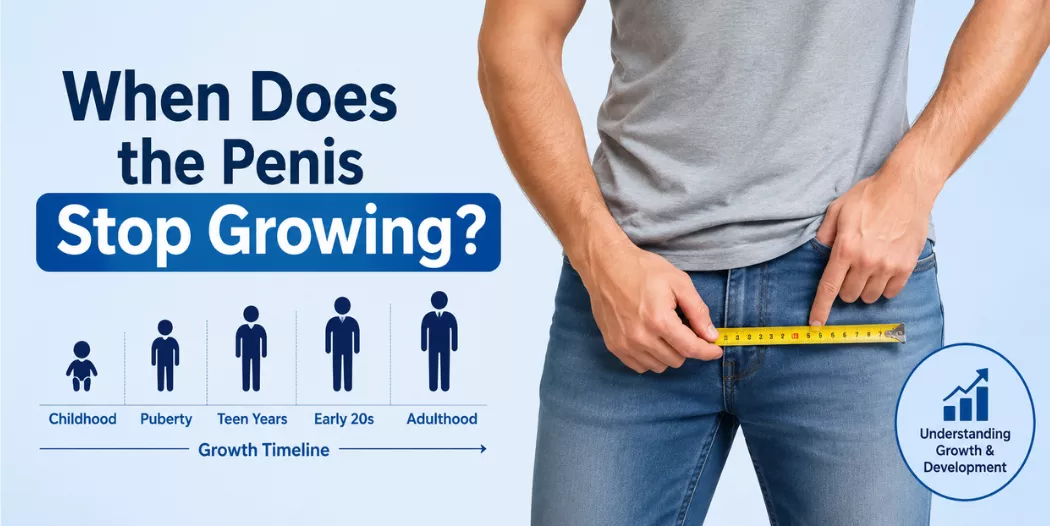
Many people ask when does your penis stop growing especially during their teenage years. It is a common question because the body undergoes many physical changes during puberty. The penis grows naturally as hormone levels, especially testosterone, increase. However not everyone grows at the same speed. Some boys start puberty earlier while others develop later so the timing of penis growth is different for everyone. Most penis growth happens during puberty and usually stops by the late teens or early twenties.
Factors such as genetics, hormones, nutrition and overall health can all affect growth. It is also important to know that penis size does not determine masculinity, fertility or sexual performance. There is a wide range of normal sizes and every person develops differently.
In this article you’ll learn about penis growth age when growth usually stops the factors that affect development and common myths about penis growth. You can also explore our Men’s Health section for more expert information on male puberty reproductive health and overall wellness.
At What Age Does the Penis Stop Growing?
One of the most common questions people ask is at what age penis stops growing. For most males, the penis continues to grow throughout puberty and usually reaches its full adult size between 18 and 21 years of age. However, there is no exact age that applies to everyone because every person develops at a different pace.
The age limit for pennis growth depends on when puberty begins. Boys who start puberty earlier may finish growing sooner, while those who enter puberty later may continue developing into their early twenties. This is completely normal and is mainly influenced by genetics and hormone levels.
It is also important to remember that penis growth happens gradually over several years, not overnight. Some teenagers may notice changes earlier, while others develop more slowly. Comparing yourself with friends or images on the internet can lead to unnecessary worry because everyone’s body grows differently.
Penis Growth Timeline by Age
Understanding the typical penis growth age can help you know what to expect during puberty. Every person develops at a different pace, so there is no exact age when everyone experiences the same changes. However, most boys follow a similar growth pattern.
Ages 9–11: Early Puberty
During this stage puberty usually begins. The testicles are usually the first part of the reproductive system to grow while the penis may not change much yet. Your body starts producing more testosterone which prepares it for further development. Some boys may also notice the first signs of pubic hair and a gradual increase in height.
Ages 12–14: Rapid Growth
Between the ages of 12 and 14 penis growth becomes more noticeable. The penis usually grows longer and gradually becomes thicker as testosterone levels increase. During this stage many boys also experience a rapid growth in height, a deeper voice, increased muscle development and the growth of pubic underarm and facial hair. Frequent erections and wet dreams are also common.
Ages 15–17: Continued Development
During this stage the penis continues to grow in both length and girth. Many teenagers reach most of their adult penis size during these years. The body also becomes more mature. Muscle mass increases, shoulders become broader and facial and body hair continue to grow. Some boys complete puberty during this stage while others may continue developing until their late teens or early twenties.
Ages 18–21: Final Stage of Growth
By the age of 18 to 21, most males reach their full adult penis size. Any remaining growth is usually very small and happens as puberty finishes. If puberty starts later than usual, some growth may continue into the early twenties. Once puberty is complete and hormone levels become stable, the penis usually stops growing naturally.
How Does the Penis Grow During Puberty?
Many people wonder if does penis grow simply because of age or if other factors are involved. The answer is that penis growth is mainly driven by puberty and hormones, especially testosterone. Puberty is the stage when a boy’s body begins to develop into an adult body.
During this time, the brain sends signals to the testicles to produce more testosterone. This hormone is responsible for many physical changes, including penis growth, deeper voice, increased muscle mass, and the growth of facial and body hair.
Increase in Penis Length
One of the first noticeable changes during puberty is an increase in penis length. This growth happens slowly and steadily rather than overnight. The tissues inside the penis continue to develop, allowing it to become longer as puberty progresses.
Increase in Penis Girth
As puberty continues, the penis also becomes thicker. This increase in width, known as girth, is a normal part of development. Some boys may notice changes in length first, while others may notice an increase in thickness. Both growth patterns are completely normal.
Testicle Growth
The testicles usually begin to grow before the penis does. They produce testosterone and sperm, making them an important part of male reproductive development. Enlargement of the testicles is often one of the earliest signs that puberty has started.
Development of the Foreskin and Glans
For boys who are not circumcised, the foreskin gradually becomes more flexible during puberty. At the same time, the glans (the head of the penis) continues to mature as hormone levels increase.
Increased Blood Flow and Erections
It is common to experience more frequent erections. These can happen without sexual thoughts or stimulation and are caused by normal hormonal changes. If you want to learn more about how erections work and what is considered normal during puberty read our Erection Guide.
Everyone Develops at Their Own Pace
Every person goes through puberty differently. Genetics, hormone levels, overall health, and the age at which puberty begins all affect how and when the penis grows. Some boys may notice changes earlier, while others may develop later. Both are normal, and comparing yourself with others is usually not helpful.
Factors That Affect Penis Growth
Penis growth is a normal part of puberty but everyone develops differently. Some boys grow earlier while others take more time. The size and timing of penis growth are influenced by several factors. Most of these are natural and cannot be changed.
Genetics
Genetics is one of the main factors that affects penis growth. Your genes determine many physical traits, including your height, body shape, and adult penis size. They also influence when puberty starts and how your body develops.
If the men in your family experienced early or late puberty, you may have a similar growth pattern. Since genetics cannot be changed, they play a major role in your natural growth and development.
Hormone Levels
Testosterone is the main hormone responsible for penis growth during puberty. As puberty begins, the body produces more testosterone, which helps the penis, testicles, muscles, and other male reproductive organs develop.
If the body does not produce enough testosterone due to a medical condition, growth may be slower or delayed. If there are concerns about hormone levels, a doctor can perform tests and recommend the appropriate treatment if needed.
Nutrition
Eating a healthy and balanced diet helps your body grow properly during puberty. Foods rich in protein, vitamins, minerals, and healthy fats support hormone production and overall physical development.
While a poor diet does not usually stop penis growth, severe malnutrition or long-term nutrient deficiencies during childhood can affect normal growth and development. Eating nutritious foods every day helps your body stay healthy and supports normal puberty.
Overall Health
Your overall health plays an important role in healthy growth during puberty. Eating a balanced diet, getting enough sleep, exercising regularly, and maintaining a healthy weight help your body produce the hormones needed for normal development.
These healthy habits support proper growth of the penis and other body changes during puberty. Some long-term illnesses or certain medical conditions may slow down growth and should be checked by a healthcare professional.
What Is the Average Penis Size?
Many people wonder whether their penis size is normal, especially during their teenage years. The truth is that penis size varies naturally and most men fall within a healthy range.
According to medical research the average erect penis measures about 13 to 14 cm (5.1 to 5.5 inches) while the average flaccid penis measures around 8 to 10 cm (3.1 to 3.9 inches). The size of a flaccid penis can change because of temperature stress or physical activity.
Genetics plays the biggest role in determining adult penis size. There is no scientific evidence that shoe size, height, hand size or race can predict penis size. If your development is normal there is usually no reason to worry about your penis size.
Can the Penis Continue to Grow After Puberty?
Many people wonder whether the penis can continue to grow after puberty. In most cases, the answer is no. Penis growth mainly happens during puberty, when the body produces higher levels of testosterone. Once puberty is complete and hormone levels become stable, natural penis growth usually stops.
For most males, this happens between the ages of 18 and 21, although the exact age can vary from person to person. Even after puberty ends, some people may notice changes in the way their penis looks. However, these changes usually affect its appearance rather than its actual size.
Late Puberty
Some boys start puberty later than others. If puberty begins later, penis growth may also continue for a little longer until development is complete. This is usually normal and is not a cause for concern unless recommended by a healthcare professional.
Changes in Appearance
The penis may sometimes look larger or smaller even though its actual size has not changed. For example, losing excess fat around the lower abdomen can make more of the penis visible, making it appear longer. On the other hand, gaining weight around the pubic area may make the penis look shorter because part of the shaft is covered by body fat.
Hormone Treatment
In some cases, doctors may prescribe hormone therapy for boys who have certain hormone deficiencies or delayed puberty. This treatment can help support normal development if started at the right time. However, testosterone therapy does not increase penis size in healthy adults who have already completed puberty.
Surgical Procedures
Some surgical procedures can change the appearance or length of the penis, but they are usually performed only for specific medical conditions. These procedures are not recommended for cosmetic penis enlargement because they can have risks and complications. Anyone considering surgery should discuss the benefits and risks with a qualified healthcare professional.
Can You Increase Penis Size Naturally?
Many people look for natural ways to increase penis size. You may see advertisements for pills, creams, supplements or home remedies that claim to make the penis bigger. However there is no scientific evidence that these products can permanently increase penis size after puberty.
Once puberty is complete the penis has usually reached its full adult size. Healthy habits can improve your overall sexual health and may make the penis appear larger but they cannot permanently increase its length or thickness.
Maintain a Healthy Lifestyle
A healthy lifestyle helps your body work properly and supports good sexual health. While it cannot make your penis physically larger it can improve blood flow hormone balance and overall well-being.
Healthy habits include:
- Eat a balanced and nutritious diet.
- Exercise regularly.
- Maintain a healthy weight.
- Get enough sleep.
- Avoid smoking alcohol and recreational drugs.
These habits help keep your body healthy and support normal sexual function.
Lose Excess Weight
If you are overweight, losing extra fat around the lower abdomen can make your penis appear longer. This is because more of the shaft becomes visible when fat around the pubic area is reduced.This does not increase the actual size of the penis. It only improves its visible appearance.
Pelvic Floor Exercises
Pelvic floor exercises also called Kegel exercises strengthen the muscles that support the bladder and reproductive organs.These exercises may improve erection quality, bladder control and sexual function. However they do not increase penis length or thickness.
Have Realistic Expectations
Penis size naturally varies from one person to another. Many men who think they have a small penis actually have a normal size.Instead of using products that promise unrealistic results focus on staying healthy, maintaining a healthy weight and building self-confidence.
Many people also wonder whether masturbation affects penis growth. Read our guide on Masturbation Increase Penis Size to separate common myths from medical facts.
Does Penis Size Continue to Change With Age?
The penis usually stops growing after puberty. However as you get older you may notice some changes in its appearance or function. These changes are mainly caused by aging lifestyle and overall health rather than actual penis growth.
Most men reach their full adult penis size between the ages of 18 and 21. After that the length and thickness usually stay the same. However certain factors can make the penis look larger or smaller over time.
Aging
As men get older the body naturally goes through several changes. Blood flow may decrease and hormone levels may slowly decline. These changes can affect erection quality but they do not usually change the actual size of the penis.
Weight Gain
Gaining excess body fat especially around the lower abdomen can make the penis look shorter. This happens because part of the shaft becomes hidden by the fat around the pubic area.Losing extra weight can make more of the penis visible but it does not increase its actual size.
Blood Flow and Erectile Function
Healthy blood flow is important for achieving a firm erection. Conditions such as high blood pressure, diabetes , heart disease and smoking can reduce blood flow to the penis. Poor blood circulation may cause erections to feel less firm making the penis appear smaller during an erection even though its actual size has not changed.
Lifestyle Habits
Regular exercise, a healthy diet, enough sleep and avoiding smoking can help maintain good blood flow and overall sexual health as you age.Taking care of your health can improve erectile function and help you maintain a healthy sex life.
Can Exercises or Supplements Increase Penis Size?
Many products claim to increase penis size including exercises, pills, creams, pumps and supplements. However most of these methods have little or no scientific evidence to support their claims. Before trying any enlargement method it is important to understand what medical research says.
Penis Exercises
Some people practice stretching exercises such as jelqing in the hope of increasing penis size. There is no strong scientific evidence that these exercises permanently increase penis length or thickness. In some cases they may even cause pain, bruising or injury if performed incorrectly.
Penis Pumps
Vacuum pumps are medical devices that draw blood into the penis using gentle suction. They can help produce an erection for a short period and are sometimes recommended for men with Erectile Dysfunction under medical supervision. However they do not permanently increase penis size.
Supplements and Pills
Many supplements claim to enlarge the penis naturally. However, there is no reliable scientific evidence that penis enlargement pills or herbal supplements permanently increase penis size. If you are considering treatment for erection problems, learn about the Safest ED Medication and consult a healthcare professional.
Surgery
Penis enlargement surgery is available in some cases but it is usually recommended only for specific medical conditions. Like any surgery it carries risks such as infection, scarring, reduced sensation and unsatisfactory results. It should never be considered without discussing the benefits and risks with a qualified urologist.
Conclusion
Many people wonder when does your penis stop growing especially during puberty. In most males, the penis grows throughout puberty and reaches its full adult size between the ages of 18 and 21. However, the exact timing is different for everyone because genetics, hormone levels, and overall health all play a role.
It is also important to remember that penis size naturally varies from person to person, and most men have a normal size. Products that claim to permanently increase penis size are not supported by scientific evidence. Maintaining a healthy lifestyle supports overall sexual health but does not increase penis size after puberty.