
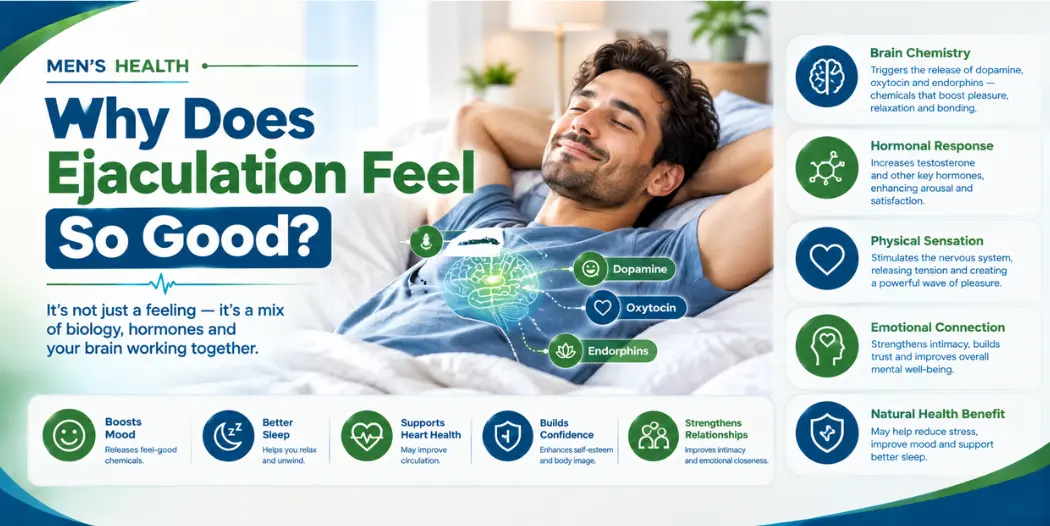
Ejaculation is a natural part of male sexual function. But have you ever wondered why it feels so good? The pleasure comes from more than just releasing semen. Your brain, nerves, hormones and muscles work together to create these enjoyable feelings.
Many men wonder, Why Does Ejaculation Feel So Good? During sexual activity, sensitive nerves send signals to the brain, which processes them as pleasurable sensations. As you reach orgasm, muscles contract rhythmically, and the brain responds to these changes. This combination makes sexual climax feel intense and satisfying.
Understanding how ejaculation works can help you better understand your sexual health, recognize normal changes in pleasure, and identify when something may need medical attention. This article explores the science behind ejaculation, the factors that influence pleasure, and why the experience can feel different from one person to another.
What Is Ejaculation?
Ejaculation is the process through which semen is released from the penis, usually during sexual stimulation and orgasm. It is a natural body function controlled by the brain, nerves, reproductive organs and pelvic muscles. The process generally occurs in two stages. During emission, sperm and fluids from the reproductive glands move into the urethra. During expulsion, rhythmic contractions of muscles surrounding the urethra help push semen out through the penis.
Ejaculation usually happens during orgasm, which is the moment of intense sexual pleasure. However, orgasm and ejaculation are not the same. A man can sometimes experience an orgasm without releasing semen. Ejaculation is a normal part of male sexual health. Its frequency and sensations can vary from person to person depending on their physical condition and overall health.
Why Does Ejaculation Feel So Good?
Ejaculation feels good because the brain, nerves, muscles, and hormones work together to create sexual pleasure. During sexual activity, sensitive nerves send signals to the brain, while muscles around the penis and pelvic area contract during orgasm. Many people wonder, why does cumming feel so good? The answer is that the body experiences several physical and chemical changes during sexual climax. These changes create intense pleasure, satisfaction, and relaxation.
Here are the main reasons why ejaculation feels so pleasurable.
The Brain’s Reward System and Dopamine
The brain plays a central role in sexual pleasure. During sexual arousal, brain circuits involved in motivation, reward, and pleasure become active. Dopamine is an important neurotransmitter involved in sexual motivation and reward processing. It helps reinforce pleasurable experiences and contributes to the anticipation of sexual activity.
However, dopamine is not the only chemical involved in sexual pleasure. Other brain chemicals also work together to control excitement, pleasure, and relaxation. During orgasm, the brain receives signals from sensitive nerves in the body and processes them into pleasurable sensations. This combination helps make ejaculation feel satisfying and enjoyable.
Stimulation of Sensitive Nerve Endings
The penis contains numerous sensory nerve endings, particularly around the glans and other sensitive areas. During sexual stimulation, these nerves send signals to the brain through the spinal cord. The brain receives these signals and creates feelings of pleasure and excitement.
As sexual arousal increases, these sensations become stronger, making ejaculation feel more pleasurable. This also helps explain why does cumming feel good. The pleasure comes not only from touching sensitive areas but also from how the brain responds to these signals. every person experiences sexual pleasure differently. Some men may feel stronger sensations, while others may experience milder pleasure. This depends on nerve sensitivity, sexual arousal, and individual body responses.
Rhythmic Pelvic Floor Muscle Contractions
Muscle contractions are another important part of the ejaculation process. During ejaculation, the muscles around the penis and pelvic area tighten and relax repeatedly. These movements help push semen out of the penis through a small tube called the urethra.
These muscle movements also play an important role in creating pleasurable feelings during orgasm. As the muscles contract, they add to the intense physical sensations experienced during ejaculation.
The strength and speed of these contractions can be different for every person. They may also change depending on sexual excitement and physical condition. When these muscle movements work together with nerve signals and brain activity, they help create the pleasurable and satisfying feelings that many men experience during ejaculation.
The Role of Oxytocin and Endorphins
Several chemicals are involved in the body’s response to sexual activity. Oxytocin and endorphins are two natural chemicals that may play a role in sexual pleasure and relaxation. Oxytocin is often called the love hormone because it helps support emotional bonding and feelings of closeness. Its levels may increase around orgasm, although scientists are still studying its exact effects.
Endorphins are natural chemicals produced by the body that help reduce pain and support feelings of well-being. They may also contribute to pleasure and relaxation during sexual activity. Together, these chemicals work with the brain and nervous system to support sexual responses. They may help explain why many men feel satisfied, calm, and relaxed after ejaculation.
Release of Sexual Tension
Sexual arousal involves increasing physical and psychological excitement. During sexual activity, the body becomes more excited, and physical tension starts to build. Your heart beats faster, breathing increases, and more blood flows to the penis. The muscles around the pelvic area also become tighter as sexual excitement grows.
When orgasm happens, the body begins to release this built-up tension. After ejaculation, the heart rate and breathing slowly return to normal, and the muscles start to relax. This sudden change from excitement to relaxation creates a feeling of pleasure, relief, and satisfaction. That is why many men feel calm, comfortable, and relaxed after ejaculation. It is a natural response that helps the body return to its normal state.
What Happens in the Body During Ejaculation?
Ejaculation involves several coordinated physiological processes. Understanding these stages makes it easier to recognize how pleasure develops and why orgasm can feel intense.
Sexual Arousal and Stimulation
Sexual arousal begins when a man feels excited through physical touch or sexual thoughts. The brain sends signals that increase blood flow to the penis and cause an erection. As stimulation continues, the heart beats faster and breathing increases. The muscles become tense, and the nerves in the penis send signals to the brain. This increases pleasure and prepares the body for orgasm.
Emission and Ejaculation
Emission is the first phase of ejaculation. During this stage sperm travel through the reproductive ducts and mix with fluids from the seminal vesicles and prostate to form semen. The semen then moves into the urethra. Next comes the expulsion phase. Muscles in the pelvic area contract and push semen through the urethra and out of the penis. Both stages are controlled by the nervous system.
Orgasm and Physical Sensations
Orgasm is generally experienced as a brief period of intense sexual pleasure accompanied by involuntary muscle contractions. The physical sensations during ejaculation may include rhythmic pulsations around the penis and contractions in the pelvic region along with a feeling of sexual release.
Some men experience strong sensations throughout the pelvic area while others notice more localized feelings. The intensity of orgasm does not necessarily depend on the amount of semen released. Pleasure is influenced by sensory processing and arousal as well as individual physical responses.
Relaxation and the Resolution Phase
After orgasm, the body enters the resolution phase and slowly returns to its normal state. During this stage, sexual excitement decreases. The heart rate and breathing return to normal. The muscles also begin to relax.
An erection usually goes away as blood flow returns to normal. Many men experience a recovery period called the refractory period. During this time, having another orgasm may be difficult. The length of this recovery period depends on age and overall health.
What Happens to the Brain During Ejaculation?
The brain plays an important role in making ejaculation feel pleasurable. During sexual activity, sensitive nerves in the penis send signals to the brain, which processes these signals and creates feelings of pleasure. As sexual excitement increases, the brain activates areas responsible for pleasure, emotions, and sexual responses. It also uses chemicals such as dopamine, which helps create feelings of excitement and satisfaction.
During orgasm, the brain and body work together to produce intense pleasurable sensations. After ejaculation, sexual excitement usually decreases, leaving many men feeling relaxed and satisfied. This helps answer why does nutting feel good from a neurological perspective. Sexual climax combines physical stimulation with brain activity that processes reward, sensation, and emotional experience. The result is a complex experience that cannot be explained by one hormone or neurotransmitter alone.
Is Ejaculation the Same as Orgasm?
No, ejaculation and orgasm are not the same, but they usually happen together during sexual activity. Ejaculation happens when semen is released from the penis. It is a natural process controlled by the nerves and muscles. Orgasm is the feeling of intense pleasure that happens during a sexual climax. It often includes muscle contractions and a feeling of satisfaction.
Most men experience orgasm and ejaculation at the same time, but they can also happen separately. For example, some men may experience an orgasm without releasing semen. This is called a dry orgasm. Orgasm is the feeling of pleasure, while ejaculation is the release of semen. Both are normal parts of male sexual function.
What Is the Difference Between Orgasm and Ejaculation?
The main difference is that orgasm is a sensory and neurological experience, while ejaculation is a reproductive process.
| Orgasm | Ejaculation |
| Experience of sexual climax | Physical release of semen |
| Involves brain activity and sensory responses | Involves reproductive organs and muscle contractions |
| Usually associated with intense pleasure | May occur with or without typical orgasmic pleasure |
| Can occur without semen release | Can occur without a typical orgasm |
Why Does Ejaculation Feel Different for Everyone?
Sexual pleasure is not experienced in exactly the same way by every person. Some men report intense sensations during orgasm, while others experience a milder or shorter climax. Several physical and psychological factors can influence these differences.
Physical Sensitivity and Nerve Responses
The penis contains sensitive nerves that send pleasure signals to the brain during sexual activity. Some men have greater sensitivity than others, which can affect how intense an orgasm feels. Nerve problems, injuries, or certain health conditions may also reduce sensitivity and change the experience of ejaculation.
Emotional and Psychological Factors
Your emotions and mental state can affect sexual pleasure. Feeling relaxed, comfortable, and emotionally connected with your partner may make orgasm more enjoyable. However, anxiety, relationship problems, or worrying about sexual performance can make it harder to experience pleasure during ejaculation.
Stress, Fatigue and Overall Health
Stress, tiredness, and poor sleep can affect sexual desire and pleasure. When your body is exhausted or your mind is under pressure, ejaculation may feel less satisfying. Health problems such as diabetes or conditions affecting blood flow and nerves can also influence sexual sensations. Getting enough sleep, exercising regularly, and managing stress can help support sexual health.
Medications and Hormonal Changes
Some medicines can change how ejaculation feels. For example, certain antidepressants may delay ejaculation or make orgasms less pleasurable. Hormonal changes, such as low testosterone levels, can also affect sexual desire and sexual function. If you notice changes in ejaculation after taking a new medicine, speak with your doctor before making any changes to your treatment.
Why Do Men Feel Relaxed or Sleepy After Ejaculation?
Many men feel relaxed, satisfied, or sleepy after ejaculation. This happens because the body starts to calm down after sexual activity. Changes in brain chemicals, hormone levels, and muscle tension may also contribute to these feelings.
Changes in Arousal After Orgasm
During sexual activity, your heart beats faster, breathing increases, and muscles become tense. After orgasm, the body slowly returns to its normal state. Your heart rate and breathing slow down, and your muscles begin to relax. This change can make you feel calm and comfortable.
Possible Roles of Prolactin and Oxytocin
After orgasm, the body may release more prolactin and oxytocin. Prolactin is a hormone that may play a role in sexual satisfaction and recovery after orgasm. Oxytocin is often called the bonding hormone because it is linked to feelings of closeness and connection. These hormones may contribute to relaxation, but scientists are still studying their exact effects.
Physical Relaxation and Sleepiness
Sexual activity involves physical movement, muscle tension, and increased energy use. After ejaculation, the body begins to relax, which can make you feel tired or sleepy. Some men prefer to rest or sleep after orgasm, while others feel refreshed and energetic. Both responses are normal.
Does Frequent Ejaculation Affect Pleasure?
Ejaculation frequency can influence sexual experiences but there is no universal frequency that produces the greatest pleasure. Some men may feel less pleasure when they ejaculate several times within a short period. This happens because the body needs time to recover after orgasm. However the experience can be different for everyone.
Frequent ejaculation is generally safe and does not cause health problems unless it leads to pain or discomfort or affects daily life. There is also no fixed number of times a man should ejaculate each week. If you notice changes in sexual pleasure or ejaculation timing it may help to speak with a healthcare professional.
Men who ejaculate earlier than they want may look for ways to Cure My Premature Ejaculation. Treatment options may include simple behavioral techniques and medical advice based on individual needs.
Conclusion
Ejaculation feels good because the brain, nerves, hormones, and muscles work together during sexual activity. Sensitive nerves send pleasure signals to the brain, while muscle contractions create intense sensations during orgasm. These natural responses make ejaculation feel satisfying and often leave men feeling relaxed afterward.
Although orgasm and ejaculation usually happen together, they are not exactly the same. Orgasm is the feeling of sexual pleasure, while ejaculation is the release of semen from the penis. Both are normal parts of male sexual function.
The pleasure experienced during ejaculation can vary from person to person. Stress, tiredness, physical sensitivity, medications, and overall health can affect how it feels. Understanding why does cumming feel so good can help men learn more about their bodies and sexual health. If you notice pain, discomfort, or sudden changes during ejaculation, it is important to speak with a healthcare professional for proper guidance.