Sexual performance anxiety is a common problem that can affect confidence, arousal and enjoyment during sex. It often happens when a person worries too much about performing well, satisfying their partner, maintaining an erection or meeting certain expectations. These worries can increase stress and make intimacy more difficult.
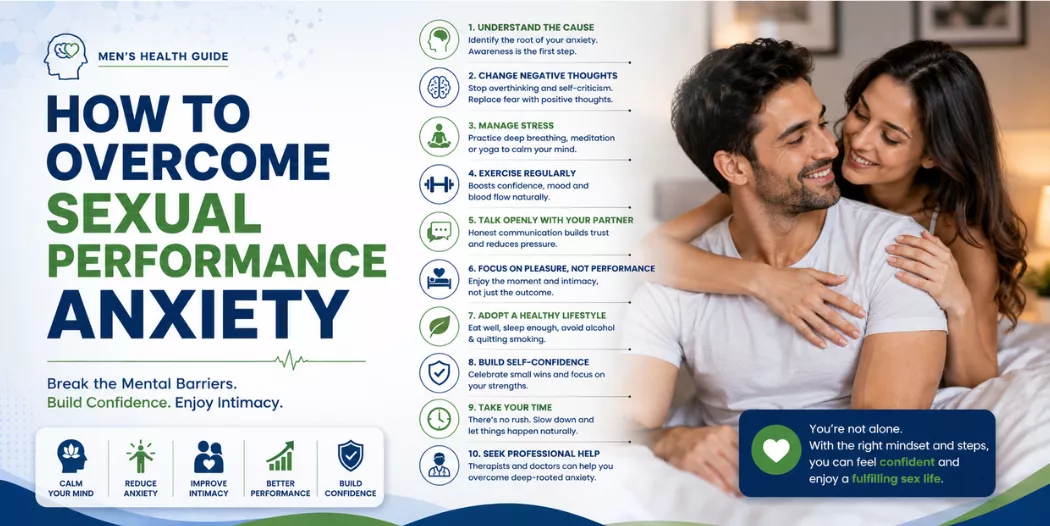
The good news is that Sexual Performance Anxiety can often be managed. Talking openly with your partner focusing on intimacy instead of performance practicing deep breathing and avoiding negative thoughts can help. Regular exercise, good sleep, healthy eating and stress management may also support sexual confidence.
Learning how to overcome sexual performance anxiety starts with understanding its causes and reducing unnecessary pressure. If anxiety continues or regularly affects sexual function, speaking with a qualified healthcare or mental health professional can help identify the cause and find suitable treatment.
What Is Sexual Performance Anxiety?
Sexual performance anxiety is the fear or nervousness a person may feel before or during sex. Someone may worry about satisfying their partner or staying aroused or maintaining an erection or reaching orgasm or being judged. Feeling nervous sometimes is normal, especially in a new relationship.
However ongoing worry can affect sexual enjoyment and arousal. Anxiety can trigger the body’s stress response and make it harder to relax and stay focused during intimacy.
This can create a cycle where worrying about sexual performance leads to difficulties and causes more worry. Understanding this connection can help reduce pressure and build sexual confidence.
Common Causes of Sexual Performance Anxiety
Sexual performance anxiety can happen for many different reasons. It may be linked to personal worries, past experiences, relationship problems, daily stress, or unrealistic expectations about sex.
Fear of Sexual Performance
Some people feel nervous or worried about how they will perform during sex. They may worry about lasting long enough or keeping an erection or satisfying their partner. These thoughts can create pressure and make it hard to relax.
Instead of enjoying intimacy they may focus too much on whether they are performing well. This fear of sexual performance can increase anxiety and make sexual experiences more stressful.
Previous Negative Sexual Experiences
A negative sexual experience can affect your confidence during future intimacy. You may start worrying that the same problem will happen again. This worry can increase anxiety and make it harder to relax and enjoy the moment.
Over time, constantly thinking about past difficulties can create more fear, reduce confidence, and make sexual experiences feel stressful.
Low Sexual Confidence
Low sexual confidence can make intimacy feel stressful. You may worry about your body, sexual experience, or whether you can satisfy your partner. These thoughts can increase nervousness and make it harder to enjoy the moment.
Comparing yourself with others or watching unrealistic sexual content online may also create pressure. Remember that real-life intimacy is different for everyone, and you do not need to meet unrealistic expectations to have a satisfying experience.
Relationship Concerns
Relationship problems can sometimes affect sexual confidence. Arguments, poor communication, emotional distance, or worrying about your partner’s expectations may make you feel nervous during intimacy.
When you feel stressed or uncomfortable with your partner, it can be harder to relax and enjoy the moment. Talking openly, listening to each other, and creating a supportive relationship can help reduce pressure and make intimacy feel more comfortable and natural.
Stress and Everyday Pressure
Daily stress can affect your mood, your energy and your sexual wellbeing. Work pressure, money problems, family responsibilities, poor sleep and other worries can make it difficult to relax during intimacy.
When your mind is busy with stress you may find it harder to focus on your partner and enjoy the moment. This connection between stress and sexual performance can sometimes increase anxiety and reduce sexual confidence.
Unrealistic Expectations About Sex
Some people believe sex should always involve strong arousal, perfect erections, long-lasting performance, or orgasm every time. These expectations are not realistic.
Sexual experiences naturally change from one day to another. Desire and arousal can also vary. Understanding this can reduce pressure and help you feel more comfortable during intimacy.
Symptoms of Sexual Performance Anxiety
Sexual performance anxiety can cause emotional, physical, and behavioral symptoms. These symptoms may happen before sex, during intimacy, or when thinking about sexual activity.
Common symptoms include:
- Worrying too much about sexual performance
- Fear of disappointing your partner
- Difficulty becoming sexually aroused
- Trouble getting or maintaining an erection
- Lower sexual desire during stressful times
- Difficulty reaching orgasm
- Feeling nervous or self-conscious during intimacy
- Fast heartbeat or muscle tension
- Overthinking sexual experiences
- Avoiding sex because of fear or embarrassment
Not everyone experiences the same symptoms. They can also range from mild to severe depending on the person and situation.
Sexual performance anxiety does not always cause physical symptoms. Sometimes, the main problem is constant worry, negative thoughts, or fear about sexual performance. These thoughts can make it harder to relax and enjoy intimacy.
It is also important to remember that sexual problems are not always caused by anxiety. Health conditions, medications, hormonal changes, stress, and relationship concerns can also affect sexual function.
How Does Anxiety Affect Sexual Performance?
Anxiety can affect sexual performance by making it harder to relax and stay focused during intimacy. When a person worries about performing well, satisfying their partner, or maintaining an erection their attention may shift away from pleasure and connection. These thoughts can increase stress and make sexual arousal more difficult.
For some men, ongoing anxiety can contribute to erection problems. When psychological factors are the main cause, these problems may be described as Psychological Erectile Dysfunction. However physical health conditions can also cause erection difficulties.
This is why repeated or sudden problems should not always be blamed on anxiety. Anxiety can create a cycle where fear leads to sexual difficulties which then causes more worry during future encounters. Reducing pressure to communicate openly and focusing on intimacy rather than performance can help break this cycle.
How to Overcome Sexual Performance Anxiety
Overcoming performance anxiety usually involves changing both thought patterns and behaviors. There is no single technique that works for everyone, but several practical approaches can make a meaningful difference.
1. Communicate Openly With Your Partner
Talking openly with your partner can reduce the pressure you feel during sex. If you are worried about your sexual performance, hiding your feelings may increase stress and anxiety. Share your concerns calmly and honestly. You do not need to explain everything at once.
Let your partner know if you feel nervous or pressured. A supportive partner can help you feel safe and comfortable. Communication also helps you discuss your preferences, boundaries, expectations, and concerns, making intimacy more relaxed and enjoyable.
2. Focus on Intimacy Instead of Performance
Try not to think of sex as a test that you need to pass. Instead of worrying about how long you last, maintaining an erection, or reaching orgasm, focus on feeling close to your partner. Kissing, touching, cuddling, talking, and other forms of affection can make intimacy more enjoyable.
When you stop putting pressure on yourself, your mind and body may relax more naturally. Remember, good sex is not about being perfect. It is about mutual comfort, consent, communication, connection, and enjoyment.
3. Practice Relaxation and Deep Breathing
Relaxation and deep breathing can help calm your mind and reduce body tension. Before or during intimacy, take slow, comfortable breaths. Breathe in gently, let your stomach expand, and then slowly breathe out. Repeat this several times while focusing on your breathing.
Mindfulness can also help you stay focused on the present instead of worrying about what may happen. Do not treat relaxation as another task you must do perfectly. Regular practice can also help manage daily stress and anxiety.
4. Avoid Negative Self-Talk
Negative thoughts can make sexual performance anxiety worse. You may think, “I will fail,” “My partner will be disappointed,” or “Something is wrong with me.” These thoughts can increase stress and make it harder to relax.
When you notice these thoughts, try replacing them with more positive and realistic ones, such as:
- “I do not have to be perfect.”
- “One bad experience does not define me.”
- “I can talk openly with my partner.”
- “I can focus on intimacy instead of performance.”
- “It is normal for sexual experiences to be different.”
You do not need to ignore your anxiety. Instead, try to understand your thoughts and avoid letting negative thinking control your sexual experience.
5. Build Sexual Confidence Gradually
Sexual confidence takes time and grows through positive experiences. If you feel pressure during intimacy, take things slowly and focus on what feels comfortable for you and your partner. Do not judge yourself by how long you last, whether you maintain an erection guide, or whether you reach orgasm.
Instead, notice small improvements, such as feeling more relaxed, communicating better, and enjoying intimacy. Remember, one difficult experience does not mean you have failed. Be patient with yourself and allow confidence to grow naturally.
6. Maintain a Healthy Lifestyle
A healthy lifestyle can support better sexual health and reduce stress. Exercise regularly to improve mood and manage anxiety. Get enough sleep because tiredness can reduce energy, mood, and sexual interest. Eat a balanced diet and drink enough water to support overall health.
Limit alcohol, as too much can affect sexual arousal and performance. If you take any medication or have a health condition, talk to your doctor about possible effects on sexual function, and never stop prescribed medicine without medical advice.
How to Relax Before Sex
If you feel anxious before sex take some time to relax and avoid putting pressure on yourself. Start by slowing down and spending time talking, cuddling or showing affection with your partner.
Practice slow deep breathing and relax the muscles in your shoulders and jaw. Try to stay focused on the present instead of worrying about what might go wrong. Do not treat sex like a task that must follow a specific plan.
Intimacy does not always have to end in intercourse or orgasm. If you face difficulty, pause and communicate with your partner. Focus on comfort instead of forcing a physical response.
Treatment Options for Sexual Performance Anxiety
Mild sexual performance anxiety may improve with relaxation, healthy habits, open communication, and reducing pressure during sex. If anxiety continues, professional support may help.
Counseling and Psychotherapy
Talking to a trained therapist can help you understand the thoughts, fears, or past experiences causing sexual performance anxiety. Therapy can also teach simple ways to manage anxious thoughts, reduce stress, build confidence, and feel more comfortable during intimacy.
Cognitive Behavioral Therapy
Cognitive Behavioral Therapy (CBT) helps people recognize negative thoughts that can increase sexual anxiety. It teaches healthier ways to manage fear, worry, and self-doubt, which may improve confidence and make Intimate Sex experiences feel more comfortable and relaxed.
Sex Therapy
Sex therapy helps people manage sexual concerns such as performance anxiety, low confidence, intimacy problems, and communication difficulties. It can help individuals or couples understand their concerns, reduce pressure, improve communication, and develop healthier and more comfortable sexual experiences.
Couples Counseling
When relationship stress is contributing to anxiety, couples counseling can provide a structured environment for improving communication and understanding between partners. It can help couples discuss concerns openly, reduce misunderstandings, build trust, and create a more supportive relationship.
Conclusion
Sexual performance anxiety can make intimacy feel stressful when it should be a source of connection and enjoyment. Worrying about erections, sexual duration, satisfying a partner, or making mistakes can increase pressure and affect arousal. Remember that you do not have to be perfect during sex.
Open communication with your partner, relaxation techniques, deep breathing, positive self-talk, regular exercise, enough sleep, and stress management can help reduce anxiety and improve confidence. These habits may also support overall sexual health and help manage concerns related to Sexual Dysfunction.
Focus on intimacy rather than performance, and give yourself time to feel comfortable. If anxiety continues or affects your sexual life, professional support can help identify the cause and guide appropriate treatment.