
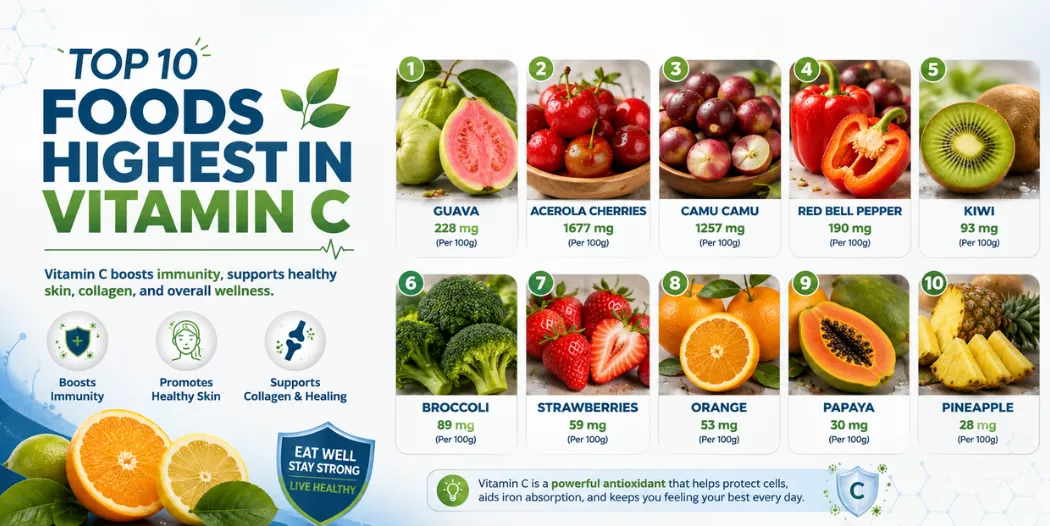
Vitamin C is an essential nutrient that plays an important role in keeping your body healthy. Many people think of oranges when they hear about vitamin C, but there are many other fruits and vegetables that contain even more. Eating a variety of foods high in vitamin C can support your immune system, help your body make collagen, protect cells from damage, and improve iron absorption.
The best part is that vitamin C is easy to get from everyday foods. Guava, bell peppers, kiwi, strawberries, papaya, and broccoli are all good choices. Some less common fruits, such as Kakadu plum and acerola cherries, contain especially high amounts of this nutrient.
In this article, we will explore the top 10 foods highest in vitamin C, explain how much vitamin C you need each day and share simple ways to add more vitamin C rich foods to your daily diet.
What Is Vitamin C and Why Do You Need It?
Vitamin C is a water-soluble vitamin that your body needs for many important functions. Since the human body cannot make vitamin C on its own, you need to get it from foods or supplements. It helps your body produce collagen, a protein that supports healthy skin, bones, blood vessels, cartilage, and other tissues.
Vitamin C also supports wound healing and helps your body absorb iron from plant-based foods. As an antioxidant, it helps protect cells from damage caused by free radicals.
It also supports normal immune system function. Eating a balanced diet with vitamin C food rich sources, such as fruits and vegetables, can help you meet your daily vitamin C needs while also providing fiber and other essential nutrients.
How Much Vitamin C Do You Need Per Day?
The amount of vitamin C a person needs depends on factors such as age, sex, pregnancy, and lifestyle. For healthy adults, the recommended daily amount is generally:
- Adult men: 90 mg per day
- Adult women: 75 mg per day
- Pregnant women: 85 mg per day
- Breastfeeding women: 120 mg per day
People who smoke need an additional 35 mg of vitamin C per day because smoking increases oxidative stress and affects vitamin C levels in the body.
Children and teenagers have different requirements based on their age. The daily requirement gradually increases as children grow.
It is important to remember that vitamin C needs can often be met by eating a variety of fresh fruits and vegetables. In fact, several commonly available foods can provide a significant amount of the daily requirement in just one serving
Top 10 Foods Highest in Vitamin C
Vitamin C is naturally found in many fruits and vegetables. Some foods contain much more vitamin C than others, making them useful additions to a balanced diet. Here are 10 excellent options to consider.
1. Kakadu Plum
Kakadu plum is a small Australian fruit known for its very high vitamin C content. It contains much more vitamin C than many common fruits, making it one of the richest natural sources of this nutrient.
The fruit is often used in powders, extracts, drinks, and other food products. Its vitamin C content can vary depending on freshness, growing conditions, and processing. Although fresh Kakadu plum may not be widely available, it is an excellent example of a naturally vitamin C-rich fruit.
2. Acerola Cherries
Acerola cherries also called Barbados cherries are small red fruits known for their very high vitamin C content. They have a sweet and slightly sour taste and can be eaten fresh or used in juices, powders and other food products. Even a small serving can provide a good amount of vitamin C.
Acerola cherries also contain antioxidants and other nutrients that support a balanced diet. However the vitamin C content may vary depending on whether the fruit is fresh dried, powdered or processed.
3. Guava
Guava is one of the best fruits high in vitamin C and is easy to find in many places. It provides a good amount of vitamin C along with fiber and other nutrients. You can eat guava fresh or add it to fruit salads.
You can also blend it into smoothies or enjoy it as a healthy snack. Its sweet and slightly tangy taste makes it easy to enjoy. Eating fresh guava regularly can be a simple way to increase your vitamin C intake naturally.
4. Bell Peppers
Bell peppers are one of the best vegetable sources of vitamin C. Red bell peppers contain a particularly high amount, while green, yellow, and orange varieties also provide this important nutrient.
You can eat them raw, add them to salads and sandwiches or lightly cook them in different dishes. Since heat can reduce vitamin C, avoid overcooking them. Bell peppers also provide fiber and other beneficial plant compounds. Their crunchy texture and mild taste make them an easy and healthy addition to everyday meals.
5. Kiwi
Kiwi is a small tasty fruit that is a good source of vitamin C. It has a sweet and slightly tangy taste making it a refreshing snack. You can eat kiwi on its own or add it to fruit salads, yogurt, oatmeal smoothies and other meals.
It also contains dietary fiber and other nutrients that support a healthy diet. Since kiwi is usually eaten fresh you can enjoy its vitamin C without cooking. Adding kiwi to your daily diet can be a simple and delicious way to increase your vitamin C intake naturally.
6. Strawberries
Strawberries are a tasty fruit and a good source of vitamin C. Their naturally sweet flavor makes them easy to include in daily meals and snacks. You can enjoy fresh strawberries on their own, add them to yogurt or oatmeal, or blend them into smoothies and fruit salads.
They also provide dietary fiber and other beneficial plant compounds that support a balanced diet. Eating fresh strawberries regularly can be a simple way to increase your vitamin C intake. Including different fruits in your diet can also help provide a variety of essential nutrients.
7. Oranges
Oranges are one of the most popular sources of vitamin C and can help meet your daily needs. They are refreshing and easy to find and simple to add to your diet. Whole oranges also provide dietary fiber which supports healthy digestion.
You can enjoy them as a snack or add them to fruit salads or have them with breakfast. While oranges are a good source of vitamin C fruits like guava kiwi and strawberries can also provide plenty of this essential nutrient.
8. Papaya
Papaya is a tropical fruit that provides vitamin C along with other nutrients. It has a soft texture and naturally sweet flavor, making it a good choice for breakfast, snacks, fruit salads, and smoothies. You can enjoy fresh papaya on its own or mix it with other fruits for a healthy snack.
Papaya is also a good option for people who want to increase their vitamin C intake without depending mainly on citrus fruits. Adding fresh papaya to a balanced diet can provide important nutrients while making meals more flavorful.
9. Broccoli
Broccoli is a healthy vegetable and a good source of vitamin C, fiber, and other nutrients. You can eat it raw or cooked and add it to salads, soups, stir-fries, and other meals. Since heat and water can reduce vitamin C, avoid overcooking broccoli.
Light steaming or microwaving can help retain more nutrients. Adding broccoli to your regular meals is an easy way to increase your vitamin C intake while eating more vegetables.
10. Brussels Sprouts
Brussels sprouts are a healthy vegetable and a good source of vitamin C. They also provide fiber and other important nutrients. Their slightly strong taste can be improved with simple cooking methods. You can steam them, roast them or add them to salads and mixed vegetable dishes.
Since heat can reduce vitamin C, avoid overcooking them. Including Brussels sprouts in your meals can help increase your vitamin C intake while adding more vegetables to your daily diet.
Fruits vs Vegetables: Which Are Higher in Vitamin C?
Both fruits and vegetables can provide plenty of vitamin C, but the amount varies from one food to another. Some fruits, such as guava, kiwi, strawberries, oranges, Kakadu plum, and acerola cherries, are especially rich in vitamin C. Vegetables such as red bell peppers, broccoli, and Brussels sprouts are also excellent sources.
There is no simple rule that fruits always contain more vitamin C than vegetables. Some vegetables can provide as much or even more vitamin C than certain fruits.
For a balanced diet, it is best to include both. You can enjoy fruits at breakfast or as snacks and add colorful vegetables to lunch and dinner. Eating a variety of Hormone-Balancing Foods can also support overall dietary quality.
Benefits of Eating Foods High in Vitamin C
Including foods high in vitamin C in your daily diet can support several important functions in the body.Supports Immune Function: Vitamin C contributes to the normal functioning of the immune system. A balanced diet containing enough vitamin C and other essential nutrients supports overall immune health.
- Helps With Collagen Production:Vitamin C is required for collagen synthesis. Collagen is important for the structure of the skin, blood vessels, cartilage, bones, and other tissues.
- Provides Antioxidant Support: Vitamin C acts as an antioxidant and helps protect cells from oxidative damage caused by free radicals.
- Supports Iron Absorption: Vitamin C improves the absorption of non-heme iron from plant-based foods. Combining vitamin C-containing foods with plant sources of iron can therefore be beneficial.
- Supports Healthy Skin: Vitamin C helps the body produce collagen which is a protein that supports healthy skin. It also works as an antioxidant and helps protect skin cells from damage. Getting enough vitamin C through a balanced diet can support normal skin health and appearance. As nutritional needs may change with age it is also important to get enough essential nutrients through a healthy diet including those discussed in Vitamins For Men Over 50.
How to Add More Vitamin C-Rich Foods to Your Diet
Increasing your vitamin C intake does not need to be complicated. A few simple dietary changes can help you eat more vitamin C rich foods every day.
Start Your Day With Fruit
Add kiwi, strawberries, papaya, guava, or oranges to your breakfast. You can eat them fresh or add them to yogurt, oatmeal, or smoothies.
Add More Vegetables to Your Meals
Include bell peppers, broccoli, and Brussels sprouts in your lunch or dinner. You can add raw bell peppers to salads or lightly cook vegetables as a side dish.
Choose Fresh Fruits and Vegetables
Fresh fruits and vegetables are good sources of vitamin C. Try to include them regularly in your meals and snacks.
Avoid Overcooking Vegetables
Too much heat and long cooking times can reduce vitamin C in vegetables. Try steaming or lightly cooking vegetables instead of cooking them for a long time.
Eat Different Sources of Vitamin C
You do not have to eat the same food every day. Try different fruits and vegetables throughout the week to get a variety of nutrients.
Choose Whole Foods
Choose fresh fruits and vegetables instead of processed foods. They provide vitamin C, fiber, and other nutrients. Even when researching Cranberry Juice Good For Sexually, remember that overall nutrition matters more than relying on one food alone.
Conclusion
Vitamin C is an important nutrient that supports immunity, healthy skin, collagen production, wound healing, and iron absorption. You can get enough vitamin C naturally by eating a variety of fruits and vegetables. Instead of relying on one food, try adding different vitamin C rich foods to your meals and snacks.
Fresh fruits, salads, and lightly cooked vegetables can make your diet more nutritious and enjoyable. A balanced diet also supports overall wellness and can be part of Healthy Habits for Better Sexual health. Small healthy food choices each day can make a positive difference in your long-term nutrition and well-being.