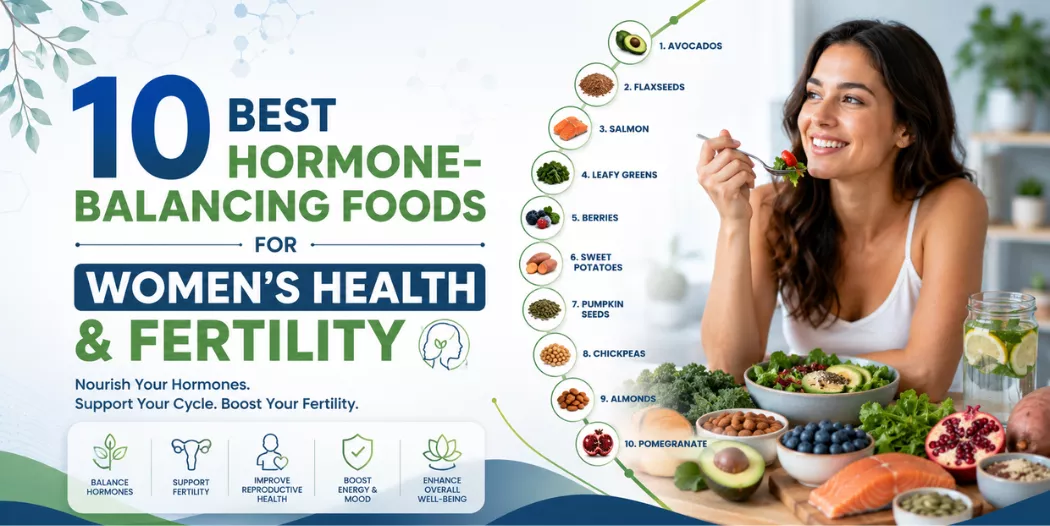
Hormones affect many areas of a woman’s health, including the menstrual cycle, mood, metabolism, bone health, energy, and reproductive function. Maintaining healthy hormone function is not about eating one magic food. Instead, a balanced diet with enough protein, healthy fats, fiber, vitamins, and minerals can support overall health.
The term hormone balancing foods for women generally refers to nutritious foods that provide nutrients needed for normal hormonal and metabolic functions. However, food cannot replace medical treatment for conditions such as PCOS, thyroid problems, infertility, or irregular periods.
A healthy diet can include vegetables, fruits, whole grains, legumes, nuts, seeds, fish, eggs, and other nutrient-rich foods. These hormone-balancing foods for women can provide important nutrients to support overall health and reproductive function. Some research suggests that healthy dietary patterns may support reproductive health, but there is not enough evidence that one specific food or diet can reliably improve fertility. The American Society for Reproductive Medicine also recommends a healthy lifestyle for overall reproductive health.
What Are Hormone-Balancing Foods?
Hormone-balancing foods are nutritious foods that provide essential nutrients to support the body’s normal hormone function, metabolism, and reproductive health. Hormones are produced and regulated by organs and glands such as the ovaries, thyroid, adrenal glands, pancreas, pituitary gland, and hypothalamus.
Healthy fats provide essential fatty acids, protein supplies amino acids, and fiber supports digestive and metabolic health. Foods such as leafy greens, legumes, eggs, seafood, and dairy also provide important vitamins and minerals.
Foods to balance hormones should be part of a balanced diet rather than viewed as foods that can directly fix or reset hormone levels. Nutritional needs can also change during menstruation, pregnancy, breastfeeding, perimenopause, and menopause.
How Does Diet Affect Hormonal Health and Fertility?
A healthy diet provides essential nutrients for hormone function and reproductive health. Vegetables, fruits, whole grains, legumes, fish, nuts, seeds, and protein-rich foods can support overall nutrition. For broader nutrition information, Vitamins For Men can also provide insights into essential vitamins and nutrients.
Some studies have linked nutrient-rich eating patterns with better fertility-related outcomes, although evidence is not strong enough to prove that one diet improves fertility for everyone.
Fertility also depends on factors such as ovulation, age, ovarian health, thyroid function, medical conditions, medications, and sperm health. Therefore, foods that help balance hormones should complement, not replace, medical care.
10 Best Hormone-Balancing Foods for Women
1. Fatty Fish
Fatty fish such as salmon, sardines, trout, and mackerel are rich in omega-3 fatty acids, high-quality protein, vitamin D, and selenium. Omega-3 fatty acids support normal cell function and may play a role in reproductive health.
Although fatty fish cannot directly balance hormones or guarantee better fertility, they can be part of a healthy diet. For women looking for foods that balance hormones in women, fatty fish are a nutritious choice. During pregnancy or when trying to conceive, choose low-mercury fish and follow food-safety guidance.
2. Leafy Green Vegetables
Spinach, kale, fenugreek leaves, and other leafy greens are rich in folate, magnesium, fiber, vitamin K, and other important nutrients. Folate is especially important for women who may become pregnant.
Leafy greens can support overall health as part of a balanced diet and are among the hormone regulating foods that provide nutrients needed for normal body functions. Add them to salads, soups, smoothies, or cooked meals. Eating them with vitamin C-rich foods may also help the body absorb plant-based iron better.
3. Avocados
Avocados are a nutritious source of healthy monounsaturated fats, fiber, potassium, and several vitamins and minerals. Healthy fats are an important part of a balanced diet and support normal body functions. The fiber in avocados can support digestive health and help you feel full for longer.
You can enjoy avocado on whole-grain toast, in salads, wraps, grain bowls, or with eggs. Avocados can support a healthy diet, but they should not be considered a food that directly balances hormones.
4. Berries
Berries such as strawberries, blueberries, raspberries, and blackberries are nutritious foods that provide fiber, vitamin C, and antioxidants. These nutrients help support overall health and protect cells from oxidative stress. Adding different fruits to your diet also provides a wider range of vitamins and minerals.
Berries can be enjoyed fresh or frozen and are easy to add to Greek yogurt, oatmeal, salads, or smoothies. They are a simple choice among the best hormone balancing foods for women.
5. Nuts and Seeds
Almonds, walnuts, pistachios, chia seeds, flaxseeds, pumpkin seeds, and sunflower seeds are rich in healthy fats, protein, fiber, magnesium, zinc, and other nutrients. Walnuts, chia seeds, and flaxseeds provide plant-based omega-3 fatty acids called alpha-linolenic acid (ALA).
Pumpkin seeds are good sources of magnesium and zinc. Magnesium supports muscle and nerve function, blood glucose regulation, and protein production. A small handful of unsalted nuts or seeds can be added to oatmeal, yogurt, salads, or smoothies for extra nutrition.
6. Eggs
Eggs are a nutritious and convenient source of high-quality protein. They also provide important nutrients such as choline, selenium, vitamin B12, and small amounts of vitamin D. Protein helps maintain muscles and supports many normal body functions.
Eggs do not directly balance reproductive hormones, but their nutrients can support overall health. Including eggs as part of a balanced diet can help women get important protein and essential nutrients needed for normal body functions.
7. Greek Yogurt
Greek yogurt is a nutritious food that provides protein and calcium, while some varieties also contain live cultures. Calcium supports strong bones, normal muscle function, nerve signaling, and hormone-related processes. Vitamin D helps the body absorb calcium.
Choose plain or low-sugar Greek yogurt to limit added sugar. You can enjoy it with berries, chia seeds, walnuts, or oats. Dairy foods have been studied for fertility, but Greek yogurt is not a proven fertility treatment. It is best included as part of a balanced diet.
8. Cruciferous Vegetables
Cruciferous vegetables such as broccoli, cauliflower, cabbage, and Brussels sprouts are rich in fiber, vitamins, minerals, and beneficial plant compounds. They can be steamed, roasted, stir-fried, or added to soups, salads, and curries. These vegetables support a healthy, balanced diet and provide nutrients that contribute to overall health.
Some sources claim that cruciferous vegetables can detox or remove excess estrogen, but this is an oversimplification. It is more accurate to say that they support normal body functions rather than directly balancing or removing hormones.
9. Legumes
Lentils, chickpeas, kidney beans, black beans, peas, and other legumes are good sources of plant-based protein, fiber, folate, iron, and magnesium. They can be especially helpful for women following vegetarian or plant-based diets. Legumes are easy to add to soups, salads, curries, grain bowls, dal, and chana dishes.
A well-planned plant-based diet can provide important nutrients. Research has explored legumes and other plant foods in relation to fertility, but more evidence is needed to confirm specific fertility benefits.
10. Whole Grains
Whole grains such as oats, brown rice, quinoa, barley, and whole-wheat products provide carbohydrates, fiber, vitamins, and minerals. Replacing some refined grains with whole grains can make your diet more nutritious and support overall health. They can also be combined with protein and healthy fats for a balanced meal.
For example, oats with Greek yogurt, berries, and walnuts provide protein, fiber, carbohydrates, and healthy fats. Brown rice with lentils and vegetables is another healthy option. Whole grains may support fertility as part of a balanced diet, but they are not a standalone fertility treatment.
Key Nutrients for Female Hormonal Health & Fertility
Omega-3 Fatty Acids
Omega-3 fatty acids are healthy fats found in fatty fish, seafood, walnuts, chia seeds, and flaxseeds. They help support cell membranes and normal body functions. Omega-3s may also support reproductive health, but current research does not prove that they alone can improve fertility in all women.
Folate
Folate is a B vitamin naturally found in leafy greens, beans, peas, nuts, and eggs. It is especially important before and during pregnancy because folic acid helps reduce the risk of neural tube defects. Women of childbearing age should get 400 mcg of folic acid daily from supplements and/or fortified foods, along with folate from a balanced diet.
Iron
Iron helps make hemoglobin and carries oxygen throughout the body. Women aged 19–50 generally need 18 mg daily, while adults aged 51 and older need 8 mg. Good sources include lentils, beans, leafy greens, fortified grains, seafood, poultry, and meat. Vitamin C can improve iron absorption. Avoid unnecessary supplements because excess iron can be harmful.
Vitamin D
Vitamin D helps the body absorb calcium and supports strong bones, muscles, and overall health. Few foods naturally contain vitamin D, but fatty fish and fortified foods can provide it. If you have a vitamin D deficiency, a healthcare professional can recommend proper treatment. Taking high doses without advice may be harmful.
Calcium
Calcium helps keep bones and teeth strong and supports muscle function, nerve signals, blood clotting, and hormone release. Good sources include milk, yogurt, leafy greens, tofu, fortified foods, and fish with edible bones. Women aged 19–50 need about 1000 mg daily, while women over 50 need 1200 mg daily.
Magnesium
Magnesium supports many important body functions, including healthy muscles, nerves, blood sugar levels, bones, and protein production. It also helps make DNA. Good food sources include nuts, seeds, legumes, whole grains, and leafy green vegetables. A balanced diet can help provide the magnesium the body needs.
Zinc
Zinc supports the immune system and helps with protein and DNA production. It also supports wound healing and normal cell function. Good sources include seafood, meat, eggs, dairy products, legumes, nuts and seeds. A balanced diet usually provides enough zinc. High-dose zinc supplements should only be taken when recommended by a healthcare professional.
Protein
Protein provides amino acids that help maintain muscle tissues and support important body processes. Good sources include fish eggs, Greek yogurt, poultry beans, lentils, tofu nuts and seeds. Including enough protein in regular meals can support overall health and help create a balanced nutritious diet.
Fiber
Fiber is found in vegetables, fruits, legumes, nuts, seeds, and whole grains. It supports healthy digestion and can help you feel full for longer. Fiber-rich foods may also help replace highly processed foods and added sugars. Increase fiber gradually and drink enough water to support comfortable digestion.
Can Hormone-Balancing Foods Improve Fertility?
A healthy diet can support overall health and provide nutrients needed before and during pregnancy. However, no single food or diet is proven to improve fertility for every woman. Research from ASRM suggests that some healthy dietary patterns may be linked with better fertility outcomes, but the evidence is still limited.
Fertility can be affected by ovulation problems, PCOS, thyroid conditions, weight, age, and other health issues. Hormonal changes may also contribute to Sexual Dysfunction. A healthy diet can support reproductive health but cannot replace medical care.
Women trying to conceive should also get enough folic acid. ASRM recommends 400 mcg of folic acid daily for women planning pregnancy to help reduce the risk of neural tube defects.
If pregnancy does not occur after 12 months of regular unprotected intercourse in women under 35, or after 6 months in women aged 35 or older, an infertility evaluation is generally recommended. Earlier medical advice may be appropriate if periods are irregular or other reproductive health concerns are present.
Lifestyle Habits That Support Hormonal Health
Regular Physical Activity
Regular physical activity can support heart health, metabolism, strong bones, energy, and overall well-being. Women can choose activities they enjoy, such as walking, cycling, swimming, yoga, or strength training. Staying active consistently, along with a balanced diet and vitamins and wellness, can help support a healthy lifestyle. Exercise can also help maintain a healthy weight and improve mood.
However, very intense workouts combined with not eating enough may affect the menstrual cycle in some women. For this reason, exercise should be balanced with enough nutritious food, proper hydration, rest, and recovery to support overall health and hormonal well-being.
Quality Sleep
Getting enough sleep is important for women’s overall health and hormonal well-being. Try to sleep and wake up at the same time each day. Keep your bedroom quiet, comfortable, and free from distractions. Avoid using phones or other screens close to bedtime when possible.
Good sleep can help support energy, mood, appetite, and healthy daily habits. Poor sleep may make it harder to stay active and follow a balanced diet. Aim for consistent, restful sleep as part of a healthy lifestyle.
Stress Management
Long-term stress can affect your sleep, mood, appetite, and daily routine. Simple activities such as deep breathing, meditation, yoga, walking, spending time outdoors, or enjoying a favorite hobby can help you feel calmer. Talking with a trusted friend or family member may also help.
Managing stress is important for overall health and well-being. However, stress management alone cannot treat fertility problems or hormone-related conditions. If you have ongoing symptoms, speak with a healthcare professional for proper guidance.
Avoiding Smoking
Smoking can harm your overall health and may also reduce fertility. If you are planning to become pregnant, it is best to avoid smoking and stay away from secondhand smoke. Cigarettes contain harmful chemicals that can affect reproductive health and make it harder to conceive.
Quitting smoking can improve your overall well-being and support a healthier reproductive system. If you find it difficult to quit, speak with a healthcare professional for safe and effective support.
Conclusion
A healthy diet can play an important role in supporting women’s hormonal and reproductive health. Instead of relying on one food, focus on a balanced diet that includes vegetables, fruits, whole grains, legumes, healthy fats, and protein-rich foods.
Fatty fish, leafy greens, berries, nuts, eggs, yogurt, and whole grains provide important nutrients such as folate, iron, calcium, magnesium, and omega-3 fatty acids. Women planning pregnancy should pay special attention to folate and include folate-rich foods in their daily diet.
For additional nutrition-related information, readers may also explore Cranberry Juice Good For Sexually and its potential role in sexual wellness. Remember, diet alone cannot treat hormonal problems or guarantee fertility. Consistent healthy eating and lifestyle habits can support overall health and well-being.