How Can You Improve Erectile Dysfunction?
Erectile dysfunction (ED) may improve when contributing factors such as physical inactivity, excess weight, smoking, excessive alcohol use, stress, poor sleep, certain medications, or underlying health conditions are addressed. Treatment may also include counseling, prescription medicines, vacuum erection devices, or other medical options. The right approach depends on the cause of the ED.
Important: There is no single treatment that works for everyone, and lifestyle changes should not replace medical evaluation when ED is persistent or concerning.
Introduction
Erectile dysfunction (ED) means having difficulty getting or keeping an erection firm enough for sex. It is common and can affect men at different ages. Occasional erection problems can happen because of stress, tiredness, or alcohol, but repeated ED may sometimes be a sign of an underlying health problem.
ED is not considered a routine part of aging. It can be related to blood vessel problems, diabetes, high blood pressure, obesity, smoking, alcohol use, certain medicines, hormonal problems, nerve disorders, anxiety, depression, or other health conditions.
The good news is that ED can often be managed and sometimes improved when its contributing causes are identified and addressed.
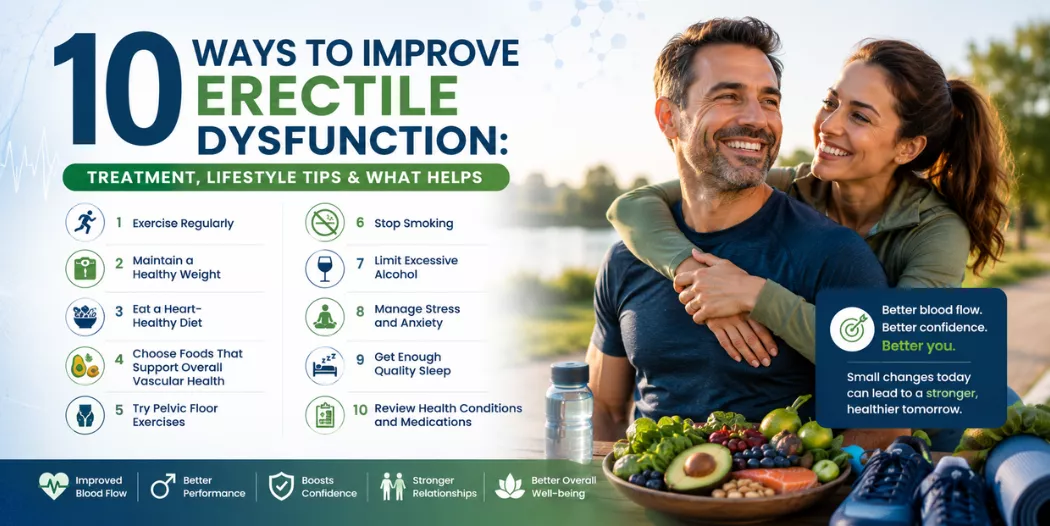
This guide explains 10 ways to improve erectile dysfunction, including exercise, weight management, diet, pelvic floor exercises, smoking cessation, alcohol reduction, stress management, sleep, and medical evaluation. It also explains natural approaches, ED treatments, and when to see a healthcare professional.
Medical note: Erectile dysfunction can have several possible causes. Lifestyle changes may help, but persistent, sudden, or unexplained ED should be discussed with a healthcare professional.
Can Erectile Dysfunction Be Improved or Reversed?
Erectile dysfunction may improve when its underlying causes or contributing factors are addressed.
For some men, healthier lifestyle habits can improve cardiovascular and metabolic health and may support better erectile function. Others may need medication, counseling, treatment for an underlying condition, or another medical approach.
Whether ED can be reversed depends largely on why it is happening.
Can erectile dysfunction be cured?
The word “cure” can be misleading because ED is a symptom with many possible causes rather than one single disease.
ED may be associated with:
- Diabetes
- High blood pressure
- Cardiovascular disease
- Overweight or obesity
- Smoking
- Excessive alcohol use
- Certain medications
- Low testosterone or other hormonal problems
- Anxiety or depression
- Relationship or sexual concerns
- Nerve disorders
- Blood vessel problems
- Other medical conditions
NIDDK notes that diseases affecting blood vessels, nerves, or hormones, along with certain medicines, mental or emotional issues, and lifestyle behaviors, can contribute to ED.
If a treatable factor is contributing to ED, addressing it may improve erectile function.
However, improvement is not guaranteed, and some causes require ongoing medical management.
Can ED be reversed naturally?
Sometimes lifestyle changes can help, especially when physical inactivity, smoking, excessive alcohol use, excess weight, or other modifiable factors contribute to the problem.
Useful lifestyle measures may include:
- Exercising regularly
- Maintaining a healthy weight
- Eating a balanced diet
- Stopping smoking
- Limiting excessive alcohol
- Getting adequate sleep
- Managing stress
- Treating underlying medical conditions
These changes support overall health but should not be viewed as guaranteed cures.
Why the cause of ED matters
An erection depends on several systems working together.
The brain and nerves must send appropriate signals. Blood must flow into the penis and remain there long enough to produce and maintain an erection. Blood vessels, hormones, medications, mental health, and general physical health can all influence this process.
That is why treating only the erection may not address the underlying problem.
For example, if diabetes, high blood pressure, smoking, or a medication is contributing to ED, identifying and managing that factor may be an important part of treatment.
10 Ways to Improve Erectile Dysfunction
There is no universal “best” way to improve ED. The most appropriate approach depends on the underlying cause.
The following strategies focus on cardiovascular health, physical fitness, mental well-being, sexual health, and medical factors that can contribute to ED.
1. Exercise Regularly
Regular physical activity supports cardiovascular health, and healthy blood vessels are important for normal erectile function.
NIDDK lists insufficient physical activity as one lifestyle factor that may contribute to ED and includes increased physical activity among lifestyle changes that may help improve symptoms.
Exercise can support:
- Cardiovascular fitness
- Blood circulation
- Weight management
- Blood pressure control
- Blood sugar management
- Overall physical health
- Stress management
What type of exercise is best for ED?
There is no single exercise that works for everyone.
A practical exercise plan can combine:
- Brisk walking
- Jogging
- Cycling
- Swimming
- Resistance training
- Bodyweight exercises
For general health, U.S. physical activity guidelines recommend that adults work toward at least 150 minutes of moderate-intensity aerobic activity each week plus muscle-strengthening activity on at least 2 days per week. People who are currently inactive can start gradually and build up over time.
If you have a medical condition or have been inactive for a long time, ask a healthcare professional what level of exercise is appropriate for you.
Tip: Consistency is more useful than trying to compensate for inactivity with occasional very intense workouts.
2. Maintain a Healthy Weight
Being overweight or having obesity can be associated with conditions that increase the risk of ED, including diabetes, high blood pressure, and cardiovascular disease.
If excess weight is contributing to metabolic or cardiovascular problems, gradual weight management may support better overall health and may help erectile function.
Healthy weight management can include:
- Regular physical activity
- Nutritious meals
- Appropriate portions
- Adequate sleep
- Sustainable eating habits
Can losing weight improve ED?
It may, particularly when excess weight is contributing to metabolic or cardiovascular problems.
However, weight loss is not a guaranteed treatment for every type of ED.
The goal should be better overall health rather than focusing only on sexual performance.
3. Eat a Heart-Healthy Diet
The blood vessels involved in erections are part of the body’s wider vascular system. A healthy eating pattern can therefore support cardiovascular health, which is relevant to erectile function.
A balanced diet can emphasize:
- Vegetables
- Fruits
- Whole grains
- Beans and legumes
- Nuts and seeds
- Fish
- Other sources of unsaturated fats
It can also help to limit excessive amounts of:
- Highly processed foods
- Added sugars
- Sodium
- Saturated fats
- Trans fats
What does a healthy diet have to do with ED?
The connection is largely related to vascular health.
Conditions that affect blood vessels can reduce blood flow and contribute to erectile difficulties. A heart-healthy eating pattern can support the broader health factors involved in sexual function.
However, eating one particular food is unlikely to immediately resolve ED.
Better approach: Focus on your overall eating pattern instead of looking for one “ED food.”
4. Choose Foods That Support Overall Vascular Health
Searches for foods that improve erectile dysfunction are common, but nutrition should not be presented as a quick cure.
Some foods contain nutrients associated with cardiovascular and vascular health.
Examples include:
| Food or food group | Why it can be part of a healthy diet |
|---|---|
| Leafy green vegetables | Provide fiber, vitamins, minerals, and naturally occurring nitrates |
| Beets | Provide dietary nitrates |
| Berries | Provide fiber and plant compounds |
| Citrus fruits | Provide vitamin C and other nutrients |
| Nuts and seeds | Provide unsaturated fats, fiber, and minerals |
| Fatty fish | Provides omega-3 fatty acids |
| Beans and legumes | Provide fiber and plant-based protein |
| Whole grains | Provide fiber and other nutrients |
What about nitric oxide foods for erectile dysfunction?
Nitric oxide is involved in blood-vessel relaxation and blood flow. Dietary nitrates found in foods such as leafy green vegetables and beets can contribute to pathways involved in nitric oxide production.
However, this does not mean that eating a nitrate-rich food will immediately produce an erection or cure ED.
The evidence does not support treating a particular food as a standalone ED treatment.
Nutrition is best viewed as one part of a broader approach to cardiovascular and sexual health.
Bottom line: Choose a healthy overall diet rather than relying on a single food, juice, or ingredient marketed as an ED remedy.
5. Try Pelvic Floor Exercises
The pelvic floor contains muscles involved in urinary and sexual function.
Pelvic floor exercises, commonly called Kegel exercises, involve repeatedly tightening and relaxing these muscles.
Some evidence suggests pelvic floor muscle training may benefit certain men with ED, particularly when pelvic floor muscle dysfunction or weakness contributes to the problem.
How do you identify the pelvic floor muscles?
The muscles used to stop urine flow can help you understand where the pelvic floor muscles are located.
However, do not routinely perform Kegel exercises while urinating. Regularly interrupting urine flow can interfere with normal bladder emptying.
Instead:
- Identify the pelvic floor muscles.
- Tighten the muscles gently.
- Hold the contraction briefly.
- Relax completely.
- Repeat several times.
- Gradually increase duration and repetitions as comfortable.
Proper technique is more important than doing a large number of repetitions.
If you are unsure whether you are using the correct muscles, a healthcare professional or pelvic floor physical therapist can provide guidance.
6. Stop Smoking
Smoking can damage blood vessels and increase cardiovascular risk. Because healthy blood vessels are important for erections, smoking can contribute to ED.
NIDDK identifies cigarette smoking as a lifestyle factor that may contribute to erectile dysfunction and recommends quitting smoking as part of lifestyle management.
Quitting smoking can also reduce the risk of other serious health problems, including heart disease and stroke.
Can quitting smoking improve ED?
It may, especially when smoking is contributing to vascular problems.
The amount and speed of improvement can vary between individuals.
If quitting is difficult, talk with a healthcare professional about evidence-based smoking cessation support.
Health tip: If you smoke and have persistent ED, discuss both issues with a healthcare professional rather than treating them as unrelated problems.
7. Limit Excessive Alcohol
Alcohol can affect the nervous system and sexual response. Heavy or frequent alcohol use can contribute to erectile dysfunction and may also contribute to health conditions associated with ED.
NIDDK lists drinking too much alcohol as a lifestyle factor that can contribute to ED and includes limiting or stopping alcohol use among lifestyle measures that may help.
Does alcohol cause erectile dysfunction?
Heavy or frequent alcohol use can contribute to ED, but the effect varies between people.
Some people may notice erection problems after drinking, while long-term heavy alcohol use can contribute to broader health problems that affect sexual function.
Reducing excessive alcohol intake may be helpful when alcohol is contributing to ED.
Tip: If you regularly notice difficulty getting or keeping an erection after drinking, consider reducing alcohol and discussing the pattern with a healthcare professional.
8. Manage Stress and Anxiety
Mental and emotional factors can affect sexual function.
Stress and anxiety can make it harder to become sexually aroused. Worrying about whether you will maintain an erection can also create a cycle in which anxiety contributes to further erection difficulties.
This is sometimes called performance anxiety.
Can anxiety cause erectile dysfunction?
Yes. Anxiety, stress, and other psychological factors can contribute to ED or make existing ED worse.
Possible contributors include:
- Performance anxiety
- Relationship difficulties
- Work or financial stress
- Depression
- General anxiety
- Previous negative sexual experiences
- Fear of erectile failure
Physical and psychological causes can also occur together.
What can help?
Depending on the cause, helpful approaches may include:
- Regular physical activity
- Relaxation techniques
- Adequate sleep
- Open communication with a partner
- Counseling
- Sex therapy
- Treatment for an underlying mental health condition
If anxiety is significantly affecting your sexual function or everyday life, a healthcare professional or qualified mental health professional can help.
Remember: ED related to anxiety is still a real medical problem. It is not simply “all in your head.”
9. Get Enough Quality Sleep
Sleep affects many areas of health, including mood, energy, cardiovascular health, and hormone regulation.
Poor sleep may also be associated with sexual and erectile problems.
Can lack of sleep cause erectile dysfunction?
Persistent poor sleep may contribute to erection problems, particularly when it is associated with another sleep or health condition.
Sleep apnea deserves particular attention because it causes repeated interruptions in breathing during sleep and is associated with several health problems.
Possible signs of sleep apnea or another sleep disorder include:
- Loud or frequent snoring
- Waking up gasping or choking
- Excessive daytime sleepiness
- Morning headaches
- Difficulty concentrating
- Feeling tired despite getting enough time in bed
If these symptoms occur regularly, discuss them with a healthcare professional.
Practical ways to improve sleep
Try to:
- Keep a consistent sleep schedule.
- Create a dark, quiet sleeping environment.
- Limit stimulating activities close to bedtime.
- Avoid excessive alcohol.
- Exercise regularly.
- Discuss persistent snoring or other sleep symptoms with a healthcare professional.
Improving sleep is not an instant ED treatment, but it can support the broader health factors involved in sexual function.
10. Review Your Health Conditions and Medications
Persistent ED can sometimes be related to an underlying health condition or medication.
Health conditions associated with ED can include:
- Diabetes
- High blood pressure
- Cardiovascular disease
- Overweight or obesity
- Chronic kidney disease
- Hormonal disorders
- Neurological conditions
- Certain mental health conditions
Some prescription and over-the-counter medicines can also cause sexual side effects. NIDDK lists several medication categories that may contribute to ED.
What should you do if you think a medication is causing ED?
Do not stop a prescribed medicine on your own.
Instead, tell your healthcare professional about the erection problems.
They can determine whether the medication may be contributing and whether an alternative treatment or dosage adjustment is appropriate.
This is important because the medication may be treating an important health condition.
Safety note: Persistent ED can sometimes be associated with cardiovascular or metabolic health problems. Understanding the underlying cause is an important part of treatment.
How Long Does It Take to Improve Erectile Dysfunction?
There is no single timeline for ED improvement.
The timeframe depends on:
- The underlying cause
- How long the problem has been present
- Overall cardiovascular health
- Lifestyle changes
- Whether a medication is contributing
- Psychological factors
- Treatment used
- Other medical conditions
For example, improving physical activity or stopping smoking may support health over time, while treatment for a specific medical cause may require a different approach.
Some people may notice changes relatively quickly, while others may need longer-term lifestyle changes or medical treatment.
Avoid products that promise to permanently cure ED within days or guarantee an immediate result.
The most useful approach is to identify the cause and choose treatment based on that cause.
Natural Remedies for Erectile Dysfunction: What Actually Helps?
“Natural remedies” can refer to many different approaches, including exercise, diet, lifestyle changes, herbal products, and dietary supplements.
These approaches should not all be treated as equally effective or safe.
Lifestyle approaches with a medical basis
Examples include:
- Regular physical activity
- Healthy weight management
- A balanced diet
- Smoking cessation
- Limiting excessive alcohol
- Better sleep
- Stress management
- Treatment of underlying health conditions
These measures can support general health and may help ED when lifestyle or health factors contribute to the problem.
What about herbal supplements?
Be cautious with supplements marketed for sexual enhancement.
Evidence for many products is limited, and product quality can vary. Some products may interact with prescription medicines.
The FDA has also repeatedly warned consumers about sexual-enhancement products that contained undeclared drug ingredients such as sildenafil or tadalafil. In 2026, for example, FDA warnings identified products containing hidden prescription drug ingredients that could interact with nitrates and potentially cause dangerously low blood pressure.
Be especially cautious with products promising:
- Instant erections
- Permanent cures
- Guaranteed results
- “Natural Viagra”
- No side effects
Important: Natural does not automatically mean safe or effective.
Erectile Dysfunction Treatment Options
Lifestyle changes are important, but they are not the only options for treating ED.
NIDDK notes that treatment can include lifestyle changes, counseling, medicines, vacuum devices, injections, suppositories, and surgery depending on the cause and individual circumstances.
Lifestyle changes
Lifestyle measures may be particularly useful when ED is associated with cardiovascular or metabolic risk factors.
These can include:
- Exercise
- Weight management
- Healthy eating
- Smoking cessation
- Limiting excessive alcohol
- Better sleep
- Stress management
Lifestyle changes may also complement medical treatment.
Counseling or Sex Therapy
Counseling may help when psychological or relationship factors contribute to ED.
Therapy may address:
- Performance anxiety
- Relationship difficulties
- Stress
- Depression
- Anxiety
- Communication problems
- Negative thoughts about sexual performance
Some people have both physical and psychological contributors, so combining medical care with counseling may be appropriate.
Prescription ED Medications
Several prescription medicines can help some men with erectile dysfunction.
A commonly used group is called phosphodiesterase type 5 (PDE5) inhibitors.
Examples include:
- Sildenafil
- Tadalafil
- Vardenafil
- Avanafil
These medicines work through a chemical pathway involved in blood flow to the penis.
They do not automatically create sexual desire, and sexual stimulation is generally needed for an erection to occur.
Are ED medications safe for everyone?
No.
PDE5 inhibitors can interact with certain medicines and may not be appropriate for people with particular cardiovascular conditions.
One especially important interaction is with nitrates, which are used for certain forms of chest pain. Combining PDE5 inhibitors with nitrates can cause a dangerous drop in blood pressure.
Do not take prescription ED medicine that was prescribed for someone else, and do not change your prescribed dose without medical advice.
Medication safety: Tell your healthcare professional about all medicines and supplements you take before starting an ED medicine.
Vacuum Erection Devices
A vacuum erection device uses a cylinder placed over the penis to create negative pressure.
The pressure draws blood into the penis and can help produce an erection. A constriction ring may then help maintain the erection.
A vacuum device may be an option for some people who cannot use or do not respond adequately to certain medicines.
A healthcare professional can explain whether this treatment is appropriate and how to use it safely.
Other Medical Treatments
Depending on the cause and response to treatment, other options may include:
- Treatment for an underlying medical condition
- Hormonal treatment when a confirmed hormonal problem is present
- Injectable medicines
- Intraurethral medicines
- Penile implants
- Psychological or relationship therapy
Not every treatment is suitable for every person.
The appropriate choice depends on the cause of ED, overall health, other medications, preferences, and response to previous treatments.
Can Erectile Dysfunction Be a Sign of Heart Disease?
Sometimes.
Erections depend on healthy blood vessels and adequate blood flow. Conditions that affect blood vessels, such as atherosclerosis, high blood pressure, and cardiovascular disease, can also contribute to ED.
This does not mean that every man with ED has heart disease.
However, persistent ED can be a reason to discuss cardiovascular risk factors with a healthcare professional, particularly if you also have:
- High blood pressure
- Diabetes
- High cholesterol
- Smoking history
- Overweight or obesity
- A family history of cardiovascular disease
- Other cardiovascular risk factors
The purpose of evaluation is not to assume that ED means heart disease. It is to determine whether an underlying health condition may be contributing to the problem.
When Should You See a Doctor About Erectile Dysfunction?
Occasional erection difficulties can happen and do not necessarily mean you have a medical disorder.
However, repeated or persistent ED deserves medical attention.
Consider speaking with a healthcare professional if:
- ED happens frequently.
- The problem continues or keeps returning.
- ED is causing significant distress.
- You have diabetes or high blood pressure.
- You have cardiovascular disease or other health conditions.
- You recently started a medication and noticed sexual side effects.
- You have low sexual desire along with erection problems.
- You have symptoms suggesting a hormonal, neurological, or sleep disorder.
What happens during an ED evaluation?
A healthcare professional may review:
- Your medical history
- Sexual history
- Mental health and emotional factors
- Current medicines and supplements
- Lifestyle factors
- Blood pressure
- Cardiovascular risk factors
- Other health conditions
Depending on your circumstances, some people may also consider telemedicine for ED as a way to discuss symptoms and treatment options with a qualified healthcare professional.
NIDDK explains that ED evaluation can involve medical, sexual, and mental-health history, a physical examination, and laboratory or other tests when needed.
The goal is to understand why the problem is happening and which treatment is appropriate.
When is ED an emergency?
Seek urgent medical care if you develop a painful erection or an erection that lasts longer than 4 hours. A prolonged erection, called priapism, can damage penile tissue if it is not treated promptly.
Key Takeaways
- Erectile dysfunction can often be managed, and some people may experience improvement when contributing factors are addressed.
- ED is not considered a routine part of aging.
- Regular physical activity supports cardiovascular health and may help erectile function.
- Maintaining a healthy weight can improve health factors associated with ED.
- A balanced, heart-healthy diet supports overall vascular health.
- No single food has been proven to cure ED.
- Pelvic floor exercises may help some men.
- Smoking can damage blood vessels and contribute to ED.
- Excessive alcohol use can interfere with sexual function.
- Anxiety and stress can contribute to or worsen ED.
- Poor sleep and sleep disorders may be associated with erectile problems.
- Certain medications and medical conditions can contribute to ED.
- Prescription treatments, counseling, devices, and other medical options are available.
- Some sexual-enhancement supplements may contain undeclared drug ingredients.
- Persistent ED should be discussed with a healthcare professional because it can sometimes be associated with an underlying health problem.
- A painful erection or erection lasting more than 4 hours requires urgent medical attention.
Conclusion
Erectile dysfunction is common, but it should not simply be dismissed as a normal part of getting older.
For some people, improving physical activity, weight management, diet, sleep, smoking, alcohol use, and stress may support better erectile function. For others, ED may be related to a medical condition, medication, psychological factor, or combination of causes that requires professional treatment.
The most useful approach is to identify and address the factors contributing to ED rather than searching for a guaranteed cure.
If erectile dysfunction continues or repeatedly affects your sexual health, talk with a healthcare professional. Effective treatments are available, and the best option depends on the cause and your overall health.