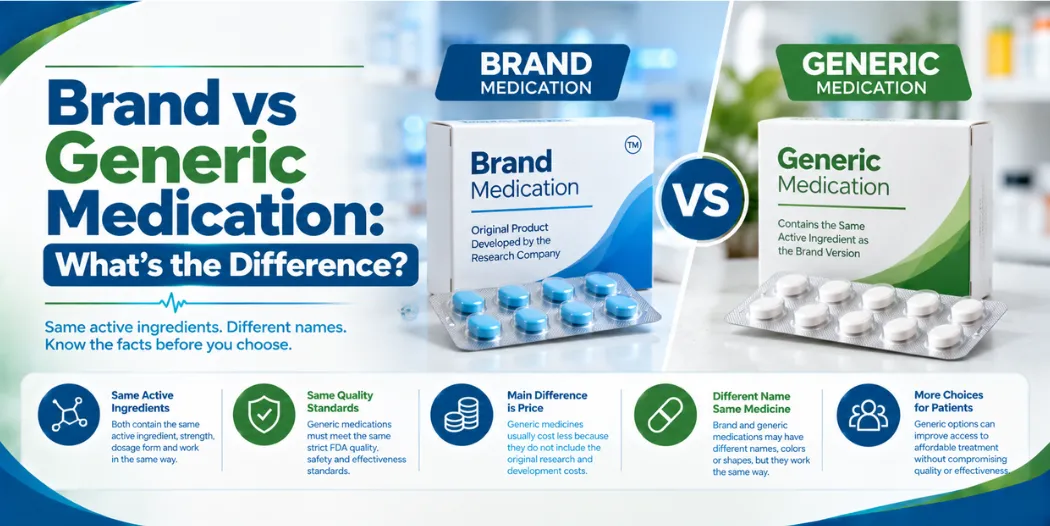
Brand-name and generic medications are used to treat different health conditions. The main differences between them are their price, name, appearance and some inactive ingredients. Brand-name medicines are usually developed by pharmaceutical companies, while generic medicines become available when other companies are allowed to make them.
Both types of medicines contain the same active ingredients when they are equivalent versions of the same drug. The U.S. Food and Drug Administration (FDA) checks generic medicines to make sure they meet safety, quality and effectiveness standards. Generic medications usually cost less than brand-name medicines, making them a more affordable option for many patients.
In this guide, Brand vs Generic Medication: What’s the Difference, we explain how these medicines compare in terms of safety, effectiveness, cost and benefits.
What Are Brand-Name Medications?
Brand-name medications are medicines developed and sold under a specific brand name by a pharmaceutical company. These medicines go through research and clinical testing to check their safety and effectiveness.
Before a new drug can be sold in the USA, it must be reviewed and approved by the Food and Drug Administration (FDA). Brand-name drugs may also have patent protection that limits competition for a certain period.
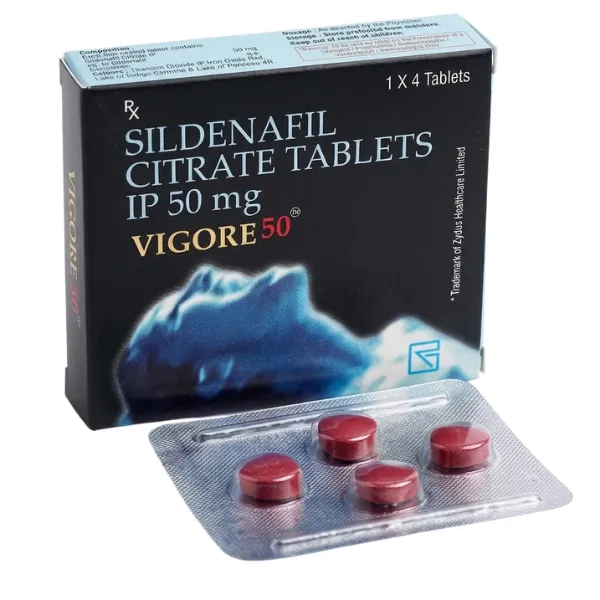
For example, Viagra contains Sildenafil and is used to treat erectile dysfunction. Lipitor contains atorvastatin and helps lower cholesterol. Brand-name medications are usually more expensive because of research, development, testing, and marketing costs.
What Are Generic Medications?
Generic medications are medicines that contain the same active ingredients as their equivalent brand-name drugs and are expected to provide the same treatment benefits. The FDA checks generic medicines to make sure they meet safety, quality and effectiveness standards. Generic drugs usually become available when patents or other market protections no longer prevent their sale.
For example, sildenafil is the generic version of Viagra, while atorvastatin is the generic version of Lipitor. Generic medications may look different in color, shape, or size, but they are expected to work just as well as their brand-name versions. They are also usually cheaper.
Brand vs Generic Medication: Key Differences
Understanding the differences between brand-name and generic medications can help patients choose the right treatment. Both types of medicines are used to treat the same health conditions. The main differences are their price, appearance, manufacturer and inactive ingredients.
| Feature | Brand-Name Medication | Generic Medication |
| Active Ingredients | Contains the original active ingredient | Contains the same active ingredient |
| Effectiveness | Tested for safety and effectiveness | Works the same as the equivalent brand-name drug |
| Safety | Must meet FDA safety standards | Must meet the same FDA safety standards |
| Cost | Usually more expensive | Usually cheaper |
| Appearance | Has a specific color, shape, and size | May have a different color, shape, or size |
| Inactive Ingredients | Contains ingredients such as fillers and colors | May contain different fillers and colors |
| FDA Approval | Goes through the FDA’s original drug approval process | Must meet FDA requirements for generic approval |
| Manufacturer | Made by the brand-name company or its partners | Made by an approved generic manufacturer |
The main difference between brand name vs generic drugs is their cost, appearance and manufacturing process. Both are expected to provide the same treatment benefits when the generic is FDA-approved and therapeutically equivalent.
Are Generic Drugs as Effective as Brand-Name Drugs?
Yes. FDA-approved generic medications are expected to work just as well as their equivalent brand-name medications. They contain the same active ingredients and provide the same treatment benefits.
When comparing generic vs brand name drugs both are expected to work in the same way. The FDA requires generic medicines to meet bioequivalence standards. This means the medicine must enter the bloodstream at a similar rate and in a similar amount as the brand-name version.
Some people may notice changes after switching from a brand-name medicine to a generic version. If this happens, they should speak with their doctor or pharmacist. The FDA carefully reviews generic medications before approval to make sure they meet the required standards for safety, quality and effectiveness.
Why Are Generic Medications Cheaper Than Brand-Name Drugs?
Generic medications are usually cheaper than brand-name drugs because their manufacturers do not have to spend as much money on research and development.
Brand-name drug companies spend years developing new medicines and testing them to make sure they are safe and effective. This process can be expensive and takes a long time.
Generic drug manufacturers do not need to repeat all these studies because the original medicine has already been approved by the FDA. However, they must still prove that their medicines meet FDA standards.
Another reason for lower prices is competition. When several companies make the same generic medicine, prices often decrease. Even though generic medications are cheaper, they must meet the same FDA quality and safety standards as brand-name drugs.
Are Generic Medications Safe?
FDA-approved generic medications are considered as safe as brand-name medications when used correctly. They must meet the same FDA standards for safety, quality and effectiveness.
Before approving a generic medicine, the FDA checks that it contains the correct active ingredient and works the same way as the brand-name version.
Generic and brand-name medications usually have the same side effects because they contain the same active ingredients. However, generic medicines may have different inactive ingredients, such as colors, fillers or preservatives. Some people may be allergic or sensitive to these ingredients.
Always take your medication as directed by your doctor. If you notice any unusual side effects after switching to a generic medicine, speak with your doctor or pharmacist. Do not stop taking prescribed medication without medical advice.
Benefits of Generic Medications
Generic medications offer several benefits for patients who need safe, effective, and affordable treatment. They provide an alternative to brand-name drugs while meeting FDA quality standards. Some important benefits include:
1. Lower Medication Costs
Generic medications usually cost less than brand-name drugs. This helps patients save money on their prescriptions, especially when they need regular treatment.
2. Similar Effectiveness
FDA-approved generic medications work just as well as their equivalent brand-name drugs. They contain the same active ingredients and provide the same expected treatment benefits.
3. FDA-Regulated Quality
Generic medications must meet FDA safety and quality standards before they can be sold in the United States. This helps ensure they are safe and effective when used correctly.
4. More Treatment Choices
Generic medications give patients more treatment options. Different companies may make the same generic drug, making it easier to find an affordable option.
5. Better Long-Term Affordability
Generic drugs can help patients save money on long-term treatment. This is especially helpful for people taking regular medications for conditions such as diabetes, high blood pressure, or high cholesterol.
Common Myths About Generic Medications
Many people have questions about generic medications because they cost less or look different from brand-name drugs. Understanding the facts can help patients make informed decisions.
Myth 1: Generic medications are less effective
FDA-approved generic medications work just as well as their equivalent brand-name drugs. They contain the same active ingredients and provide the same expected treatment benefits.
Myth 2: Generic drugs are unsafe because they are cheaper
Generic drugs are usually cheaper because manufacturers do not need to repeat the original drug’s full development process. Competition between manufacturers also helps lower prices.
Myth 3: Generic medications have different active ingredients
Generic medications contain the same active ingredients as their equivalent brand-name drugs. However, their color, shape, and inactive ingredients may be different.
Myth 4: Generic medicines take longer to work
FDA-approved generic medicines must meet requirements showing that the active ingredient is absorbed at a comparable rate and amount to the reference drug. They must meet FDA requirements to show that the medicine works in a similar way.
Myth 5: Brand-name drugs are always better
Brand-name drugs are not always better than generic medicines. FDA-approved generic drugs provide the same expected treatment benefits and are usually more affordable.
Can You Switch From Brand-Name to Generic Medication?
Yes. Many patients can safely switch from brand-name medications to FDA-approved generic medicines. However, it is important to talk to your doctor or pharmacist before making any changes. Generic medications contain the same active ingredients as their equivalent brand-name drugs and are expected to work in the same way. Switching to a generic medicine can also help you save money on treatment.
Before switching, your doctor may check your health condition and current medications. They may also ask about any allergies you have. Some medicines such as thyroid medications and certain seizure medications may need extra care when switching. Your doctor may recommend additional monitoring to make sure the medicine continues to work properly.
Always check that your new medication has the correct strength and dosage form. If you notice any unusual symptoms or changes after switching contact your doctor.
Brand vs Generic Medication: Which Is Better?
Both brand-name and generic medications can be effective in treating different health conditions. The better choice depends on your health needs and treatment costs. Your doctor’s advice is also important.
1. Brand-Name Medications
Brand-name medications may be a good choice for patients who need a specific formulation or are sensitive to certain inactive ingredients found in generic versions. In some cases doctors may recommend continuing with the same brand-name medicine to keep treatment consistent. However brand-name drugs are usually more expensive than generic alternatives.
2. Generic Medications
Generic medications are a good option for patients looking for safe and effective treatment at a lower cost. FDA-approved generic drugs contain the same active ingredients as their equivalent brand-name medicines and are expected to provide the same treatment benefits. They usually cost less. This makes them a practical choice for people who need regular or long-term medication.
Conclusion
Brand-name and generic medications are both used to treat different health conditions. They may have different prices, colors, shapes, and inactive ingredients. However, FDA-approved generic medicines work just as well as their equivalent brand-name medicines.
Generic medications usually cost less because they are cheaper to develop and more companies can make them. They must also meet FDA standards for safety and quality. For most people, generic medicines are a safe, effective, and affordable option. However, the right choice depends on your health condition and treatment needs. Always talk to your doctor or pharmacist before switching from a brand-name medicine to a generic medicine.