
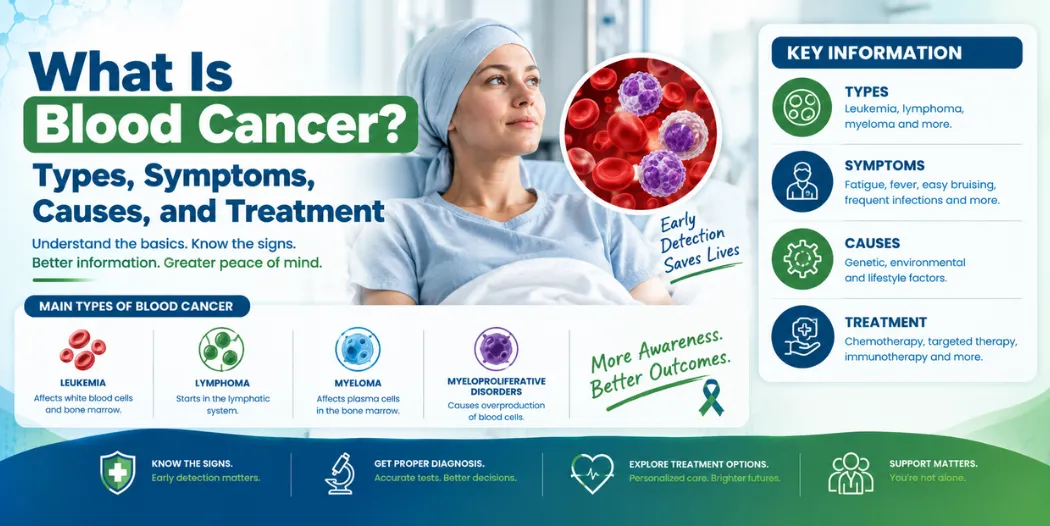
Blood cancer is a serious health condition that affects blood cells, bone marrow or the lymphatic system. It develops when abnormal cells grow uncontrollably and affect healthy blood cells. The three main types are leukemia, lymphoma, and multiple myeloma.
Common symptoms include tiredness, frequent infections, fever, unexplained weight loss and unusual bleeding. The exact cause is not always known, but genetic changes and certain environmental factors may increase the risk.
Treatment options include chemotherapy, targeted therapy, immunotherapy, and stem cell transplants. Understanding What Is Blood Cancer can help people recognize possible symptoms, learn about treatment options and seek medical care when needed.
What Is Blood Cancer?
Blood cancer is a group of cancers that begin in blood-forming tissues, such as the bone marrow, or in cells of the immune system. It happens when abnormal cells grow uncontrollably and affect the normal function of healthy blood cells.
The medical term for blood cancer is hematologic cancer or hematologic malignancy. It can affect red blood cells, white blood cells, and platelets. Red blood cells carry oxygen throughout the body, white blood cells help fight infections and platelets help stop bleeding.
The effects of blood cancer depend on the type of cancer and how it affects the body. It can reduce the number of healthy blood cells and affect the bone marrow, lymph nodes and other organs. This may cause tiredness, frequent infections, unusual bleeding and other health problems.
What Are the Main Types of Blood Cancer?
There are three main types of blood cancer: leukemia, lymphoma and multiple myeloma. Each type affects different blood cells and may cause different symptoms. Treatment depends on the type of cancer and the patient’s health condition.
1. Leukemia
Leukemia is a type of blood cancer that usually starts in the bone marrow, where blood cells are made. It causes the body to make abnormal blood cells that can stop healthy blood cells from working properly. There are two main forms of leukemia: acute and chronic. Acute leukemia develops quickly, while chronic leukemia usually develops slowly.
The four common types are acute myeloid leukemia (AML), acute lymphoblastic leukemia (ALL), chronic myeloid leukemia (CML) and chronic lymphocytic leukemia (CLL). Common symptoms of leukemia include tiredness, fever, frequent infections, and easy bruising.
2. Lymphoma
Lymphoma is a type of blood cancer that affects lymphocytes. These are white blood cells that help the body fight infections. It mainly affects the lymphatic system which includes the lymph nodes and spleen. There are two main types of lymphoma: Hodgkin lymphoma and non-Hodgkin lymphoma.
Common symptoms include swollen lymph nodes and fever. Some people may also experience night sweats and unexplained weight loss. Some types of lymphoma grow slowly while others grow quickly and need immediate medical treatment.
3. Multiple Myeloma
Multiple myeloma is a type of blood cancer that affects plasma cells. These are white blood cells that help the body fight infections by producing antibodies. In this condition abnormal plasma cells build up in the bone marrow and affect the production of healthy blood cells. They can also weaken bones and cause kidney problems.
Common symptoms include bone pain and tiredness. People may also experience weakness and frequent infections. Treatment can help control the disease and reduce symptoms. It can also improve the patient’s quality of life.
What Causes Blood Cancer?
Blood cancer develops when changes happen in the DNA of blood cells or cells that help fight infections. These changes cause abnormal cells to grow and multiply without control. Over time, these cells can affect the production and function of healthy blood cells.
In many cases, doctors do not know the exact blood cancer reason. However, certain factors may increase the risk of developing the disease. Some DNA changes happen naturally as people get older. Other changes may be linked to exposure to harmful chemicals, high levels of radiation, or previous cancer treatments.
Certain genetic conditions passed down through families can also increase the risk of some types of blood cancer. However, most people with blood cancer do not have a family history of the disease. Having these risk factors does not mean someone will develop blood cancer. It can also affect people who have no known risk factors.
What Are the Symptoms of Blood Cancer?
The symptoms of blood cancer can vary depending on the type of cancer and how it affects the body. Some people may notice symptoms early, while others may not experience any clear signs at first. Common symptoms of blood cancer include:
1. Unexplained Tiredness and Weakness
Feeling tired or weak all the time is a common symptom of blood cancer. This may happen when the body does not produce enough healthy red blood cells. A person may feel tired even after getting enough sleep or rest.
2. Frequent Infections
Blood cancer can weaken the immune system and make it harder for the body to fight infections. A person may get sick more often or take longer than usual to recover from an infection.
3. Fever and Night Sweats
Some people with blood cancer may experience fever without a clear reason. They may also sweat heavily at night, even when the room is cool. Night sweats can sometimes make clothes or bedsheets wet.
4. Unexplained Weight Loss
Losing weight without changing your diet or exercise routine can be a sign of blood cancer. This may happen because the disease affects the body’s normal functions and appetite.
5. Easy Bruising or Bleeding
Blood cancer can reduce the number of healthy platelets that help stop bleeding. This may cause easy bruising, frequent nosebleeds, bleeding gums, or small red or purple spots on the skin.
6. Swollen Lymph Nodes
Some people may notice swollen lymph nodes in the neck, armpits, or groin. These swollen areas are often painless and may develop when abnormal white blood cells build up in the lymph nodes.
7. Bone or Joint Pain
Blood cancer may cause pain in the bones or joints when abnormal cells build up in the bone marrow. People with multiple myeloma may experience pain in the back, ribs or hips.
8. Shortness of Breath
Some people with blood cancer may feel short of breath, especially during physical activity. This can happen when the body does not have enough healthy red blood cells to carry oxygen throughout the body.
What Are the Risk Factors for Blood Cancer?
Certain factors can increase the risk of developing blood cancer. However, the risk may be different for each type of blood cancer, including leukemia, lymphoma and multiple myeloma.
- Age: Blood cancer is more common in older adults, but some types can also affect children and younger people.
- Family History: People who have a close family member with certain types of blood cancer may have a higher risk of developing the disease.
- Genetic Conditions: Some inherited conditions, such as Down syndrome and Fanconi anemia, can increase the risk of certain types of leukemia.
- Radiation Exposure: Exposure to high levels of radiation may increase the risk of developing some types of blood cancer.
- Chemical Exposure: Long-term exposure to harmful chemicals, such as benzene, may increase the risk of certain blood cancers.
- Previous Cancer Treatment: People who have received certain chemotherapy drugs or radiation therapy in the past may have a higher risk of developing another blood cancer later in life.
How Is Blood Cancer Diagnosed?
Doctors use different tests to diagnose blood cancer and identify its type. The tests help doctors understand how the disease affects the body and choose the right treatment.
- Physical Examination and Medical History: The doctor checks for symptoms such as swollen lymph nodes, unusual bruising, and tiredness. They also ask about the patient’s health history and family medical history.
- Complete Blood Count (CBC): This blood test measures red blood cells, white blood cells, and platelets. Abnormal levels may be a sign of blood cancer or another health condition.
- Peripheral Blood Smear: A small blood sample is examined under a microscope to check the size, shape, and appearance of blood cells.
- Bone Marrow Biopsy: The doctor takes a small sample of bone marrow, usually from the hip bone, to check for abnormal or cancerous cells.
- Imaging Tests: CT scans, MRI scans, or PET scans may help doctors find enlarged lymph nodes, affected organs, or other signs of disease.
- Flow Cytometry and Genetic Testing: These tests help identify abnormal cells and check for genetic changes. The results can help doctors determine the type of blood cancer and select suitable treatment options.
What Are the Treatment Options for Blood Cancer?
The main goal is to destroy cancer cells, control the disease and improve quality of life.
1. Chemotherapy
Chemotherapy is a common treatment for blood cancer. It uses medicines to kill cancer cells or stop them from growing. Doctors often use chemotherapy to treat leukemia and lymphoma. The treatment may include one medicine or a combination of medicines. Common side effects include tiredness, nausea, hair loss and a higher risk of infections.
2. Radiation Therapy
Radiation therapy uses high-energy rays to destroy cancer cells. Doctors may recommend this treatment for certain types of lymphoma or to reduce bone pain caused by cancer. The treatment focuses on specific areas of the body. Doctors carefully plan radiation therapy to protect healthy tissues as much as possible.
3. Targeted Therapy
Targeted therapy uses special medicines to block proteins or processes that help cancer cells grow and survive. It can help control certain types of blood cancer. For example Rituxirel Injection contains rituximab, which targets a protein called CD20 found on certain B cells. Rituximab is used to treat some types of non-Hodgkin lymphoma and chronic lymphocytic leukemia (CLL).
In the United States, doctors prescribe FDA-approved rituximab products when suitable. Patients should use these medicines only under medical supervision.
4. Immunotherapy
Immunotherapy helps the body’s immune system recognize and fight cancer cells. It is used to treat certain types of blood cancer, including some forms of leukemia, lymphoma and multiple myeloma. One type is CAR T-cell therapy. In this treatment, doctors collect a patient’s immune cells and modify them to help attack cancer cells. It may be recommended for certain patients when other treatments have not worked.
5. Stem Cell Transplant
A stem cell transplant helps the body produce healthy blood cells after intensive cancer treatment. Doctors replace damaged blood-forming cells with healthy stem cells. These stem cells may come from the patient or a suitable donor. This treatment may be used for certain types of leukemia, lymphoma, and multiple myeloma. Doctors carefully check the patient’s health before recommending a transplant because it can cause serious side effects.
6. Active Monitoring (Watchful Waiting)
Some types of blood cancer grow slowly and may not need treatment right away. In these cases, doctors may recommend active monitoring, also called watchful waiting. During this period, doctors regularly check the patient’s symptoms, blood tests, and overall health. Treatment may begin if the cancer progresses or starts causing problems. This approach may be suitable for certain patients with chronic lymphocytic leukemia, slow-growing lymphoma or smoldering multiple myeloma.
Is Blood Cancer Curable?
Some types of blood cancer can be cured while others can be managed with proper treatment. The chances of recovery depend on the type of blood cancer and the patient’s overall health. They also depend on how well the treatment works.
For example many people with Hodgkin lymphoma can be cured with treatment. Some types of leukemia can also be cured especially when patients receive the right treatment.
Other types such as chronic lymphocytic leukemia and multiple myeloma are usually managed with ongoing treatment and regular medical checkups. Many patients can live for years with these conditions.
Treatment may help patients achieve remission. This means the signs of cancer have reduced or disappeared. However remission does not always mean the cancer is completely cured.
Conclusion
Blood cancer is a serious disease that affects the blood, bone marrow, and immune system. The three main types are leukemia, lymphoma, and multiple myeloma. Common symptoms include tiredness, frequent infections, unexplained weight loss and unusual bleeding.
Treatment options include chemotherapy, radiation therapy, targeted therapy, and stem cell transplants. Some types of blood cancer can be cured, while others can be managed with proper treatment.
Early diagnosis and medical care can help improve treatment outcomes. If you notice unusual symptoms that do not go away, consult a doctor. Regular checkups and timely treatment are important for better health.